Missouri agriculture tax-credit package advances to hearing as supporters call for certainty, critics warn against removing sunsets
Loading...
Summary
Supporters told the House Agriculture Committee that removing sunsets from a portfolio of agriculture tax credits would give long-term certainty to projects and spur rural investment; some lawmakers and public commenters urged continued oversight and cautioned about transferability language and loss of scheduled review.
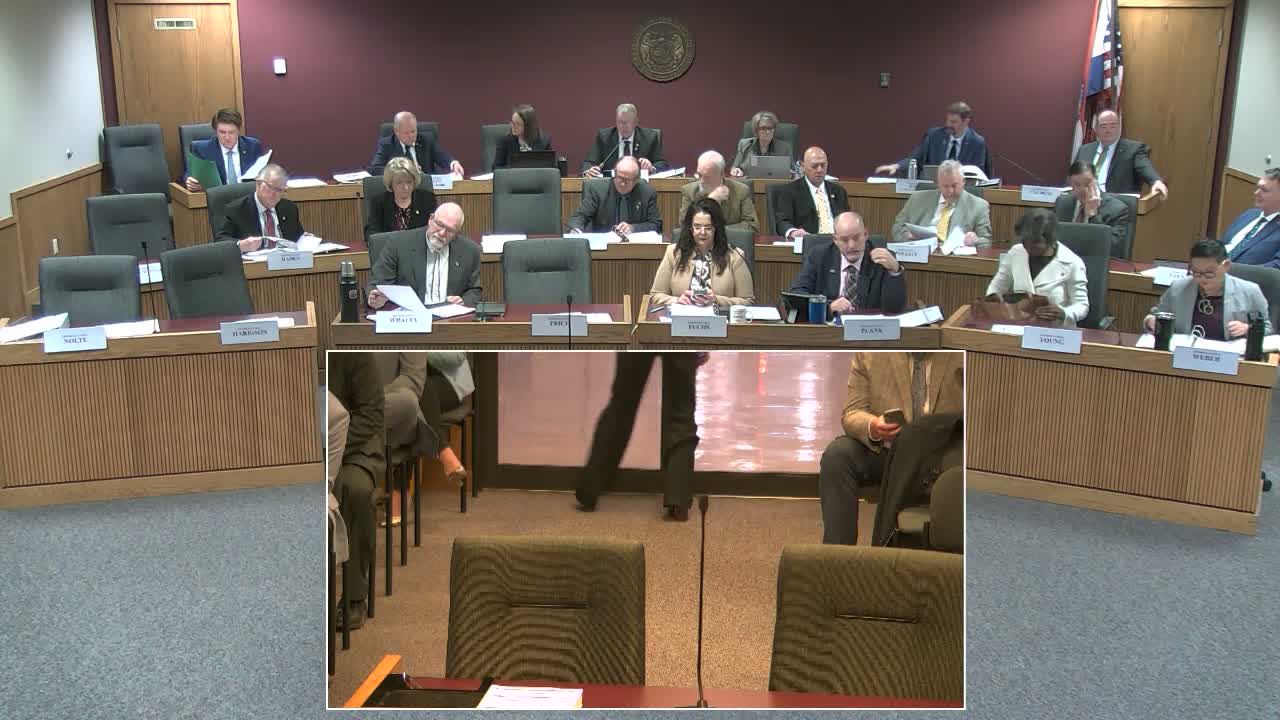
Representative Dane Deal introduced a package of agriculture tax credits, House Bill 27-13, to the House Agriculture Committee, saying the measure would remove statutory sunsets on many longstanding agricultural incentives and add provisions carried over from the Senate. "Most all of these that you see listed here today ... have a positive return on investment from the 2 to $4 range," Deal said.
The bill sponsors and a long line of industry witnesses told the committee the credits support ethanol plants, biodiesel production, meat processors, rolling stock, wood energy and other rural industries. Elena Fork of the Missouri Corn Growers Association said the programs "help stimulate investment in key areas of Missouri's agriculture industry" and provide markets and jobs for corn farmers. Matt Amick of the Biodiesel Coalition of Missouri said Missouri's five biodiesel plants produce about 25 million gallons and credited early cooperative tax credits with starting the industry.
Supporters — including the Missouri Cattlemen's Association, Missouri Forest Products Association, Missouri Agribusiness Association, Missouri Economic Development Council, Missouri Soybean Association and others — emphasized that many projects rely on multi-year certainty. Shana Cooper said appropriations authority gives the legislature a later check on program funding even if statutory sunsets are removed: "If you think any of these programs are not a good value for the taxpayers ... you can make that decision through the appropriations process and take the money away from those programs."
Several committee members pressed for guardrails. Representative Pollitt cited a history in which biodiesel credits were rescinded and later restored and said he was uneasy removing all sunsets. Representative Farnon asked how the state would know the tax credits continued to meet their goals; Deal said the legislature reviews program performance and that data on return on investment is available and would be provided to members on request.
Representative Nolte raised the bill's rolling-stock transferability language and the potential for credits to be assigned against different chapters of the tax code (142, 147, 148). Deal deferred to industry representatives in the audience for technical details. Jeff Van Schaake of the Missouri Eastern Railroad described a short-line provision included in the package as a "lifeline" for short-line infrastructure, said the short-line credit is a 50% credit, and cited a program cap used in the draft language.
No formal committee vote on HB 27-13 was recorded during the hearing. The committee alternated witness testimony between supporters and the chair closed the public-comment portion without any witnesses registering opposition on the record.
The committee is expected to consider written materials and follow-up information (Deal offered to provide maps and return-on-investment charts on request) before taking further procedural steps.