
Committee hears HB2517, a disclosure bill aimed at real-estate wholesaling practices
Get AI-powered insights, summaries, and transcripts
Subscribe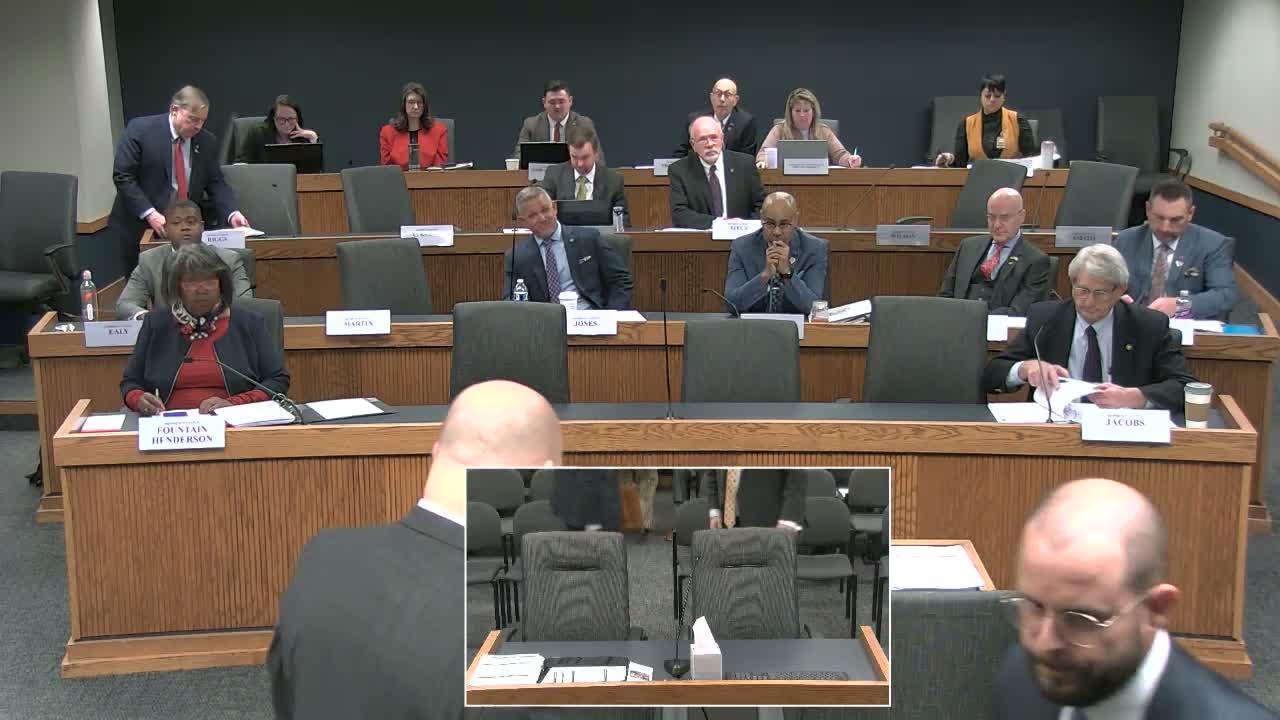
Summary
Rep. Chris Brown said HB2517 would require wholesalers to give sellers a signed written disclosure before entering a contract — failure to provide it would render the agreement void. Supporters framed it as consumer protection for seniors and distressed homeowners; witnesses debated a proposed 14-day waiting period and the attorney general's enforcement role.
Rep. Chris Brown returned to the committee to present House Bill 2517, a consumer-protection measure intended to increase transparency in real-estate wholesaling. Brown told the committee the practice of wholesaling — placing a home under contract and then assigning that contract to another buyer for a profit — can be legitimate but has attracted "bad actors" who take advantage of sellers who may be elderly, heirs or distressed homeowners.
"House Bill 2517 would require wholesalers to provide a simple written disclosure before entering into a contract with the seller," Brown said. The disclosure must state the individual is acting as a wholesaler, does not represent the seller, may assign the contract to another buyer, and encourage the seller to seek legal counsel. The bill further provides that a wholesaler agreement is void and unenforceable if the required disclosure is not signed and dated by both parties and that any earnest money placed in escrow by the wholesaler would be paid to the seller in that event.
Witnesses from the real-estate and rehab community broadly supported the measure while urging careful drafting. Jason Zamkes of the Missouri Association of Realtors told the committee the bill was modeled on efforts in Ohio and Oklahoma and noted a senate committee amendment that would require a 14-calendar-day delivery and execution window for the disclosure and that changed an enforcement mandate from "shall" to "may," giving the attorney general prosecutorial discretion. "With that change, it's my understanding that that takes the fiscal note to a 0," Zamkes said, explaining the amendment reduced budgetary exposure.
Chris Bass, representing the National Association for Housing Revitalization and New Western, supported the disclosure but cautioned against overregulation that could reduce the flow of rehab-driven affordable housing. Bass cited market figures to show the scale of vacancy and rehab activity in Missouri: "There are 300,000 vacant homes. That's an 11% vacancy rate," he said, and added that rehabbers bring many properties back to market.
Local operators described harm they attribute to unlicensed or deceptive wholesalers: Mark Delator of Best Offer KC said some wholesalers put properties under contract with no earnest money and insufficient capital and then walk away, leaving sellers months worse off. Delator urged the committee to view HB2517 as a floor and consider licensure or other measures later.
Committee members debated tradeoffs. Some members supported the 14-day window and the change to prosecutorial discretion as meaningful safeguards; others warned a 14-day mandatory wait could harm owners facing imminent tax sales or foreclosure. Several witnesses said many reputable buyers and platforms already use upfront disclosures and that the bill would level the playing field by penalizing deceptive actors.
The committee took testimony from a range of stakeholders and did not hold a vote during the hearing. Sponsors and witnesses said they were open to a committee substitute to refine timing and enforcement language.