Kansas City Public Schools urge caution as committee weighs ending 11(g) Hancock protection; lawmakers press parity
Loading...
Summary
KCPS officials told the committee they support eventual Hancock parity but asked lawmakers to let the district put an operating levy to local voters (April 2027) before removing Article 10, Section 11(g) protections. State and taxpayer advocates urged ending special exemptions and applying Hancock broadly; committee discussed timing and fiscal mechanics.
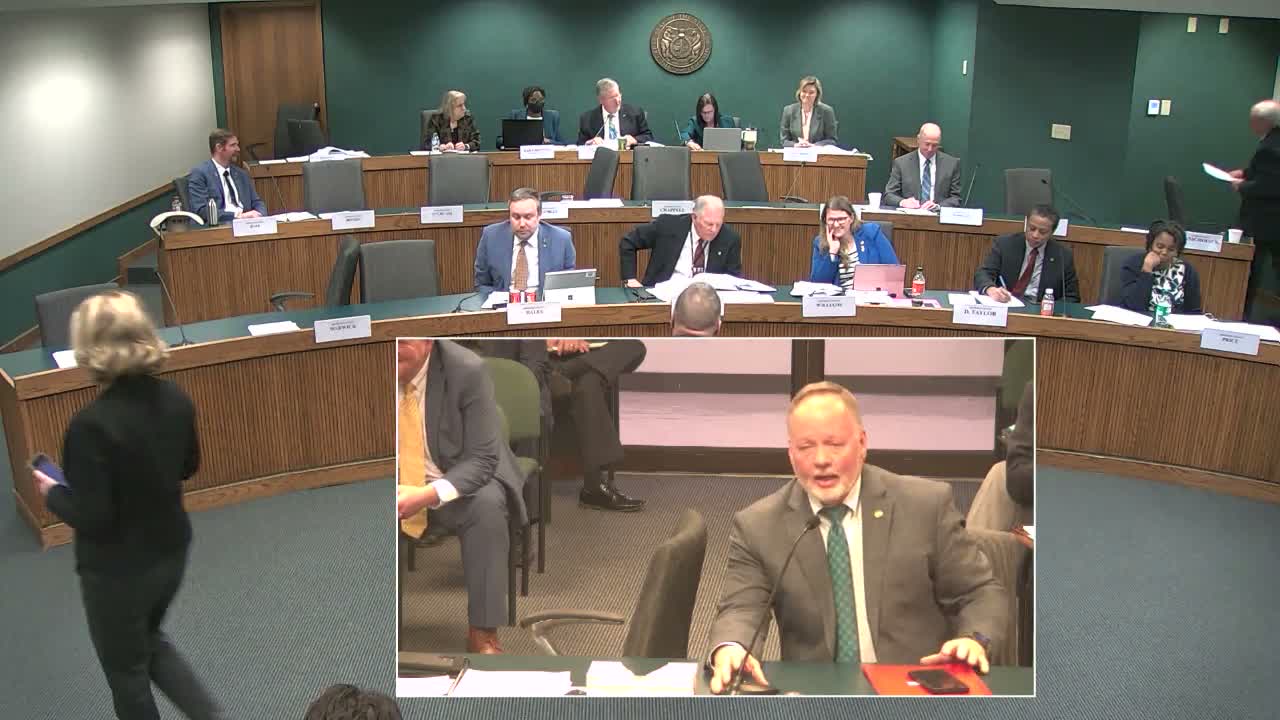
Representatives Jeff Coleman and Tim Taylor presented House Joint Resolutions 148 and 111, which would bring the Kansas City Public Schools (KCPS) under the Hancock amendment (Article 10) rollback rules and remove the district’s special 11(g) designation.
KCPS Superintendent Jennifer Collier testified that KCPS supports the objective of being under Hancock but strongly objected to language in the bills that would end 11(g) before KCPS has an opportunity to secure a local, voter‑approved operating levy. Collier said the district plans a no‑tax‑increase operating‑levy vote in April 2027 at the same rate the district currently levies (4.9599) and asked the legislature to sequence any statutory or constitutional change so that KCPS can obtain local voter approval first.
KCPS legal counsel Shauna Long explained technical timing problems: language that sets a new levy as of 01/01/2027 could be mathematically impossible because final assessment data arrive later in the year; language that ends 11(g) on 01/01/2028 would expose the district to Article 10 default calculations (a 2.244 levy in the committee’s reading) that could cut local revenues by about 48% if a local voter levy has not passed. KCPS and charter schools warned that such a revenue drop would seriously damage operations and charter funding.
Proponents and other witnesses (including the State Tax Commission representative and the state public advocate) argued Hancock parity promotes fairness across districts and limits untethered levy windfalls; some argued bringing new‑construction and debt service under Hancock would broaden the tax base and put downward pressure on tax rates statewide.
Committee members asked technical questions about timing, whether a voter‑approved local levy could be coupled with statutory language assuring Hancock rollbacks would apply thereafter, and whether a constitutional amendment might be necessary. KCPS offered to include in its local ballot language an explicit commitment to be subject to Hancock rollbacks if local voters approve the operating levy — a potential compromise discussed in committee.
The committee heard additional testimony on new construction and debt‑service treatment under Hancock from school administrators and fiscal advocates, and adjourned after an extended hearing.