
Committee hears testimony supporting bill to clarify Missouri water law for farms
Get AI-powered insights, summaries, and transcripts
Subscribe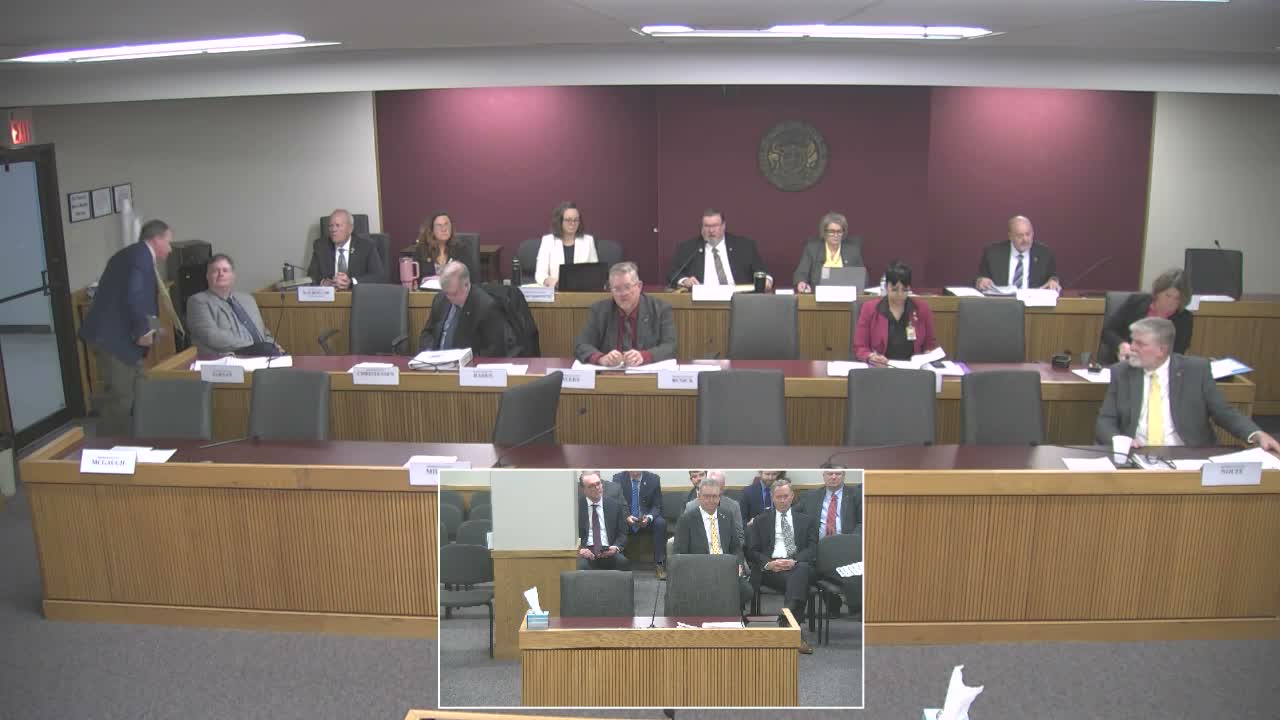
Summary
Lawmakers and farm groups told the Special Committee on Real Issues that House Bill 3076 would remove ambiguous language—specifically the phrase 'water contaminant'—that could be read to subject routine farming activities to Missouri DNR permitting. Proponents said the change protects voluntary conservation programs and aligns state law with current practice.
The Special Committee on Real Issues took public testimony on House Bill 3076, introduced by Representative Doyle Justice, which would remove the phrase "water contaminant" from Missouri water law language that proponents say could be read to require permits for routine agricultural activities.
Representative Doyle Justice opened the hearing, saying the bill "removes the words... water contaminant" from statute language that "could be read to pull common farming practices into ... a permitting process of the Missouri clean water Commission," and that the change "aligns the statute with established policy and helps reduce unnecessary regulatory litigations risk for both DNR and farmers." He framed the measure as "largely clean up language" that provides clarity so routine agricultural activities are "not subject to unnecessary permitting."
Multiple agricultural groups and legal counsel testified in favor. Derek Steen, director of public policy for the Missouri Corn Growers Association, outlined examples of nonpoint activities such as field terraces, tile drainage, fertilizer application, livestock grazing and farm ponds, and said "This bill will not impact these operations nor change their permitting obligations as they are already classified as point sources." He argued the statute's current wording creates a conflict with long-held regulatory exemptions for nonpoint sources and said removing the term would preserve farmers' eligibility for voluntary, cost-shared conservation programs.
Robert Brundage, general counsel for the Missouri Agribusiness Association, told the committee he has read the relevant definition sections for decades and that Missouri DNR "does not have any water contaminant source permits" in his recollection. Brundage said the bill would have a fiscal note of zero because it would not change DNR's current permitting practice and would comport with the federal Clean Water Act's focus on point sources.
Other supporters included the Missouri Farm Bureau, Missouri Soybean Association, Missouri Dairy and the Missouri Wine and Grape Board; witnesses described the legislation as a technical statutory cleanup that would reduce future uncertainty for farmers and landowners.
Committee members asked clarifying questions. Vice Chair Cabello and Ranking Member Plank pressed proponents to explain if there had been Missouri cases requiring permits for routine farm runoff; proponents said they were not aware of such Missouri cases but noted similar issues have arisen elsewhere. Representative Hayden offered a colloquial example, saying "If a deer craps in the woods, that would be a water contaminant," to underscore the proponents' point that incidental, nonpoint runoff should not trigger permitting. Representative Rush asked whether the bill would exempt discharges that could harm public drinking water; witnesses repeatedly distinguished the bill's focus on nonpoint, nonindustrial runoff from point sources such as wastewater treatment plants and industrial facilities, which remain subject to permitting.
No witnesses registered opposition; the chair closed the hearing and adjourned the committee.
The committee record shows proponents seeking statutory clarity so that common agricultural practices remain eligible for voluntary conservation programs and are not unintentionally swept into permitting requirements. The transcript does not record any formal amendments or committee votes on HB 3076 during the hearing.