
Physician assistant compact draws mixed testimony over portability and scope concerns
Get AI-powered insights, summaries, and transcripts
Subscribe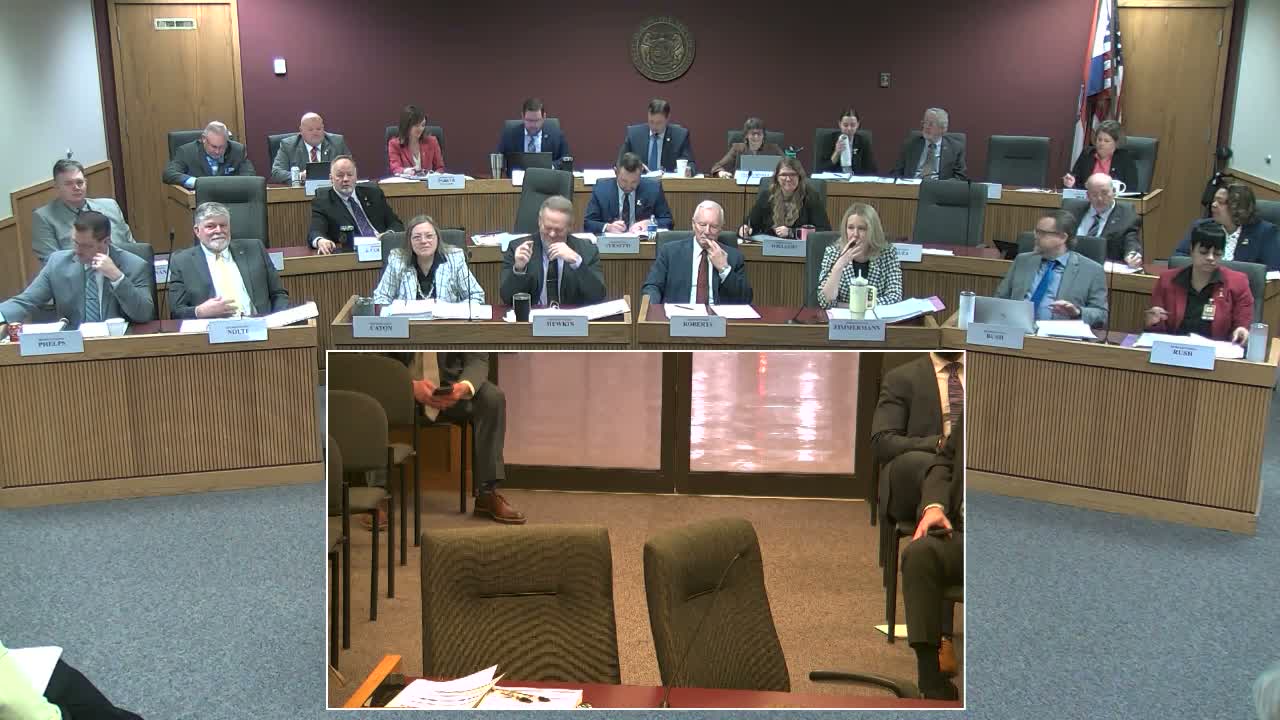
Summary
Representative Ben Keithley presented a PA compact (House Bill 3129) to allow reciprocal practice among compact states; supporters said it increases access and aids rural health funding, while the Missouri State Medical Association warned the compact could create 'scope‑adjacent' conflicts and allow commission rules to supersede state law.
Representative Ben Keithley introduced House Bill 3129, a physician assistant (PA) compact intended to allow portability of practice and reciprocal licensing among participating states. Keithley said the compact does not expand scope of practice but eases access for PAs, including remote-state privileges and telehealth, and noted roughly 20 states already participate.
Andrea Applegate, a practicing PA and educator, testified in support, saying the compact helps PAs who work in border regions and rural settings and could keep practitioners in Missouri rather than having them cross into other states.
Jacob Scott of the Missouri State Medical Association testified in opposition, raising concerns that the compact contains "scope-adjacent" language, inconsistent terminology (using "PA" rather than "physician assistant" in some places), and that rules by the compact commission could potentially supersede state law; he warned the commission's makeup could be heavily weighted toward PAs and that enforcement could be complicated.
Wes Sutton of the Missouri Division of Professional Registration testified in support, called the compact part of rural health transformation and linked adoption to maintaining roughly $216 million per year in rural health transformation funding over five years, saying compact language is standard and remote-state privileges still require compliance with the receiving state's scope laws. Sam Panatteri (United We) also voiced support focused on reducing barriers to workforce participation.
The committee heard both support and opposition and then adjourned; no committee vote is recorded in the transcript.