
Missouri committee hears bill to cap local building-permit review times; municipalities warn of liability and staffing gaps
Get AI-powered insights, summaries, and transcripts
Subscribe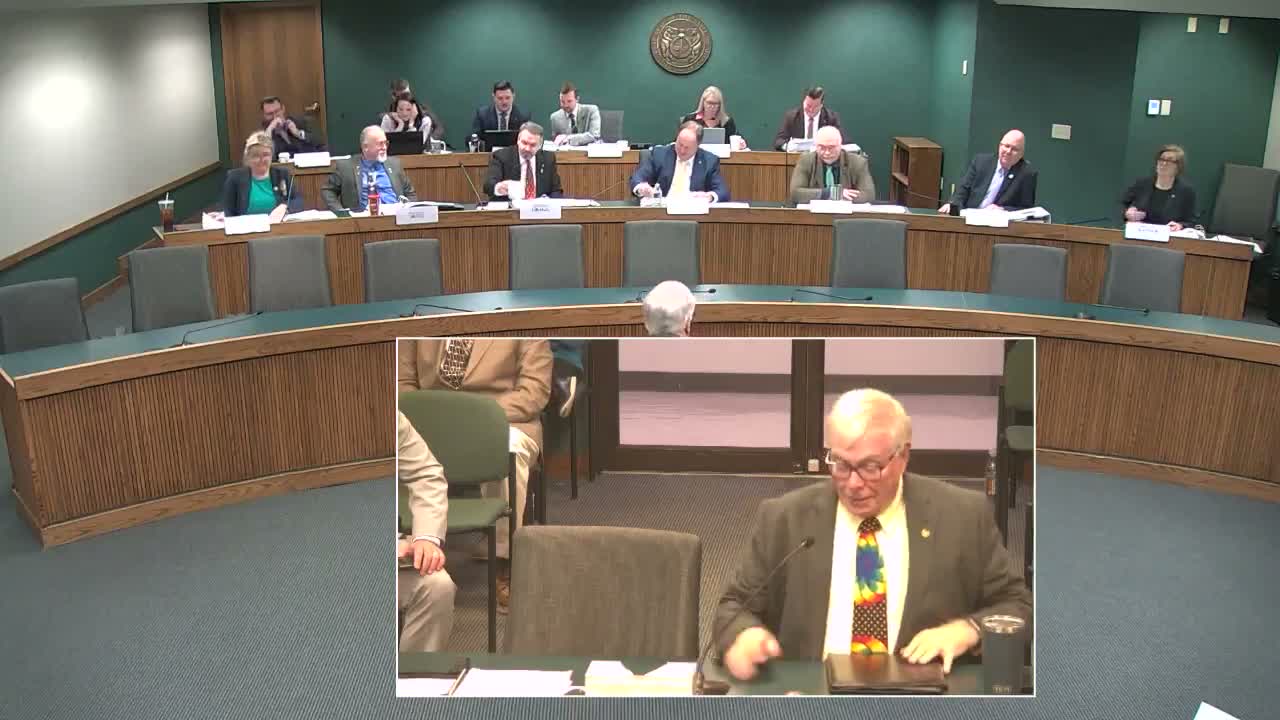
Summary
Supporters say House Bill 1791 would reduce construction costs by capping review times and providing fee-reduction/auto‑approval incentives; municipal officials warn one-size-fits-all deadlines and default approvals could create liability exposure and strain understaffed local departments.
Representative Jim Murphy introduced House Bill 1791 to set maximum timelines for political subdivisions to review building-permit applications, arguing that long, unpredictable reviews raise costs for contractors and slow housing and infrastructure projects.
Murphy told the committee a routine example: he "applied for the permit in November" for a whole‑house generator and "Saint Louis County issued the permit in March," a four‑month delay he said could have been handled much faster. He framed the bill as a way to add predictability — with categories of projects carrying different review windows (sponsor testimony cited examples such as roughly 12 days for simple work and up to 60 days for more complex projects) — and included administrative incentives such as progressive fee reductions and eventual automatic approval when a political subdivision fails to act within the statutory period.
Supporters from the construction industry, represented by Marco Zolotar Rodas of ABC Heart of America, told the committee that predictable timelines protect contractors’ cash flow and reduce overhead. Zolotar Rodas said the bill preserves inspections and safety checks while addressing the operational uncertainty that forces crews to stand down and increases project carrying costs.
Municipal officials who opposed the bill warned of practical problems. Richard Sheets of the Missouri Municipal League said cities vary widely in staffing and capacity and questioned whether uniform deadlines would be workable statewide; he also raised liability concerns if a permit were deemed approved by default, telling the committee, "If this permit is approved and something happens in the building and someone is injured, I believe the city would have a real liability." Pat Kelly, representing Metro St. Louis municipalities, urged caution and said safety must remain paramount: "safety is the most important thing," he told the committee when asked about disaster and structural‑integrity risks.
Committee members pressed the sponsor on details: Rep. Kimball asked whether missed deadlines produce automatic approvals (the sponsor confirmed that the bill provides for automatic approval in some circumstances), and others sought clarification on how the "clock" resets when applicants supply additional information. Some members urged technical fixes — for example, one member asked that reviewers be required to cite the specific ordinance or code section that justifies a request for more information; the sponsor indicated willingness to draft amendment language.
The hearing included a range of proposals and technical concerns rather than a final vote; committee members signaled interest in working with municipal representatives to adjust timelines and definitions to account for local capacity and emergencies. The committee did not record any formal vote on HB 1791 during this session.