Missouri hearing on solar siting and tax bills pits county leaders and neighbors against developers
Loading...
Summary
Lawmakers heard hours of testimony on House Bills 2402 and 2816, which would set local assessment rules, impose a $2,500-per‑MW baseline, allow counties to cap cropland conversion and create a 500‑foot setback; landowners, county commissioners and farmer groups urged higher taxes, stricter setbacks and decommissioning provisions, while developers and utilities asked for uniform rules and predictability.
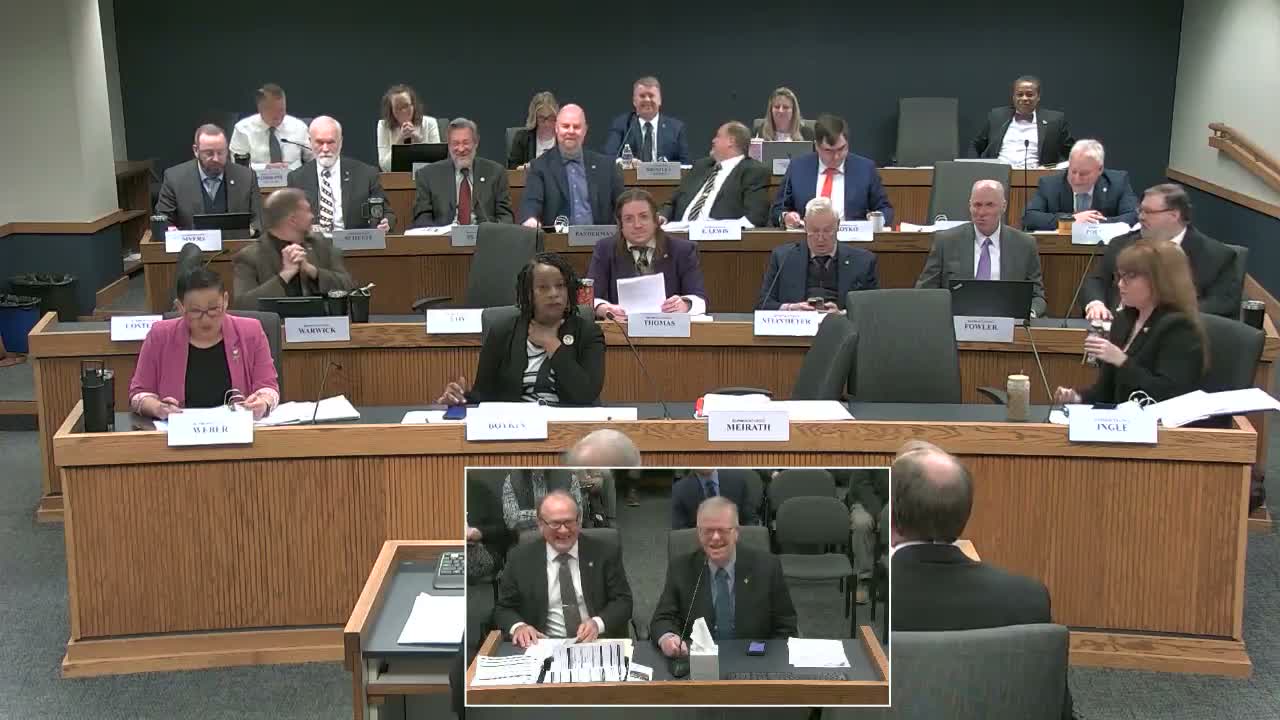
Representative Kent Hayden opened the hearing on House Bill 2402 (and companion House Bill 2816) by describing a package of changes the sponsors say will bring local control and tax clarity to utility‑scale solar development.
"What my bill actually does is several things," Hayden told the committee: it would make the projects locally assessed so tax revenue stays in counties, set a valuation of $2,500 per megawatt with a 3.5% annual escalator, reclassify panel-covered land as commercial rather than agricultural for assessment purposes, and impose a 500‑foot setback from houses, schools and churches. The bill also allows counties to opt in to a limit so no more than 4% of tillable farmland in a county could be converted to utility‑scale solar under the statutory cap.
Supporters representing rural electric cooperatives, county governments and farm organizations asked the committee to impose guardrails. Audrain County Associate Commissioner Leslie Meyer said some developers have been cooperative but others are not; Meyer and others urged higher per‑megawatt payments and a more protective cap. "We are actually advocating for…4 to 6,000 per megawatt," Meyer said, and asked for protections such as decommissioning bonding and American-made procurement where federal dollars are involved.
Opponents and affected neighbors delivered emotional testimony. Debbie Stinson, who said her home is now surrounded on all sides by panels, described glare, dust from construction traffic near her driveway, loud daytime noise that upset a special‑needs daughter, and security patrols that left her fearful to leave doors unlocked. "We no longer feel safe in our home," Stinson said, asking the committee to strengthen setbacks and enforcement beyond what the sponsors propose.
County assessors and other local officials warned about fiscal impacts and the role of Chapter 100 agreements that can supersede local rules. Commissioners and landowner groups argued the bill’s $2,500-per‑MW baseline is too low to compensate counties for lost agricultural economic activity and public services; multiple witnesses proposed figures between $4,000 and $6,000 per MW and recommended a lower cap (2%) on cropland conversion.
Developers, trade groups and utilities urged predictable, uniform rules rather than a patchwork of local ordinances. Azimuth Renewables and trade groups described the need for clarity so contracts and construction schedules can proceed; Ameren Missouri told the committee it found most bill provisions acceptable but asked for care on how assessors treat real property versus personal property inside a project fence because assessment disputes can take years to resolve and ultimately affect customers.
Members pressed topics that recurred throughout testimony: how to treat projects that already have Chapter 100 deals; whether bills should be statewide or opt‑in for counties; the adequacy of the 500‑foot setback versus requests for 1,000–2,500 feet depending on safety and view‑shed concerns; and the need for decommissioning bonds or other financial assurance to ensure cleanup when projects end.
Witnesses repeatedly urged speed. Several speakers said federal incentives and guidance embedded in recent federal tax law could spur a wave of construction that developers must start before certain 2026 deadlines; advocates asked the committee to consider emergency language or an earlier effective date so new rules apply before a projected rush of projects.
The committee did not vote on either bill; the hearing concluded after extensive public comment and the chair invited stakeholders to submit written materials and meet with staff to refine language.