Judiciary committee adopts substitute combining HB 2637 and HB 3155; advances sentencing transparency changes
Loading...
Summary
The House Judiciary Committee adopted a House Committee substitute combining HB 2637 and HB 3155 and voted to report the substitute 'do pass' by a roll call of 8 ayes and 3 noes; testimony reflected a split between calls for transparency and concerns about increased prison time for lower‑level offenses.
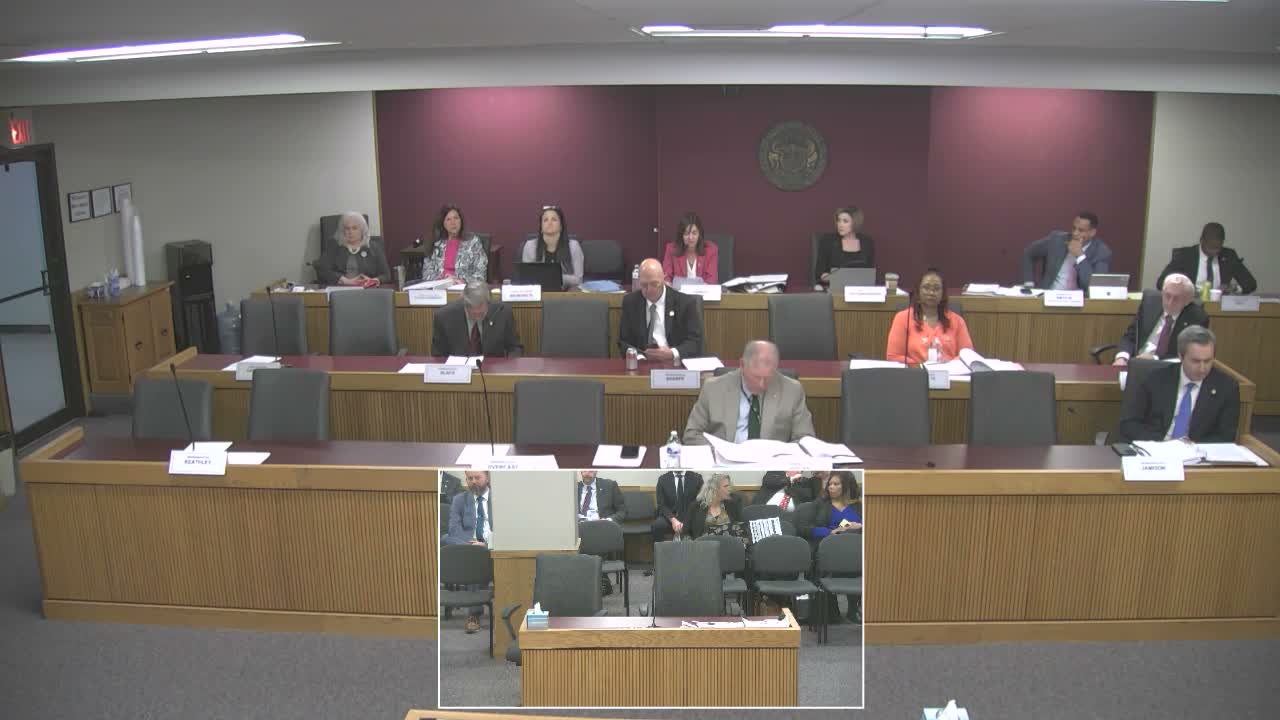
In executive session the House Judiciary Committee adopted and voted to report a House Committee substitute that combines provisions from House Bills 2637 and 3155. Representative Black, who sponsored the amendment, told the committee the substitute merges the two bills, converts some previously described percentages or ranges into flat parole‑eligibility percentages and clarifies treatment of local jail credit and sentencing terminology.
The public hearing record on HB 3155 (the sentencing measure) showed sharply divided views. Trevor Foley, director of the Missouri Department of Corrections, registered support. Sheena Rogers, executive director of Show Me Justice for All and a person with lived experience in the corrections system, testified in opposition and warned that increasing mandatory service percentages and eliminating conditional release or review would lengthen prison terms, raise correctional costs and worsen outcomes inside facilities. “When hope is taken away, behavior worsens,” Rogers said, arguing rehabilitation and programming produce better public‑safety results.
Locke Thompson of the Missouri Prosecutors Association supported the bills, saying the substitute creates sentencing certainty for victims and judges and that some perceived increases in expected time served could be offset by clearer judicial discretion and negotiated plea practices. Mallory Rush of Empower Missouri and other advocates emphasized concerns about nonviolent and drug‑related offenses, urging carve‑outs or safeguards to avoid unnecessarily lengthening time for people who need treatment.
Representative Black summarized principal changes during executive session: combining bill language, converting a range into a flat percentage for at least one sentencing class (for example, a prior 60–80% range was described as made into a 70% flat rate in committee explanation), clarifying how local incarcerated time counts toward terms, and changing the bill title to reflect "terms of sentencing" rather than only imprisonment. The committee then adopted the House Committee substitute and voted to report the combined measure 'do pass.' The transcript record shows a roll call with 8 ayes and 3 noes and the chair announced the committee's action.
Opponents repeatedly asked whether the substitute will increase time served for lower‑level felonies (class D and E) and for people with prior short incarcerations used for treatment. Supporters said the substitute does not raise statutory mandatory minimums across the board and argued certainty may reduce the need for prosecutors to seek longer individual sentences in plea bargaining. The committee did not resolve all policy concerns during the session; the adopted substitute will advance to the next legislative stage.