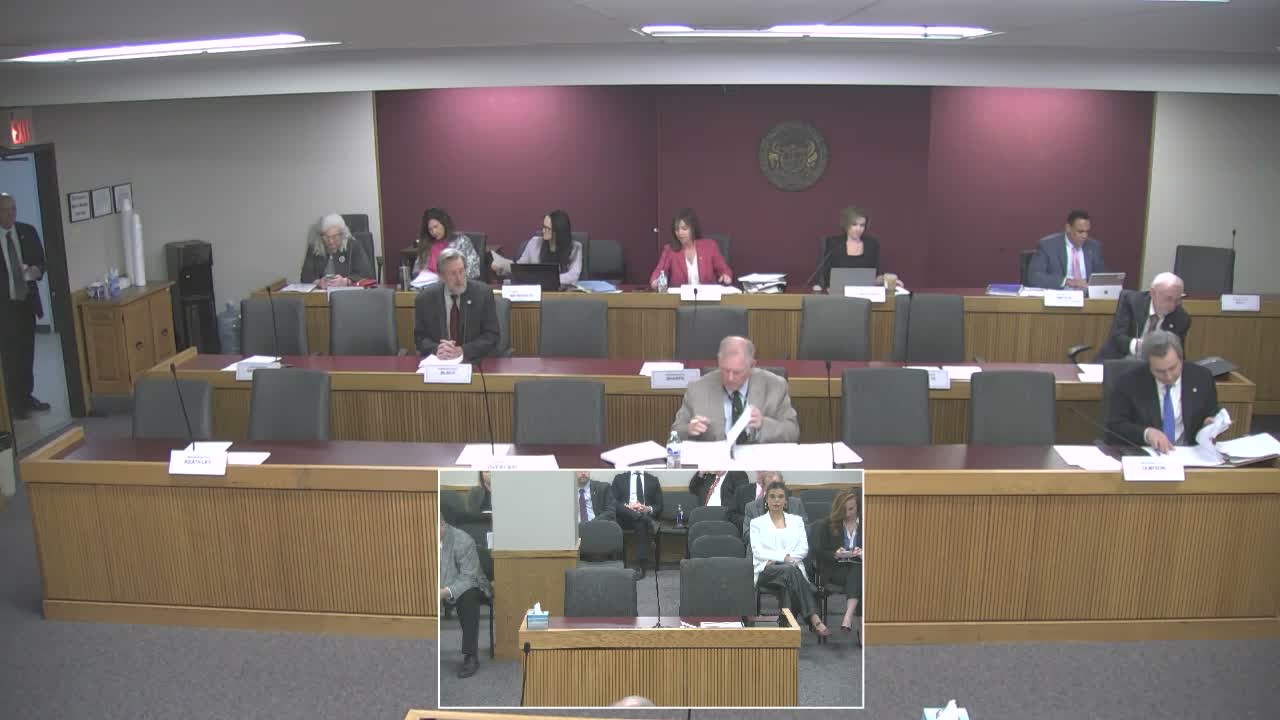
Committee hears competing views on bill to tighten Missouri expert‑witness rules
Loading...
Summary
Supporters told the House Judiciary Committee HB 2,255 would update Missouri law to mirror Federal Rule of Evidence 702 and the Daubert framework; opponents said it risks added litigation costs and could limit juries' role in weighing expert testimony.
Representative Barry Hovis opened the public hearing on House Bill 2,255 by saying the proposal would align Missouri’s expert‑witness standard with federal practice and provide consistency for businesses that face expensive litigation. Proponents said the amendment simply clarifies judges’ gatekeeping duty, while opponents warned it would raise costs and curtail jury decision‑making.
Missouri trial lawyer Jennifer Artman, testifying for the Missouri Organization of Defense Lawyers, described three clarifying changes captured in HB 2,255: reaffirming that the trial court is the gatekeeper on expert admissibility, applying a preponderance‑of‑the‑evidence standard for admissibility, and making the court’s gatekeeping role ongoing during trial. “The court is always going to be the gatekeeper for expert witness testimony,” Artman said, adding that the proposed changes are neutral and intended to reduce inconsistent rulings by trial courts.
Hospital insurers and business groups also supported the bill. Dana Fries, president and CEO of Healthcare Services Group, told the committee that unreliable expert testimony can mislead juries and produce costly retrials. “Admission of unreliable expert opinion testimony can undermine Missouri civil justice and erode our trust and confidence in Missouri state courts,” Fries said, urging a clearer, consistent process for admissibility challenges.
Opponents — including a plaintiff‑side attorney who testified from Kansas City and a state public advocate — argued the statutory language would shift questions properly for juries to decide onto judges, drive earlier and more frequent pretrial challenges, and increase litigation costs for parties with fewer resources. “The jury is there to weigh the opinions of each expert … that is the job of the jury that’s being taken away with this language,” the plaintiff’s witness said. The public advocate warned the change could make courts less accessible to ordinary Missourians.
Witnesses debated whether the changes would actually increase pretrial litigation and expert fees. Proponents responded the standard they seek is low (a simple preponderance threshold) and is intended to be applied rarely; opponents countered that even occasional hearings require costly expert preparation and travel. Committee members pressed both sides on cost, frequency of challenges and whether the change would advantage plaintiffs or defendants; proponents emphasized the amendment applies to both sides.
The hearing record shows proponents cited the U.S. Supreme Court decision Daubert v. Merrell Dow Pharmaceuticals, Inc., and the 2023 amendments to Federal Rule of Evidence 702 as precedents and noted several states that have adopted similar clarifications. Opponents stressed impacts on access to justice for low‑income plaintiffs and on the timing of discovery in state practice.
The committee took testimony but did not record a final vote on HB 2,255 during this hearing. Several organizations said they would submit written or online testimony for the record after the session.