Get AI Briefings, Transcripts & Alerts on Local & National Government Meetings — Forever.
House committee adopts substitute encouraging cursive instruction, removes immediate fifth‑grade test
Summary
The House Elementary and Secondary Education Committee approved a substitute combining House Bill 2115 and House Bill 1876 that urges schools to teach cursive and removes an immediate fifth‑grade assessment; the substitute passed the committee roll call 13‑4 with 3 present.
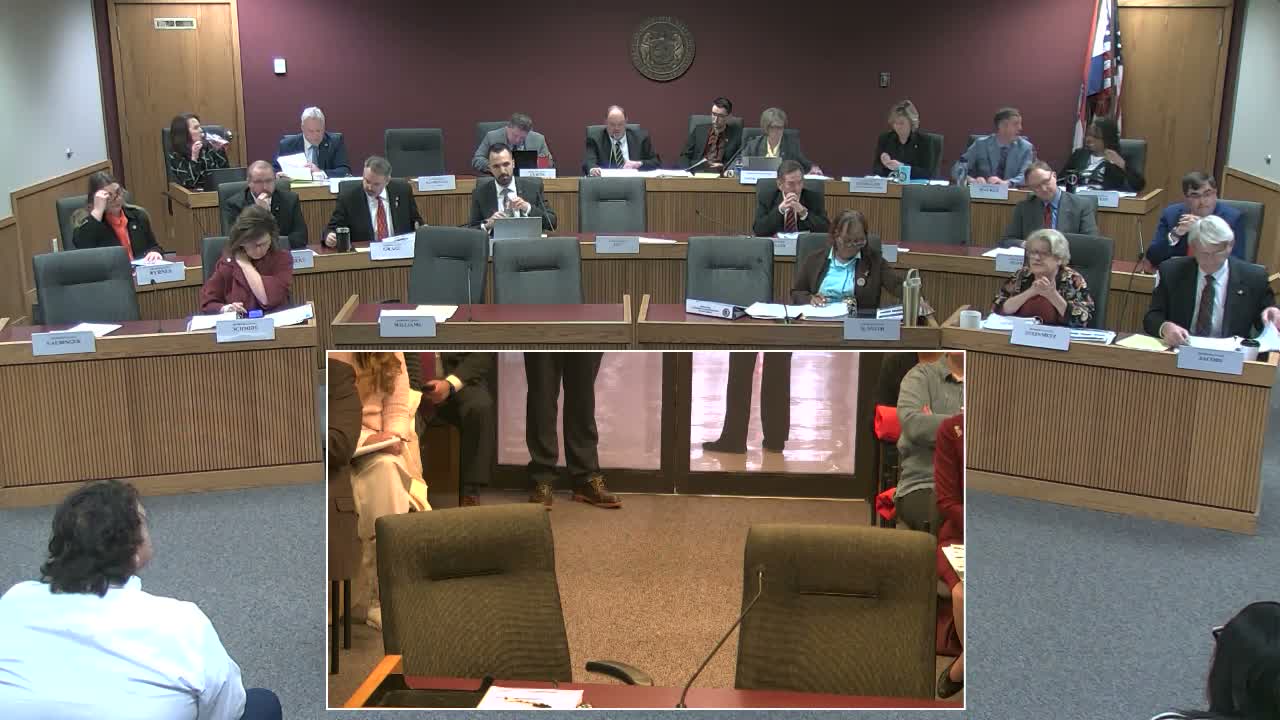
The House Committee on Elementary and Secondary Education on Monday adopted a committee substitute combining House Bill 2115 and House Bill 1876 that encourages schools to teach cursive writing but removes a previously proposed immediate assessment at grade five.
Chairman Lewis moved adoption of the substitute and said it “is basically just saying, we believe cursive writing needs to be taught,” while clarifying the change removes the immediate fifth‑grade test previously in the text. Representative Kelly confirmed during the hearing that the substitute “is not putting a mandate,” and that there would be no penalty provision if students did not pass a later assessment.
Representative Jacobs asked whether a fiscal note had been attached, raising concerns that many elementary teachers “wouldn’t know how to teach cursive” and that statewide professional development could impose significant costs on districts. The committee’s sponsor responded that, without a mandatory test, implementation would largely be left to local schools and said some low‑ or no‑cost training resources are available.
Representative Steinhoff, while praising the bill handlers’ work, said she supported the idea but would not support the measure as written without assurances on timing and resources: “Unless we can do this with full intentionality and the resources and the training… it is going to add to the plate.” The sponsor said the substitute gives districts three years before any assessment and that “there is no penalty provision.”
The committee adopted the substitute by voice and then voted on the substitute as the committee recommendation; the roll‑call result announced by the secretary was 13 Aye, 4 No, and 3 Present. The chair said the committee will allow further amendment on the House floor if the bill advances.
What’s next: The substitute will be reported out of committee with a recommendation to pass and may receive additional amendments when considered by the full House.