House committee advances broad property-tax substitute after weeks of debate over ballot labels and turnout rules
Loading...
Summary
The Special Committee on Property Tax Reform voted its House Committee substitute out of committee after adopting clerk-requested ballot-language cleanups and removing a constitutional pension reference; members extensively debated a proposed 25% registered-voter assent rule and whether key changes needed more public vetting.
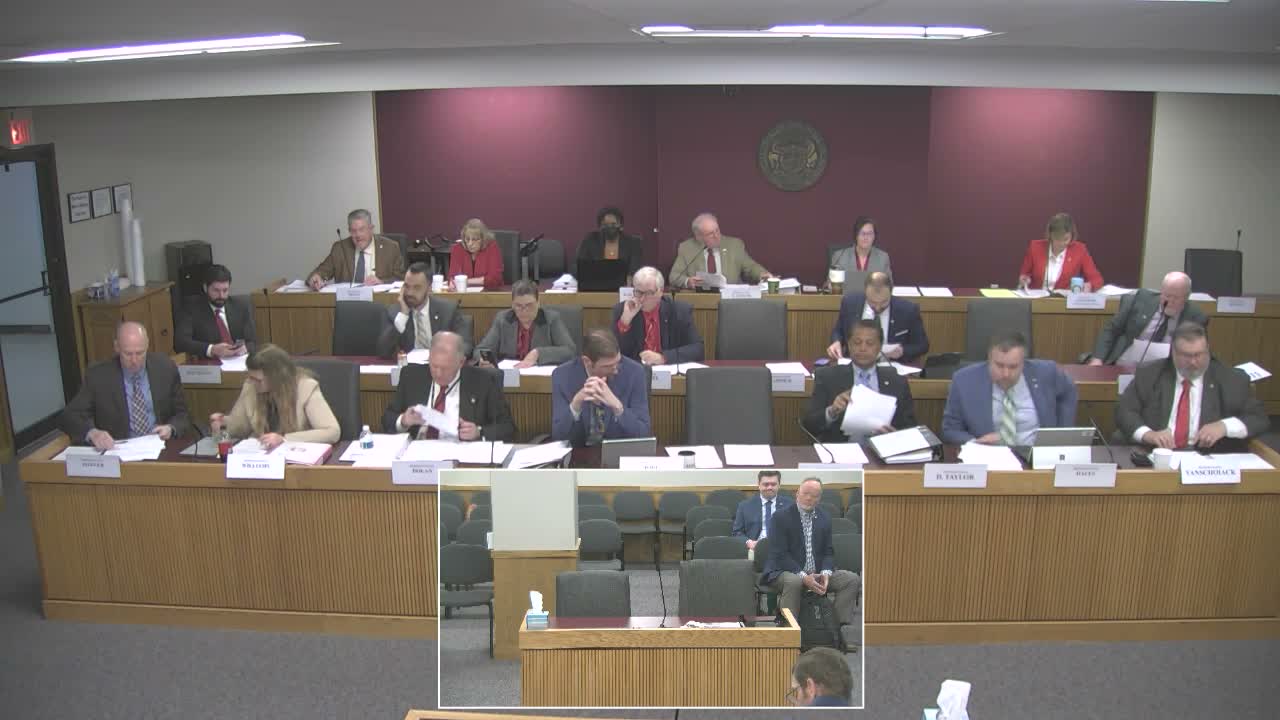
Chair Taylor’s Special Committee on Property Tax Reform voted a consolidated House Committee substitute out of committee on Tuesday after several hours of debate over ballot-labeling rules and whether to require a 25% registered‑voter assent for off‑cycle tax measures.
The substitute combines provisions from multiple property‑tax bills and, as brought to the committee, removed references to nursing homes and apartment buildings and excised language concerning the blind pension fund. Chair Taylor said the changes were intended to streamline the package; he moved the substitute and directed staff to fold in two clerk‑requested clarifications before the committee vote.
Why it matters: The substitute retools how some local tax measures are presented to voters and how local elections are scheduled. Members repeatedly said the changes could shift who votes on local tax questions and how readily taxing jurisdictions could place measures on ballots — changes with potential budgetary consequences for school districts and special taxing districts.
Representative Murphy, explaining a clerks’ requested amendment, said the change would standardize ballot titling so local clerks would not have to accept arbitrary or branded labels. “The language that was in there, the clerks had some problems with it… So that's what the amendment does,” Murphy said, describing the amendment as a practical fix to clerks’ operational concerns.
The committee debated whether alphabetic ballot labels should be limited to a single character and how sequencing should work. Representative Keithley warned that clerks do not now invent measure labels and that any new rule must avoid putting clerks between conflicting legal obligations: “The clerks don't actually choose the ballot names. They have to actually go with the name as it's submitted,” he said.
A separate, larger amendment considered including a requirement that an off‑cycle tax measure achieve affirmative assent from 25% of registered voters (rather than simply moving such measures to the November general election). Proponents said a turnout threshold could increase voter buy‑in for tax increases; opponents said the math and incentives were problematic. Representative Chappell illustrated the concern: in some scenarios he said the 25% assent rule could necessitate roughly 50% turnout to meet the threshold, a result he called a potential distortion of democratic choice.
Members also questioned whether the committee had given adequate public vetting to the 25% concept; Representative Taylor acknowledged the idea had been discussed previously but conceded the specific numeric threshold had not been the subject of a standalone public hearing. Facing the concerns, Chair Taylor instructed staff to draft an amendment to the amendment to strike the 25% provision while keeping the neutral ballot‑label language. He subsequently withdrew the 25% version and the committee resumed its work with the clarified substitute.
The committee also considered an amendment developed after a post‑hearing meeting with Kansas City Public Schools. Chair Taylor said the language was designed to bring Kansas City into the Hancock framework without reducing the district’s funds; he described the change as intended to make the district whole under the Hancock provisions.
Votes at a glance: The committee adopted the clerk‑requested ballot‑language amendment and the amendment removing blind‑pension references, rolled those changes into a new substitute and ultimately voted the House Committee substitute for the consolidated property‑tax bills due pass. The clerk recorded committee votes at key points: the substitute and amendments were adopted by voice or roll‑call votes during the session; on final roll call the committee reported a result of 13 yeas and 3 nays (with one member recorded present at an earlier tally). A separate House Committee substitute for HJR 148 and 111 (the Hancock‑related resolution) passed the committee 14–3.
Committee members said they intend to continue refining the package on the floor if needed. With committee work complete for the day, Chair Taylor adjourned the meeting.
The substitute and the collected amendments will now proceed according to the House calendar.