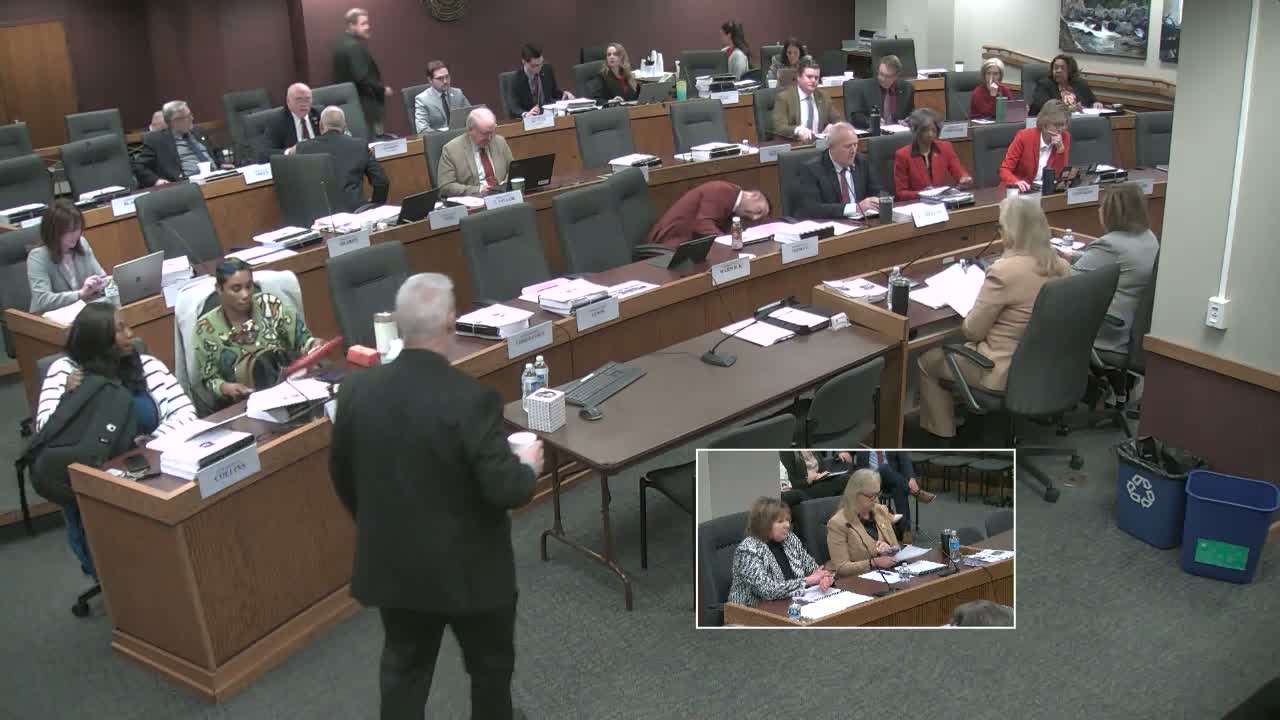
Attorney General Catherine Hannaway outlines FY2027 priorities, highlights insulin and VLT enforcement work
Loading...
Summary
Attorney General Catherine Hannaway told the Missouri House Budget Committee her office's four priorities—reducing violent crime, targeting unlicensed —vice' operations (VLTs, unlicensed cannabis and related businesses), protecting Missourians from fraud and building internal capacity—and described ongoing high-profile litigation including suits over insulin pricing and governance at a school board.
Attorney General Catherine Hannaway presented the Office of the Attorney General's fiscal 2027 budget to the House Budget Committee and opened by laying out four priorities: reduce violent crime, pursue an organized "vice squad" to enforce laws against illegal video-lottery terminals (VLTs) and unlicensed sellers, protect Missourians from fraud, and strengthen the office's internal legal operations.
Hannaway said her office is coordinating closely with local prosecutors, the U.S. attorneys and federal law-enforcement partners on cross-border and multi-jurisdictional crimes. "We literally say, are you working on these cases? Great. I won't work on those. You got these," she told lawmakers, describing weekly communications with federal counterparts and the aim of maximizing resources.
On litigation, the attorney general described a multistate suit against pharmacy benefit managers and insulin manufacturers that seeks reduction of prices and restitution for people who cannot afford insulin. Hannaway told the committee the state's data show insulin costs in Missouri can be $400'$500 per dose and that some countries pay as little as $5; the case aims to bring price relief and recoveries for affected patients.
She also described an undercover consumer-protection sweep aimed at retail pricing irregularities that involved more than 5,000 purchases at 179 stores; the office's team found customers on average paid about $7 more at the register than displayed shelf prices. Hannaway said the Dollar General matter is headed to trial in July and that some settlement funds have been offered.
Hannaway announced the office has filed suit against a body called "Misha" over board governance practices it alleges discriminate in at-large board appointments; the filing was prompted, she said, by a report from a local superintendent and the state auditor. She emphasized the office generally acts on reported matters and welcomes additional notifications from legislators about other boards or programs that may raise similar issues.
Lawmakers questioned how the office would operationalize its enforcement priorities, particularly VLTs and unlicensed cannabis operations. Hannaway described investigations into operators' money flows, locations and machine counts as necessary groundwork before enforcement and said the feds had reached out to work jointly on related enforcement efforts.
The attorney general also updated members on Jackson County tax-assessment litigation, recent antitrust and criminal matters handled by the public-protection unit, and the office's work on sexual-assault kit (SAKI) testing and Medicaid fraud.
The committee recessed after a broad-budget preview; Hannaway then walked members through the budget book and specific decision items that would support the priorities she outlined.