
FDA researcher urges performance‑based evaluation and clear regulatory pathway for emerging anti‑biofilm technologies
Get AI-powered insights, summaries, and transcripts
Subscribe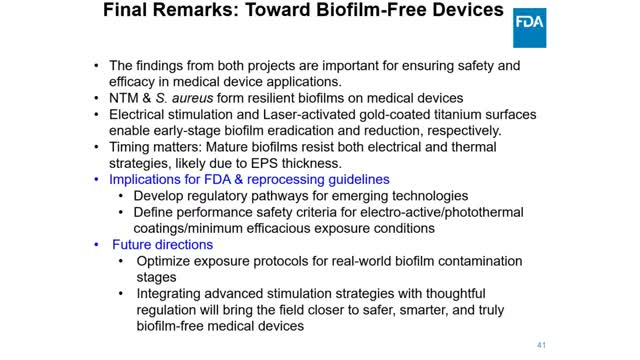
Summary
Summarizing two WEAC projects, Dr. Jelika Amarsingh said electrical stimulation and photothermal gold‑nanorod coatings show promise for reducing early biofilms but require performance standards, clinical validation, corrosion and tissue‑safety testing, and a regulatory pathway before clinical adoption.
At FDA Grand Rounds Dr. Jelika Amarsingh summarized findings from two WEAC projects and framed them in a regulatory‑science context. She emphasized the public‑health burden of device‑associated biofilm infections and called for a performance‑based evaluation framework and a clear regulatory pathway for emerging anti‑biofilm technologies.
Amarsingh noted that HAIs remain a major concern and cited estimates used in the presentation — approximately 100,000 U.S. deaths annually and a device‑linked share of HAIs exceeding 60% — to underline the stakes. She said the projects show measurable laboratory reductions in early biofilms but also make clear that mature biofilms with developed EPS are substantially harder to eliminate.
Her regulatory recommendations were pragmatic: develop standardized performance metrics for anti‑biofilm technologies, require realistic contamination and reprocessing challenge models in testing, assess potential corrosion or materials‑compatibility issues (especially for electrochemical approaches), and evaluate tissue‑safety when heating or nanomaterials are used. She also highlighted collaboration with other FDA centers and external partners and acknowledged Office of the Chief Scientist grant support.
Amarsingh concluded that the research expands the evidence base for non‑antibiotic, surface‑targeted strategies and that translating bench results into clinical or reprocessing practice will require additional validation and cross‑agency regulatory planning.