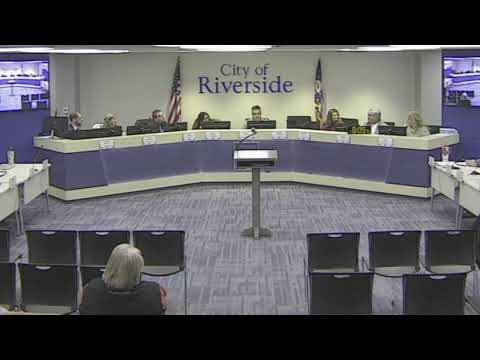
Riverside council adopts phased stormwater fee; first-year rate cut to $6 per ERU
Loading...
Summary
On Feb. 2, 2026 the Riverside City Council approved a six-year, phased plan (Option C) for the stormwater utility fee that cuts the first-year residential equivalent unit (ERU) from $12 to $6 and phases increases over time; staff will implement credits and return with operational details.
Riverside City Council on Feb. 2 approved a phased approach to the city's stormwater utility rate, reducing the proposed first-year ERU rate from $12 to $6 and phasing in increases under a six-year hybrid schedule (Option C).
City Manager Josh told council the reduced first-year fee would support ongoing maintenance while leaving roughly $100,000 available for capital in year one. "If you cut the fee in half from $12 down to 6, like we talked about last meeting, that's enough to fund the ongoing maintenance program," Josh said during the presentation. Staff showed models suggesting the fund could reach a $1,000,000 threshold (a level the market typically prefers before issuing debt) around 2028 or 2029 depending on the option selected.
The presentation laid out three staff options: Option A (six-year annual increases), Option B (12-year, biannual increases) and Option C (a six-year phase-in with rate adjustments every other year). Council debated nonresidential impacts, potential credits for mitigation measures (rain barrels, infiltration, turf replacements) and protections for low-income and senior households. Staff confirmed available credit programs for residential customers and said a nonresidential credit program could be developed and applied retroactively if council endorsed it later in the year.
After questions from council about program administration and whether credits could be applied retroactively, the councilmember who moved (speaker 6) and a second (speaker 5) brought Option C to a vote. The motion carried on a voice vote with one recorded nay; the manager will place the adopted phase-in into the master fee schedule, populate utility-billing systems accordingly, and return as needed with implementation updates.
What happens next: staff will insert the approved rate schedule into the omnibus fee schedule, work with billing systems to generate the first bills (staff indicated bills will go out on April 1 unless changed), and develop a nonresidential credit approach for council review. Council directed staff to examine outreach and hardship-handling during the budget cycle and to present actual collection numbers after the first year to determine if rate adjustments are needed going forward.
Ending: The vote ends a months-long debate on how to balance maintenance needs and long-term capital planning; staff said the phase-in brings the city closer to either saving for projects or qualifying for debt if council chooses to issue bonds later.