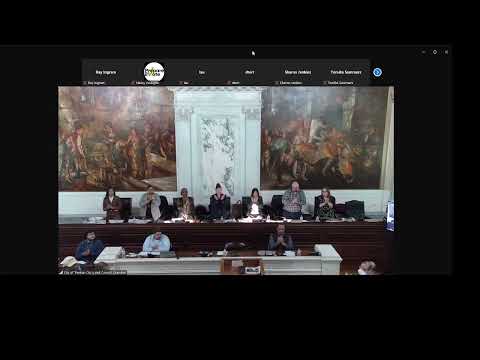
Council approves revised water-rate ordinance after attorney warns $3,500 penalty may exceed state limit
Loading...
Summary
Council adopted Ordinance 26-001 updating water rates and charges and added an amendment (a savings clause and revised multiunit thresholds) after outside counsel said the maximum penalty for an ordinance violation is generally $2,000 unless statute allows otherwise.
The City Council voted to adopt Ordinance 26-001, which revises water rates and charges for the City of Trenton and several neighboring townships to provide funds for capital and operational improvements tied to Department of Environmental Protection orders. The ordinance passed after council approved amendments that added a savings clause and changed a multiunit definition.
During the second-reading debate council members asked whether specific penalty amounts in the schedule — including a proposed maximum penalty of $3,500 for illegal connections and bypassing water meters — are legally permissible under New Jersey law. Outside counsel told the council: "the basic law is that the maximum penalty we are allowed to impose for an ordinance violation is $2,000" unless a specific statute authorizes a higher amount. Counsel recommended adding a savings clause so that if any penalty provision is struck down, the remainder of the ordinance would remain in force.
The council adopted the savings-clause amendment and a clarification changing a multiunit property threshold to "30 units and above." After those edits the ordinance was approved on roll call.
City water staff and the administration said the ordinance will support capital projects and compliance work required under DEP consent orders. Sean Sample, introduced as a director in the hearing, said staff would review statutory constraints and work with counsel when needed. The water-rate ordinance now moves forward with the amendments the council approved.