Commission grants GoldenEye Social’s entertainment permit despite strong opposition from Museum Park residents
Loading...
Summary
GoldenEye Social’s place-of-entertainment permit was approved with staff recommendations after neighbors across the street submitted a petition and dozens of comments warning that frequent amplified programming would be incompatible with a dense residential building.
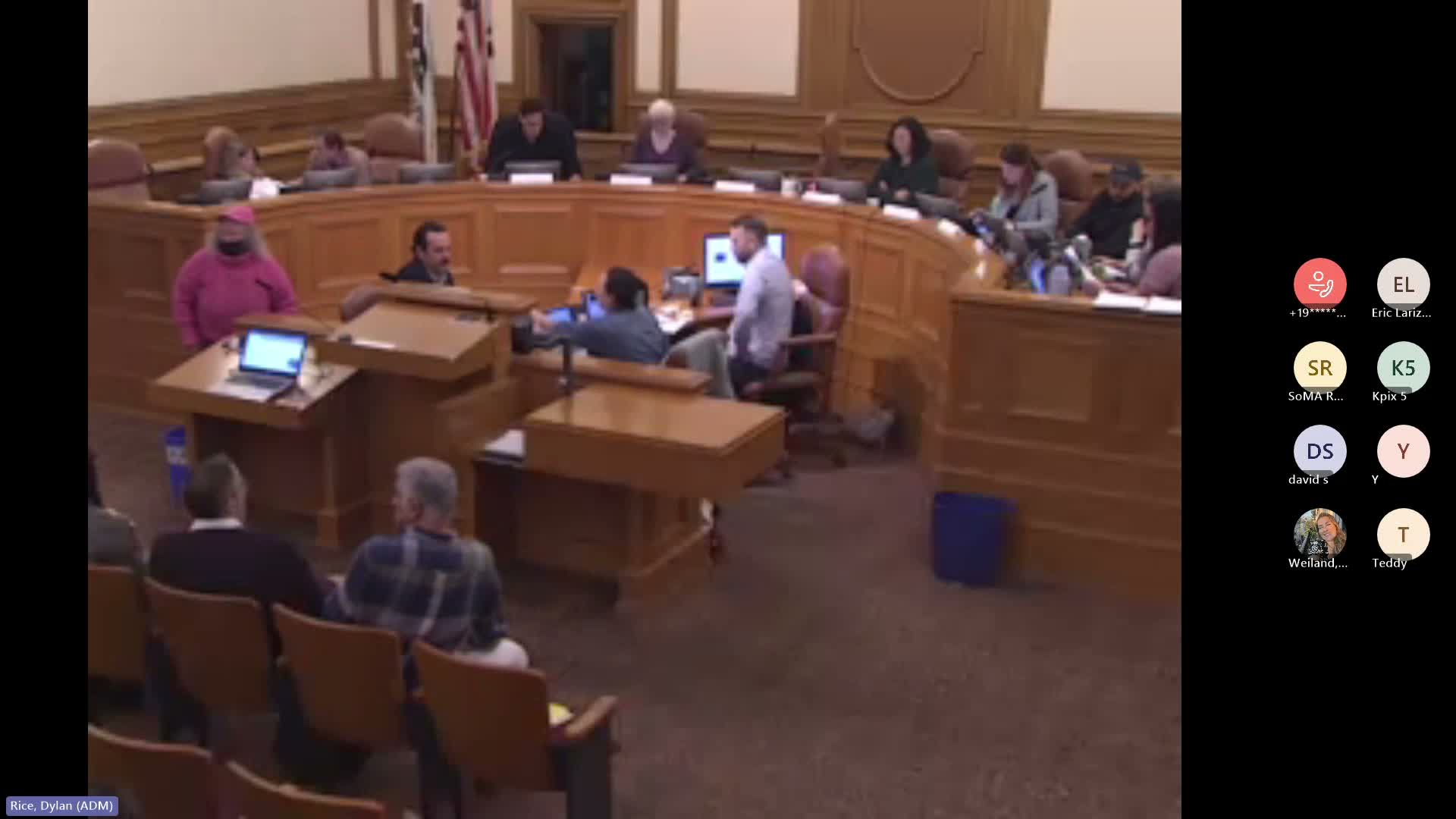
The San Francisco Entertainment Commission on Feb. 3 approved a place-of-entertainment permit for GoldenEye Social at 311 3rd Street after the applicant reduced the scope of the original request and offered mitigation measures; the decision followed intense opposition from residents of the adjacent Museum Park building.
Applicant Kingston (appearing as Kingston Vu/Wu in the record) said he scaled back the request after outreach, offered to conduct inside-home sound tests and emphasized the venue’s intended events are "occasional live entertainment" rather than nightclub operations. "We are not here to be a nuisance to our neighbors," he said.
Museum Park residents submitted petitions and more than 60 signatures opposing the permit, argued the block’s single-pane windows and lack of air conditioning make apartments particularly vulnerable to nighttime noise, and said existing venues have already produced late-night disturbances. Several residents urged denial and called the proposed cadence (live entertainment up to 12 nights per month under the applicant’s original request) effectively nightclub-scale.
Staff and commissioners emphasized that permit holders are subject to enforceable decibel limits, inspectors will test sensitive receptors, and violations carry escalating penalties. Commissioners who supported approval pointed to the applicant’s outreach, interior sound-mitigation promises and the commission’s ability — and history — of conditioning permits and enforcing limits.
The permit was approved with staff recommendations and conditions to track outreach, set internal and external sound limits, and require security and calendaring as appropriate.