
Entertainment commission approves expanded programming for Jones at 620 Jones with tighter outdoor hours and event limits
Get AI-powered insights, summaries, and transcripts
Subscribe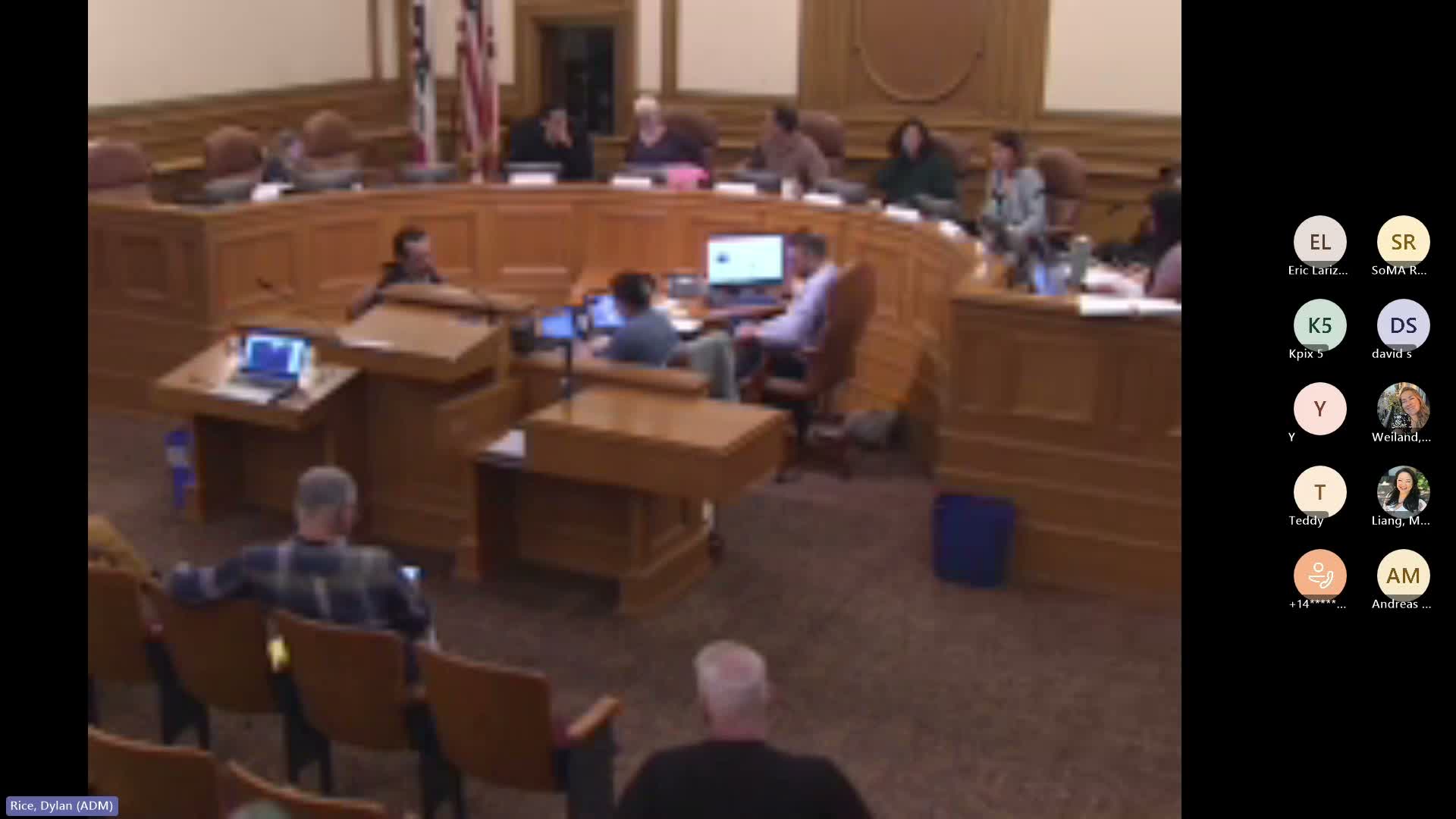
Summary
After extensive resident testimony about low-frequency noise and sleep disruption, the San Francisco Entertainment Commission approved a modified permit allowing Jones to continue outdoor programming with new day/hour limits and a reduced number of higher-volume special events.
The San Francisco Entertainment Commission on Feb. 3 approved a revised place-of-entertainment permit for Jones, the longstanding Tenderloin restaurant at 620 Jones Street, after extended public comment about noise and health effects from the venue’s outdoor programming.
Owner Jordan Langer and the Jones management team proposed narrower hours and new operational commitments during the hearing as a compromise to neighbors. Langer told the commission he and his partners had worked to reduce bass, reconfigure speaker arrays and invest in mitigation, and said residents have direct phone numbers for the management team. “People have my phone number,” he said.
Many neighbors told the commission the venue’s low-frequency noise has been disruptive inside homes. Kyoko Baker, a resident who lives with a window facing the venue, said the sound “resonates” through her apartment and left her sleeping with earplugs; another resident said, “my ears are ringing,” and multiple tenants described anxiety and lost sleep. Hotel Adagio — a nearby hotel — said elevated noise levels have caused guest complaints and cancellations.
Staff described three graduated outdoor sound limits tied to distance from the property plane (illustrated in the staff memo): a baseline limit measured at 50 feet for routine outdoor programming, a higher limit at 100 feet intended for up to a limited number of live-entertainment days per month, and a special-event limit at 150 feet reserved for a small number of annual events. Inspectors will test ambient noise at multiple sensitive receptor locations as part of enforcement.
After discussion, commissioners amended the staff recommendation to set specific outdoor operating windows for live outdoor sound and entertainment: noon–7 p.m. Sunday–Tuesday, noon–8 p.m. Wednesday–Thursday, and noon–10 p.m. Friday–Saturday, with outdoor entertainment capped at six hours per day during those windows. The motion also preserved a limited number of higher-volume entertainment days: up to 10 days per month at the mid-range (100-foot) limit and up to 8 special events per calendar year for the highest (150-foot) special-event limit; special events are subject to additional conditions and calendaring requirements.
Commissioners framed the decision as a compromise between supporting neighborhood businesses and reducing harm for nearby residents. A commissioner said staff enforcement resources make enforcement more effective when permits are held and conditioned. The measure passed on a recorded vote with commissioners present voting to approve the permit with the adopted hours and event limits.
Next steps: Jones must submit the required calendars and coordinate sound-monitor calibration with Entertainment Commission inspectors. Staff will monitor compliance, conduct spot inspections, and enforce the set limits; persistent violations can trigger fines and enforcement escalation.