Get Full Government Meeting Transcripts, Videos, & Alerts Forever!
Get email alerts on the Budget And Tax Policy topic
No spam. Unsubscribe anytime.
Year-end report shows FY25 savings but city warns SB2 tax cap could pressure future budgets
Summary
Budget Officer Bob Kleinmeier reported FY25 funds finished with overall savings and above-policy fund balances; City Manager Don Magner warned that Texas's SB2 property-tax cap and modeled scenarios could create multi-year deficits without new revenue or program cuts.
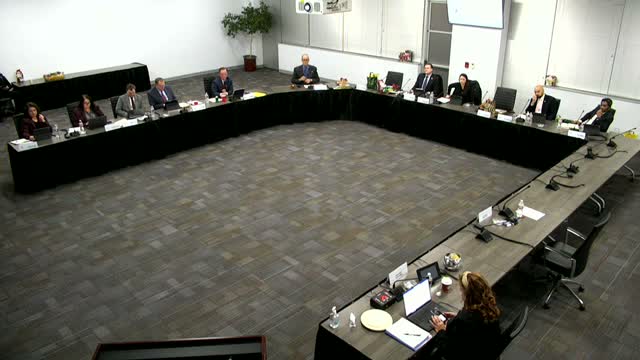
Budget Officer Bob Kleinmeier presented the city's FY25 fourth-quarter report to the Richardson City Council on Dec. 8, saying the General Fund finished with $183.6 million in revenue (about $2.9 million above the original budget) and $5.7 million in expenditure savings, leaving a fund balance near 91 days.
Kleinmeier attributed revenue shortfalls in property tax (current-year taxes about $3.5 million below budget) to two issues discussed earlier in the year: a large abatement not captured on the certified roll and a change in taxable status for a North Side development. He said sales tax outperformed expectations by roughly $3.7 million and building permits and other revenues outpaced conservative estimates.
Across operating funds, Kleinmeier reported the water and sewer fund ended the year about $2.8 million below budget due to declines in irrigation-related water sales late in the year but finished with a fund balance above policy targets. The solid-waste fund finished above budget and staff proposed using $500,000 of those savings for relocation and site-prep of dumpster staging, a move that could reduce bond-funded apparatus costs.
After the fund report, City Manager Don Magner presented multi-year budget modeling and a review of Senate Bill 2 (SB2), the Texas Property Tax Reform and Transparency Act of 2019. Magner said the city's modeling assumes conservative revenue growth (maximizing the 3.5% cap, limited inflation assumptions, and an optimistic $200 million of annual new construction in some scenarios) and noted that SB2's 3.5% cap has had a compounding effect on municipal revenue growth in the years since enactment.
Magner said the city's internal model shows a material reduction in potential new revenue since SB2's passage and that, when combined with restored costs tied to the Fire Master Plan (including restoring frozen positions, roughly $1.1 million in annual operating impact), the modeled path could produce deficits in future years unless the city identifies new revenue or reduces program spending.
Magner urged staff to conduct a comprehensive review of existing programs and services to confirm alignment with council priorities and to prepare a prioritized list of potential reductions if additional revenue sources are not identified. He said he and Richardson colleagues are engaging regionally (including work with the North Texas Commission task force) to illustrate the statewide fiscal effects of SB2 to legislators.
Council members agreed on the seriousness of the modeling. Councilwoman Justice urged residents to speak with state legislators and criticized the state approach as insufficiently targeted to protect municipal services; other members asked for a preliminary list of the largest programs that could be considered for reductions or adjustments.
The report closed with staff noting that next steps include further analysis during the FY27 budget process, outreach to state representatives and refinement of the bond propositions and funding strategy presented earlier in the meeting.