Nebraska Legislature passes LB258, creating 90-day training wage and capping future increases
Loading...
Summary
On Feb. 5, 2026, the Nebraska Unicameral passed LB258 on final reading by a 33–16 vote. Supporters said the bill provides predictability for businesses and options for hiring youth; opponents said it undermines a 2022 voter-approved minimum-wage measure and cuts pay for some workers.
LINCOLN, Neb. — The Nebraska Legislature on Feb. 5 passed LB258, a bill that revises state minimum-wage law by setting a fixed annual increase and adding an optional training wage and a separate youth wage for 14- and 15-year-olds.
Senator Anne Raybould, who moved to recommit the bill earlier in the day and later led its final-reading push, said LB258 contains three elements: a 1.75% fixed annual increase to replace the Midwest CPI adjustment, a statutory training wage tied to 90% of the Nebraska minimum wage for new workers during a 90-day period, and a youth wage intended to make it easier for 14- and 15-year-olds to be hired. “We want something that is fixed and predictable,” Raybould said, arguing the change responds to business concerns about planning and hiring.
Opponents from both parties said the bill contradicts the clear language and intent of a 2022 ballot initiative that raised Nebraska’s minimum wage to $15 and tied future increases to the Midwest CPI. “The first act of the 2026 Nebraska Legislature will be a bill that undermines the will of the people and lowers wages for Nebraskans,” said Senator John Kavanaugh, who urged colleagues to respect the ballot result and voted against final passage.
Senator Hunt, another opponent, framed the vote as a democratic concern: “When we override what voters have already decided, we damage the relationship between the people of Nebraska and their government,” she said during floor debate.
Supporters called out practical impacts on small businesses and rural employers, and emphasized that the bill allows (but does not require) employers to use training or youth wages. Senator Raybould said the proposed youth wage would be “$13.50” and that training wages would be higher than obsolete federal figures; she described the provisions as optional tools that could increase hiring for inexperienced workers.
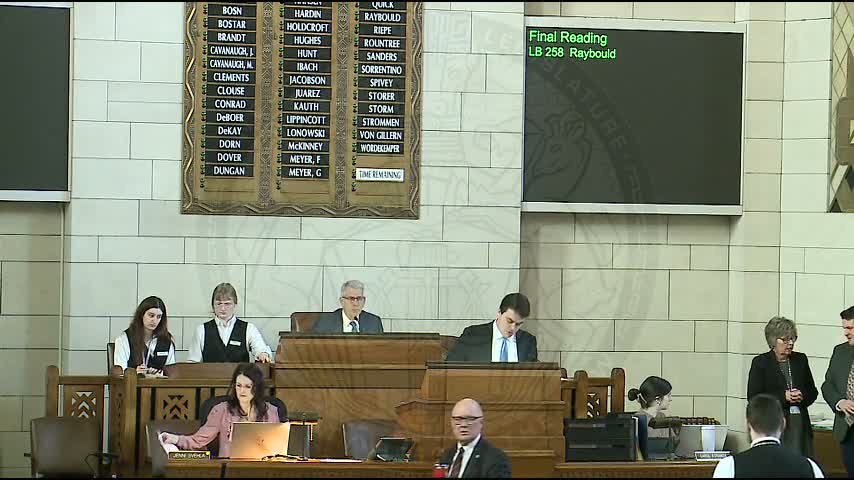
The Senate first voted to invoke cloture to end extended debate; the clerk recorded 33 votes in favor and 16 opposed, and cloture was invoked. A subsequent roll-call vote on the motion to recommit failed (16–33), and the clerk then read LB258 on final reading. The clerk announced passage of LB258 by a 33–16 recorded vote.
During the debate senators cited differing economic studies, Bureau of Labor Statistics data and handouts circulated on the floor. Some speakers emphasized potential youth employment and training benefits from an optional lower youth wage, while others emphasized the cost-of-living pressures facing minimum-wage workers and said the ballot language provided voters’ direction for inflation-linked increases.
The bill’s engrossed text, as read by the clerk, included amendments to wage-and-hour statutory sections and exceptions for training wages; the clerk placed references to the statutory language in the record during final reading.
LB258’s passage sets in motion statutory changes that supporters say will provide predictable increases and optional hiring pathways for young workers; opponents said they will pursue restoration of the voter-approved CPI linkage and that the action will be a focal point for future elections.
The legislature moved on to other bills after the vote; LB258 was among several bills signed into the record by the president before adjournment.