Lawmakers weigh restoring Power Review Board oversight for private renewables; industry warns of lost investment
Loading...
Summary
LB1027 would return Power Review Board approval and require power purchase agreements for privately developed renewable projects in Nebraska; proponents call it fairness for public power, opponents say it will deter billions in private renewable investment and cost rural tax revenue.
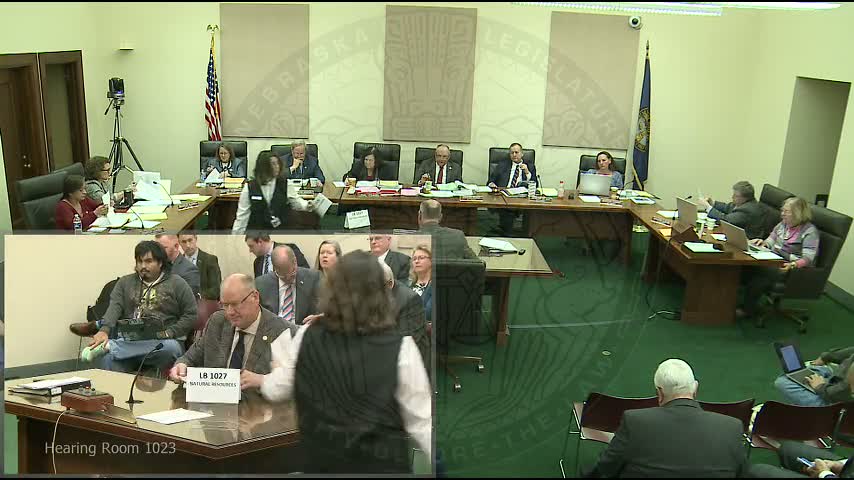
Senator Jared Storm told the Natural Resources Committee LB1027 is "about fairness," proposing that private, out‑of‑state or foreign renewable developers be subject to the same Nebraska Power Review Board (PRB) approval and power purchase agreement (PPA) requirements that govern public power construction.
Supporters from rural public power and cooperative districts framed the measure as restoring parity. James Dukesherer of the Nebraska Rural Electric Association said PRB review ensures a project "will most economically and feasibly supply the electric service" and prevents duplication of facilities.
Opponents — a broad panel including renewable developers, trade groups and environmental organizations — argued the 2016 changes that removed some PRB oversight unlocked roughly $7 billion in private investment, tens of millions in annual property tax revenue, and hundreds of millions in payments to rural landowners. David Levy (BHE Renewables/Ranger Power) said returning PRB approval and a mandatory PPA would "dramatically slow the development of renewable energy in the state and push that investment to neighboring states." He warned the PRB standard from chapter 70 was written for publicly financed fossil plants and may not suit modern wind and solar.
Student and youth advocates also testified. Steven Dickerson (Students for Sustainability) told senators that adding regulatory burden risks slowing renewable growth at a time of rapidly increasing electricity demand and job opportunities in renewables.
Senators questioned historical context: LB1048 (2010) created a certified renewable export framework and LB824 (2016) relaxed requirements to spur development. Witnesses debated whether the change in 2016 was necessary to attract projects and whether reversing it would be counterproductive.
The committee recorded substantial public comment — the clerk reported dozens of opponent submissions — and closed the hearing without a vote. Members signaled they would consider the balance between public‑power protections and economic development impacts as they contemplate next steps.