
Proposal to halve taxable property values sparks broad support and strong warnings from schools
Get AI-powered insights, summaries, and transcripts
Subscribe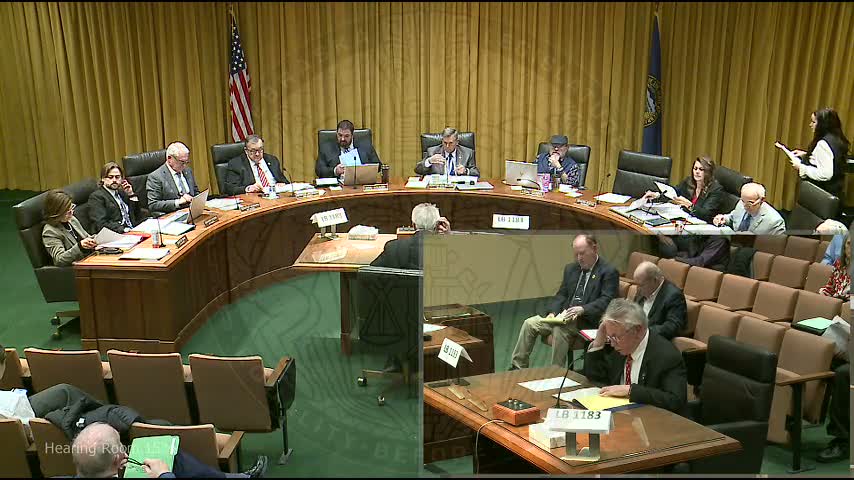
Summary
Sen. Lauren Lippincott’s LB11‑83 would value most property at 50% of actual value (ag land 37.5%), and pair with a $1.2B teacher‑salary backfill (LB11‑82). Proponents called it structural relief; counties, school districts, community colleges and ESUs warned it would erode local revenue, complicate bond debt service and require clear state backfill.
Lincoln — LB11‑83, introduced by Sen. Lauren Lippincott, would cut the taxable percentage used for real property valuations in half — residential and commercial property to 50% of actual value and agricultural and horticultural land from 75% to 37.5% — and would rely on companion legislation (LB11‑82) to move roughly $1.2 billion in state funds to cover teacher salaries.
"This bill is not a rebate or a bridge; it is a fundamental change to the state statute 77‑201," Lippincott said, arguing the measure would curb valuation‑driven tax growth and return about $2.6 billion to Nebraskans. She told senators the companion bill would fund a $50,000 base teacher salary, shifting much of school funding to the state.
The hearing attracted dozens of proponents from taxpayer groups, farmers and private citizens who portrayed the bill as urgent relief. Doug Kagan (Nebraska Taxpayers for Freedom), Eric Underwood and other witnesses recounted petition drives and argued the change would restore affordability for homeowners and farmers.
Opponents — including the Nebraska Association of County Officials, the Nebraska Community College Association, Omaha Public Schools, NERCSA and municipal and education finance officers — warned of large unintended consequences if the state did not provide explicit and enforceable backfill. County officials emphasized the simple algebra: tax revenue equals valuation times levy; cutting valuations without addressing levy authority or statutory obligations would force levies to rise or require deep cuts to local services.
Courtney Whitstruck (Nebraska Community College Association) and other education representatives said the bill would reduce schools’ and colleges’ revenue bases, complicate bond debt service and raise constitutional concerns about impairing contractual obligations if revenue to pay bonds were constrained.
The OpenSky Policy Institute presented modeling suggesting that, absent a carefully designed replacement for local revenue, many school districts could face sharp levy increases and service cuts. Omaha Public Schools’ finance chief told the committee that cutting the taxable base in half without a firm state revenue replacement would be "catastrophic" for districts that rely heavily on local tax capacity.
The committee’s discussion highlighted several policy levers that would need to be reconciled: levy caps and maximum authorities (e.g., statutes cited such as sections in chapter 77), limits on local levy increases, how TEOSA interacts with valuation changes, and the potential need to redesign state‑level replacement funding.
The revenue committee took public testimony and did not immediately advance the bill. Lippincott said she would waive closing after questions and expects additional hearings on the companion education bill in the Education Committee.