
Senate rejects cloture on LB669 after heated debate over trafficking screenings in abortion care
Get AI-powered insights, summaries, and transcripts
Subscribe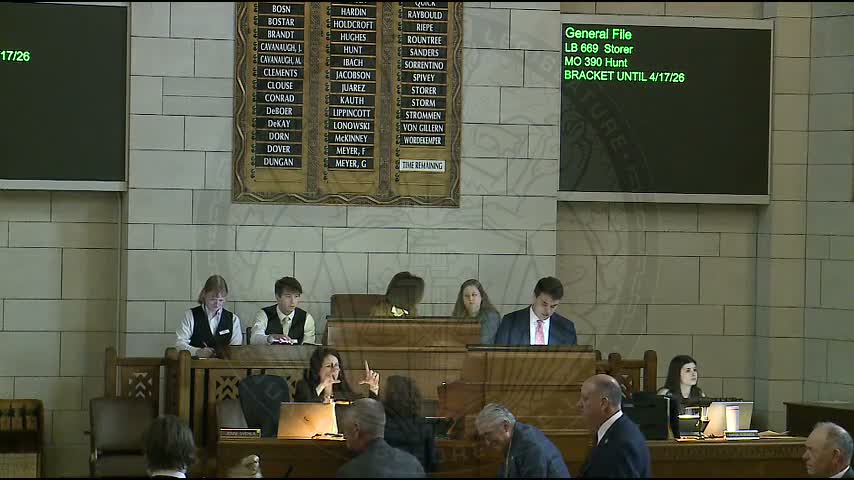
Summary
After hours of floor debate over whether LB669 should require abortion clinics to screen patients for coercion and trafficking, the Legislature failed to invoke cloture on the bill by a 31–15 vote, leaving the measure without a final floor vote during this session period.
On the twentieth day of the session in the George W. Norris Legislative Chamber, senators debated LB669, a bill introduced by Senator Storer that would require screening for reproductive coercion, domestic abuse and human trafficking at abortion clinics and provide hotline information and the opportunity for a confidential phone call. The Senate voted on a motion to invoke cloture (to end debate); the motion failed 31–15 and no final passage vote on the underlying bill occurred.
The sponsor, Senator Storer, repeatedly framed the measure as an anti‑trafficking and domestic‑violence safeguard. "LB 669 requires screening for coercion, abuse, and trafficking," she said, adding the bill would ensure a pregnant woman seeking care "be given the number for the domestic violence and human trafficking hotline and an opportunity to make a confidential phone call." Storer also emphasized privacy protections in the bill text, saying the screening language was written "in a place and manner that ensures the privacy of the pregnant woman."
Opponents on the floor raised process and substance concerns. Senator Hunt told colleagues he had "concerns that we are opening up abortion statute in a post‑Roe America" and said physicians and the Nebraska Medical Association had not been adequately consulted. Senator Frederickson described conversations with physician groups that left him "having a hard time supporting" the bill without further amendment. Senator Conrad said the committee proponent list was dominated by anti‑choice groups and noted a lack of the usual bipartisan law‑enforcement and victim‑services coalition on which prior trafficking legislation historically relied.
Proponents disputed that characterization. Senator Bosin urged colleagues to "pull out LB669" and read the introduced bill, arguing it "ensures the privacy of the pregnant person" and that the measure "is a lifeline" for women in crisis. The sponsor also quoted testimony from Julie Schrader of Innocence Freed describing survivors who said they were pressured into abortions by traffickers and called the bill "pro‑woman" and "anti human trafficking."
Procedurally, Senator Stewart moved to invoke cloture under the chamber rules and requested the house be placed under call for a roll call vote. The roll call listing on the motion produced a final reported tally of 31 ayes and 15 nays on the cloture motion. The President announced: "The motion to invoke cloture fails." No final passage vote on LB669 was taken during the floor period covered by the transcript.
Because there was no final floor vote recorded, LB669 remains subject to further committee or floor action at a later time. The record of the morning and mid‑day debate shows deep disagreement about both (1) whether the proposal meaningfully advances anti‑trafficking protections and (2) whether it inappropriately embeds clinical screening language in abortion‑related statutes.