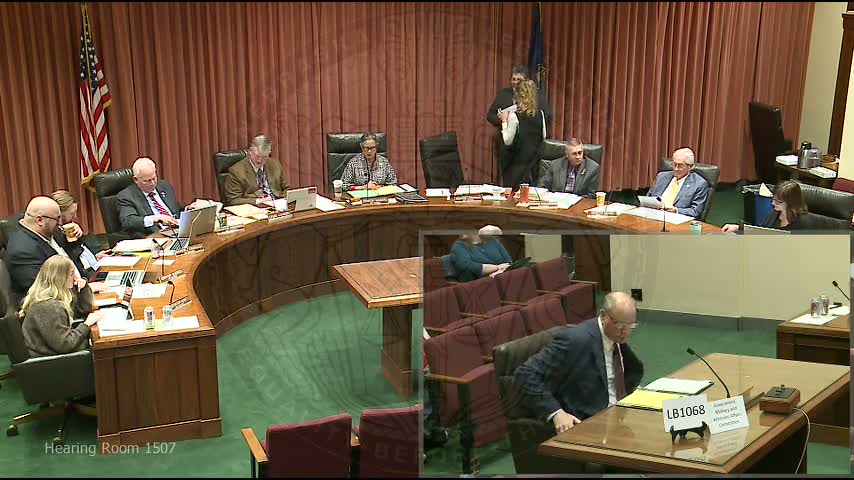
Panel debates requiring background checks and barring some paid petition circulators (LB1068)
Loading...
Summary
LB1068 would bar noncitizens and people convicted of felonies involving fraud, forgery or identity theft from serving as paid petition circulators and require sponsors to run background checks and keep lists of high‑volume circulators; supporters say it protects petition integrity, while civil‑liberties groups warn of First Amendment and access risks.
LINCOLN — Senator Jared Storm told the Government, Military and Veterans Affairs Committee that LB1068 is a "common sense" effort to protect the petition process after recent incidents where circulators allegedly submitted forged names.
With amendment AM18-32, Storm dropped an ID‑badge requirement and focused the bill on paid circulators: sponsors would be required to run criminal-history checks on paid petition circulators and to maintain a list of anyone circulating more than 25 petition pages. The bill also would bar noncitizens and people convicted of felonies involving fraud, forgery or identity theft from circulating petitions on behalf of sponsors.
Deputy Secretary of State Wayne Bennett testified in support and said his office could absorb the workload created by the amended bill. Proponents argued the rules would help identify bad actors and protect the integrity of the signature-gathering process.
Opponents included the ACLU of Nebraska, Common Cause Nebraska, the League of Women Voters, labor groups and grassroots sponsors who said the measures would chill participation and disadvantage volunteer-driven campaigns. "Circulation of petitions is core political speech," Common Cause's Gavin Geis told the committee, warning that restrictions on who may circulate signatures raise First Amendment concerns and could be vulnerable to court challenges.
The ACLU's Spike Eicholdt also noted implementation gaps: the bill requires background checks but does not specify what checks suffice, how sponsors should store results, or what to do with questionable donations or sheets. Several testifiers said the measures would disproportionately burden small, volunteer campaigns that cannot afford paid compliance staff.
Senate questions focused on narrow tailoring, the operational burden on sponsors, and whether invalidation of sheets gathered by an ineligible circulator would unfairly remove signatures from signatories who acted in good faith. Storm said he will work with stakeholders on clarifying language before the bill advances.
No vote was taken during the hearing.