Nebraska hospitals and DHHS spar over bill to block Medicaid "downcoding"
Loading...
Summary
LB942 would prohibit Medicaid managed care organizations from retroactively downgrading emergency and short inpatient claims and apply the Medicare "2‑midnight" inpatient standard to Medicaid. Hospitals say retrospective denials have cost hundreds of thousands locally; DHHS warns the change could conflict with federal rules and risk improper payments.
Sen. Merv Riepe introduced LB942 to address what hospitals call an escalating practice of Medicaid managed‑care organizations retroactively downgrading emergency department visits and short inpatient stays, reducing hospital reimbursement for care clinicians say was medically necessary at the time it was provided.
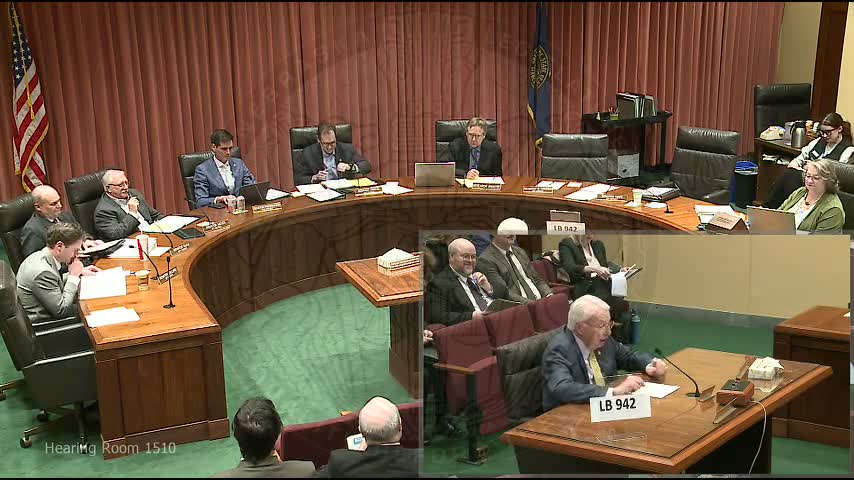
Proponents at the Health and Human Services Committee hearing said retrospective "downcoding" can leave hospitals with large, cumulative revenue losses and undermine access, especially in rural areas. David Griffiths, chief financial officer of Bryan Medical Center, said the facility experienced roughly $650,000 in lost reimbursement and cited nearly 5,000 downcoded ED claims in a recent year. Emergency physician Mark Howerter described typical cases—abdominal pain, chest pain, fevers in children—where clinicians must perform resource‑intensive evaluations even when a final diagnosis is benign.
The bill would require Medicaid and MCOs to determine whether an emergency existed based on the patient's presenting symptoms (the "prudent layperson" standard) and clarify inpatient admission standards to preserve physician clinical judgment and the application of the 2‑midnight rule. Tiffany Yakel of Nebraska Medicine testified that multiple clinical reviews still leave hospitals vulnerable to retroactive payment reductions and that appeals and peer reviews impose significant administrative burdens.
DHHS Director Drew Gonshorowski and representatives of managed‑care plans opposed the proposal. Gonshorowski said LB942 would conflate distinct federal standards for EMTALA‑mandated medical screening and Medicaid payment rules, citing federal regulations and warning that paying based on presenting symptoms without post‑service clinical findings would increase improper payment risk and jeopardize federal financial participation. Robert Bell, executive director of the Nebraska Association of Medicaid Health Plans, noted the department's existing administrative rules that govern non‑emergent emergency room payments and urged continued negotiation among hospitals, the department and MCOs.
Committee members pressed witnesses on the bill's fiscal note, whether a statutory change is needed versus negotiation, and how federal payment rules (including the Medicare 2‑midnight standard) intersect with Medicaid. Proponents emphasized clinical risk and fairness for hospitals obligated under EMTALA to evaluate and stabilize patients. Opponents warned about federal compliance and program integrity risks.
The committee did not take a final vote during the hearing. The debate centered on whether legislative clarification is the proper remedy for retrospective denials or whether administrative and contractual approaches could address the problem.