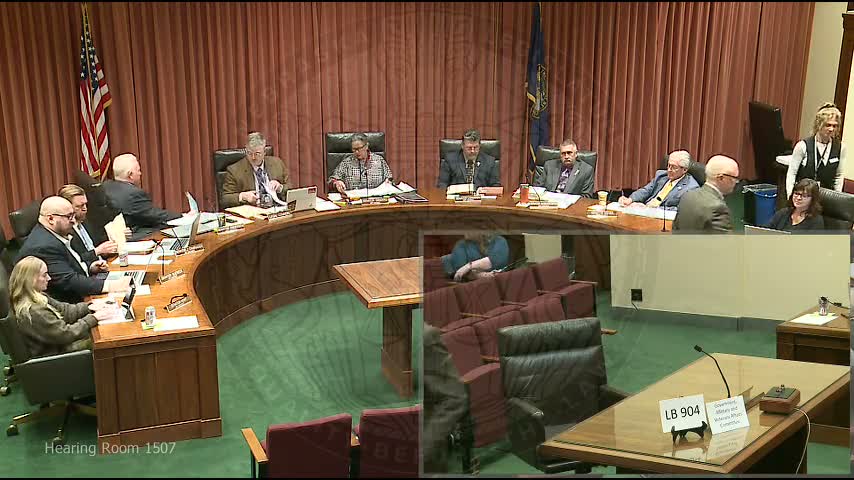
Committee weighs tougher ban on foreign money in ballot initiatives (LB927)
Loading...
Summary
LB927 would require ballot committees and donors to certify they have not received foreign-source funds (including a $100,000 aggregated threshold over four years) and imposes steep fines; supporters cite court challenges and alleged millions funneled by foreign donors, while opponents warn about enforceability and First Amendment risk.
LINCOLN — Lawmakers on the Government, Military and Veterans Affairs Committee spent most of the afternoon on LB927, a bill Senator Bob Anderson said is intended to tighten Nebraska's ban on foreign funding of ballot initiatives.
"We do not want foreign influence in our elections," Anderson told the committee, urging passage of provisions that would define prohibited preliminary activity, require committees and donors to sign deep certifications, and impose fines equal to the contribution or $100,000 — whichever is greater.
Secretary of State Bob Evnen described examples he said show the need for stronger rules, telling the committee that foreign-funded groups and billionaires have continued to spend in Nebraska even after previous legislation. "We have examples of this, where in 2020, a fund made a contribution of $2,000,000 ... and in 2024 ... spent more than $5,000,000 on Nebraska ballot measure campaigns," Evnen said.
Deputy Solicitor General Zachary Pullman, representing the attorney general, said the office's ongoing litigation alleges a Swiss billionaire and several dark‑money nonprofits channeled more than $10 million into Nebraska ballot committees in 2024. Pullman said the bill builds enforcement tools and a certification regime that would make it harder for groups to hide foreign money behind intermediaries.
Supporters from outside groups — including Caitlin Sutherland of Americans for Public Trust, Jason Snead of Honest Elections Project Action and Catherine Gonzales of lobbying firm Veradon — outlined research and experiences from other states and urged the committee to adopt the bill. Sutherland presented data alleging large foreign donations to intermediary funds and said groups such as the 1630 Fund, New Venture Fund and Hopewell Fund have funneled foreign money into U.S. political spending.
Neutral and skeptical witnesses, including Gavin Geis of Common Cause Nebraska and Scott Danigole of the Nebraska Accountability and Disclosure Commission (NADC), welcomed the bill's goal but warned about broad wording and implementation. Danigole said committees will need practical procedures — for example, refund language for suspect donations — and warned the NADC could face investigation costs; he estimated a placeholder figure of $25,000 for investigations in the fiscal note and suggested clarifying where fines would be distributed.
Several senators pressed on constitutional and practical questions: whether a foreign donor can be reached in Nebraska courts, how to treat corporate subsidiaries with foreign parents, and whether the $100,000 aggregated threshold could sweep in ordinary donors or businesses that have routine foreign transactions. Deputy Solicitor Pullman pointed to court and agency precedent and said some issues could be refined through rulemaking but described litigation supporting state-level restrictions on foreign election spending.
No committee votes were taken. Sponsors said they will work with NADC and other stakeholders on enforcement language as the bill moves forward.