Get Full Government Meeting Transcripts, Videos, & Alerts Forever!
Get email alerts on the Land Use topic
No spam. Unsubscribe anytime.
Developers seek three-lot split; Morgan water reps require half-share minimum and street meters
Summary
Developers told the Morgan Water Board they want to divide a Manning parcel into three lots. Board and secondary-water representatives clarified that each lot will need a half-share of South Morgan water, meters placed at the street, and that a stub and/or connection fees for a future Lot 3 must be addressed before permits.
Developers told members of the Morgan Water Board they bought a parcel from the Leland Manning trust and want to split it into three lots so a new house can be built on the rear lot.
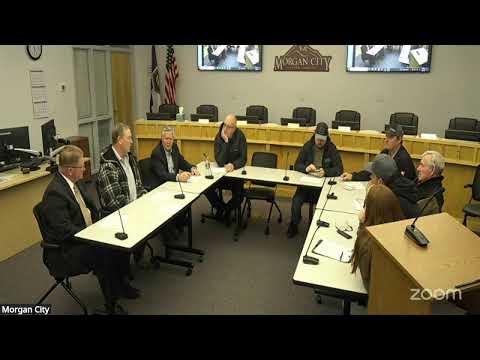
Board members and secondary-water representatives said the city’s process requires the board to review subdivision applications and set conditions before the planning commission sees them. Speaker 1 said the board was established by city ordinance to give input on projects that could affect secondary water users.
The developer said Lot 1 already has a house and shop and that the split would create Lot 2 (rear house) and Lot 3. Participants clarified how water service and shares must be handled: the secondary delivery system will require separate meters for individual lots, the city is placing meters at the street rather than on private easements, and the ditch/secondary company will require evidence that connection fees or other conditions are satisfied before a building permit is issued.
On water rights, representatives explained that South Morgan shares are the underlying water asset. "Our water shares will only be divided down to a half a share is the minimal that we can divide our water shares," a water representative said, and the board noted that each new lot would therefore need at least a half share to secure secondary delivery. Participants said the Mannings had owned one-and-a-half shares; when divided, a half share must remain with the Manning lot and the other halves would serve the two new lots.
The group discussed infrastructure details the developer must address: whether one line with taps can serve multiple lots depends on engineering and pipe sizing, a third service line would be needed if all three lots must be served immediately, and a future stub should be installed now for Lot 3 to avoid costly retrofits later. Participants also confirmed that connection fees and a meter fee typically apply; in many cases the connection fee is collected when a property actually connects to the system.
City staff said the municipality requires a letter from the secondary water provider verifying connection fees or conditions have been satisfied before issuing a building permit, and the city inspects meter installations to ensure they meet standards.
Attendees also raised neighborhood-side issues: laterals to private properties are controlled by neighbors, and new work must not impede other property owners’ ability to receive water. The meeting closed with agreement on next steps: document the half-share requirement for each lot, ensure meter placement at the street, require a stub for Lot 3, and provide the city with the secondary-water company’s verification of connection fees or satisfied conditions before permits proceed.