Get Full Government Meeting Transcripts, Videos, & Alerts Forever!
Get email alerts on the Procurement topic
No spam. Unsubscribe anytime.
Caroline County staff propose higher purchasing thresholds, more director discretion
Summary
County staff proposed raising small‑purchase thresholds (incidental limit to $2,500; written‑proposal threshold to $7,500), streamlining contract requirements for minor service purchases and clarifying sole‑source and piggybacking rules to ease procurement delays.
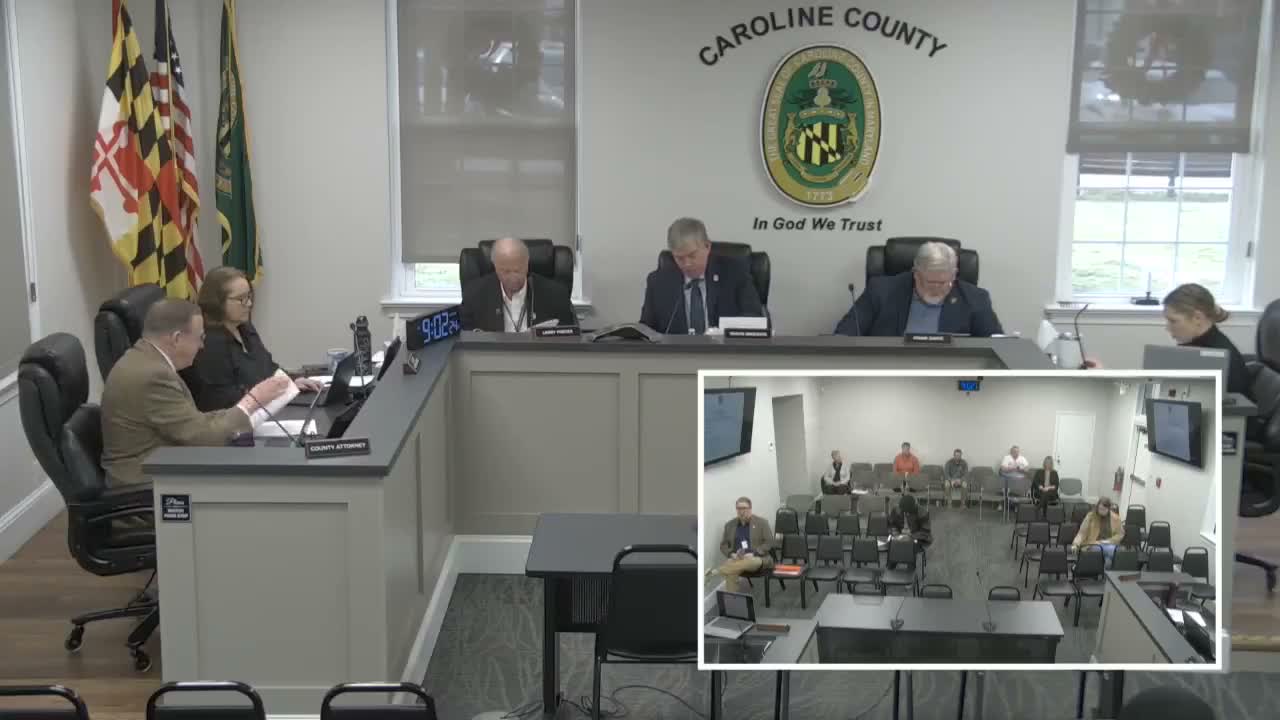
County staff on Wednesday presented a draft update to chapter 51 of the Caroline County Code that would raise several procurement thresholds and give the director of purchasing more discretion in handling small service contracts.
“Some of the terminology, some of the positions, and just other small things are outdated,” Daniel Fox, deputy administrator, told the Board of County Commissioners during a workshop on the purchasing code. Fox said the county’s dollar brackets for incidental, minor and formal purchases have not kept pace with current prices and administrative demands.
Under the draft Fox described, the incidental threshold would increase from $1,000 to $2,500, and the current “minor” bracket (previously $1,000–$5,000) would move to $2,500–$7,500. The county would continue to require formal bids for procurements of $40,000 or greater.
Fox said the intent is to reduce paperwork and vendor delays for everyday purchases. “We’re cutting more purchase orders, and we’re spending more time for items that are really incidental in nature that’s bogging down,” he said.
The presentation also addressed how staff should document quotes for small purchases. Fox and purchasing staff recommended continuing to solicit three vendors when practical but documenting attempts to solicit three if vendors do not respond. Several commissioners said they wanted language that emphasizes soliciting local vendors where feasible.
The draft would also let the director of purchasing determine when a service purchase requires a formal contract, rather than automatically requiring multi‑page contracts for relatively small service procurements. Fox said that approach would preserve contractual scrutiny for “major purchases” while avoiding excessive paperwork for routine work.
Commissioners discussed changes to piggybacking and sole‑source rules. Several said cooperative/piggyback purchases should be used only when they are demonstrably the least costly option. Commissioners also discussed adding sole‑source justification when repeated solicitations within a fixed time frame produce only a single respondent, which proponents said would reduce unnecessary rebidding when only one vendor serves a local market.
A separate section on debarment drew criticism as overly complex. A commissioner called the debarment process “a hot mess” and urged that initiation and appeals be limited to department heads, the director of purchasing and, if appealed, the full commissioners rather than an internal panel.
Fox said staff will draft the proposed code changes with the county’s office of law. Any amendment to the county code would then follow the formal legislative path, including multiple public meetings and at least one public hearing.
The board did not vote on code changes Wednesday; staff said a revised draft will return following legal review.