Get Full Government Meeting Transcripts, Videos, & Alerts Forever!
Get email alerts on the Energy And Land Use topic
No spam. Unsubscribe anytime.
Commissioners raise alarm about state energy policy and septic regulations, warn of land-use conflicts
Summary
During open discussion, commissioners criticized state-level energy and Public Service Commission decisions, warned solar and battery projects are being sited on prime farmland that could be used for housing, and scheduled a Jan. 16 meeting with Maryland Department of the Environment staff on septic-system issues affecting rural housing.
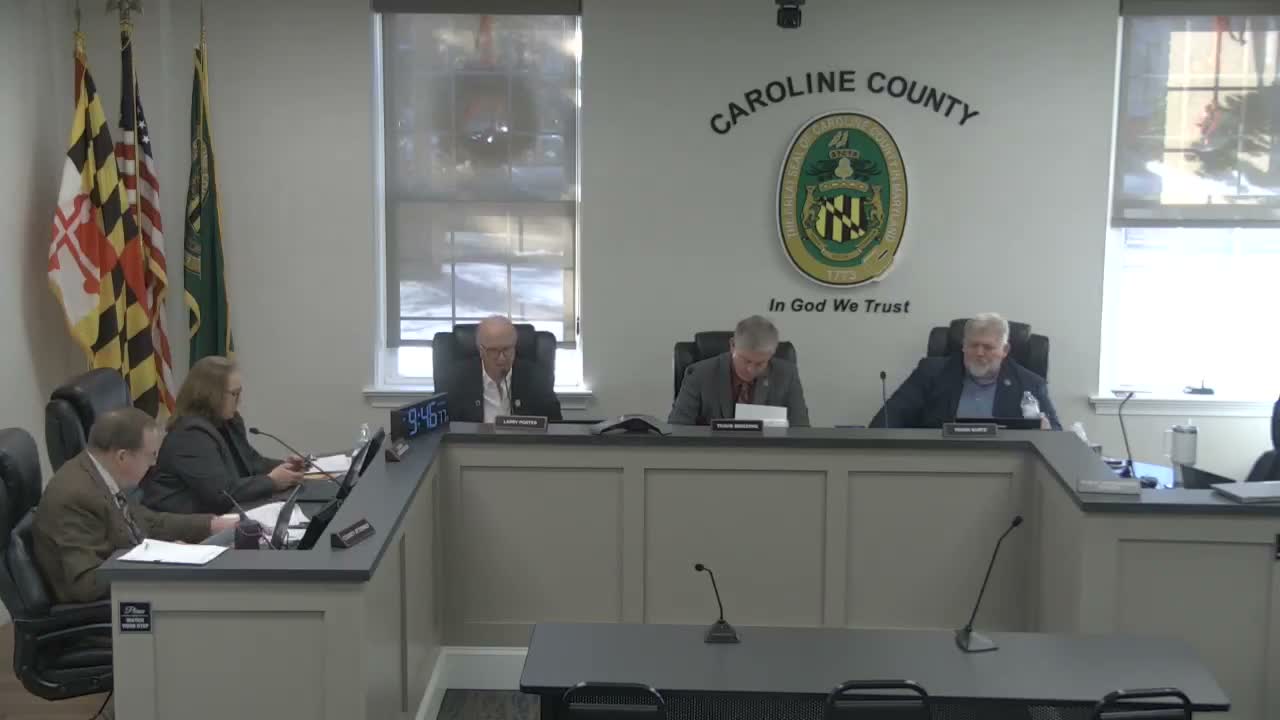
Commissioners used the open-discussion portion of the Dec. 16 meeting to air concerns about state energy policy, battery-storage safety, solar siting on prime farmland and regulatory burdens on on-site sewage disposal systems that they said hinder housing development.
One commissioner described recent sessions at Mako week on battery energy storage as offering little progress on safety and called the state-level process a "clown show," criticizing the Public Service Commission’s membership and saying Eastern Shore counties are underrepresented. Commissioners warned that renewable-energy siting decisions sometimes place solar facilities on land zoned for future housing that has access to water and sewer, a land-use outcome they called at odds with local priorities.
The board said it had arranged an online meeting Jan. 16 with Maryland Department of the Environment staff (Lee Curry and Les Knapp, water and science division) to discuss on-site disposal system (septic) regulations, which commissioners said are being interpreted conservatively by local health departments and can make building or rebuilding homes more difficult. A commissioner noted that some septic-technology standards have not been revisited in decades and urged a reassessment given new technology and a local housing shortage.
Commissioners warned they will continue to press state agencies and the General Assembly on coordination between energy siting, housing policy and environmental health standards. They cited a near-term example in Worcester County where a solar project is advancing despite county objections. No formal direction or new local regulatory action was adopted at the meeting; commissioners asked staff to keep pursuing interagency meetings and to report back on outcomes.