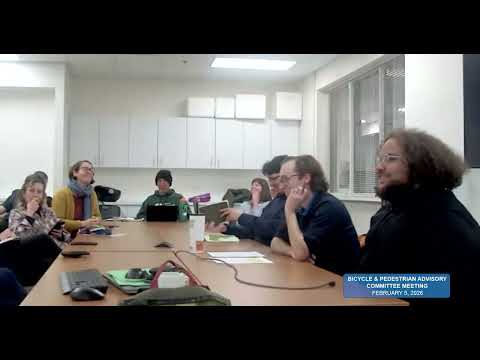
Charlottesville BPAC seeks formal quick‑build process and clearer staff accountability
Loading...
Summary
Members urged formalizing the city's quick‑build program, creating subcommittees and tracking installations after reports that many nonurgent projects were delayed or canceled; staff said some projects became urgent and others face coordination and funding hurdles.
Charlottesville's Bicycle & Pedestrian Advisory Committee (BPAC) on Wednesday pressed city staff to formalize the quick‑build program and set clearer expectations about how and when quick projects move from temporary installations to permanent infrastructure.
Committee members said last year's effort produced a number of quick‑build measures (flex posts, temporary crosswalks, speed tables) but that tracking and coordination gaps have left many nonurgent projects incomplete. "We've got, like, 10 to 20 quick build projects that have been approved and 2 years later, and they are on ground," a committee member said, summarizing recent city progress and remaining work. Another member who FOIAed city records reported urgent quick builds were largely completed but many nonurgent items, including Rose Hill projects, were canceled or remain unprogrammed.
Tommy Sefrenic, the city's bike and pedestrian coordinator, said staff is conducting site visits and photographic inventories of existing quick builds to inform future decisions and that he has raised the idea of routing projects through NDF so planners, traffic engineering, ADA and utilities can all sign off during design. "We should do that," he said of formalizing a review process, while acknowledging that month‑to‑month staff coordination has weakened since previous interdepartmental meetings ended about a year ago.
Committee members proposed creating subcommittees focused on quick builds, outreach and repaving coordination. Some urged clear written commitments from departments before residents invest time on committee work. "I want us to be able to make recommendations, but I first want to have some confidence that someone will hear them," a planning commissioner said.
The committee asked staff to report back with a draft quick‑build program framework that would: 1) define the steps from temporary installation to permanent upgrade, 2) provide an accessible project tracker or PQI (pavement quality index) references so priorities are transparent, and 3) identify the staff or meeting structure that will convene utilities, public works and planning consistently.
Next steps: BPAC members agreed to continue the discussion at a future meeting, form interested subcommittees in the near term, and request a follow‑up meeting with traffic engineering and the staff liaison to produce a written quick‑build process.