Get Full Government Meeting Transcripts, Videos, & Alerts Forever!
Get email alerts on the Local Tax Split Rate topic
No spam. Unsubscribe anytime.
House panel adds Fredericksburg, Newport News, Charlottesville to list of cities allowed split-rate property tax; similar bills advance
Summary
The subcommittee reported three locality-specific bills (HB261, HB72, HB282) that let individual cities adopt a split-rate property tax (different rates for land and improvements). Supporters said the tool encourages redevelopment; opponents warned of equity impacts. Votes: HB261 8–1; HB72 9–1; HB282 9–1.
A Virginia House finance subcommittee on Feb. 9 advanced three bills that would let individual cities adopt a split-rate property tax—separate tax rates for land and for improvements—giving local governments a tool supporters say can encourage redevelopment and affordable housing.
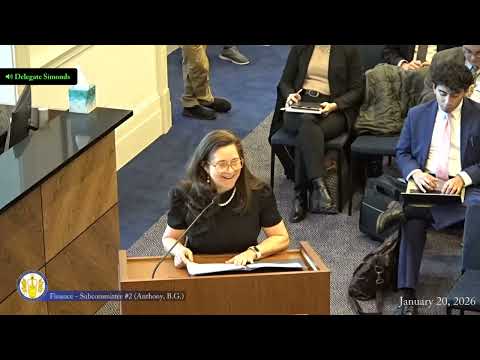
Delegate Simons told the subcommittee HB261 would add Newport News to a list of cities already authorized to consider a split-rate tax. “The bill does not set tax rates or require any changes in local taxes,” Simons said, adding the measure merely gives Newport News “the same option that other cities have.” Jerry Wilson, listed in the record as Newport News’s government affairs manager, testified in support, as did representatives of Virginia First Cities and the Virginia Realtors.
Delegate Cole presented HB72 to add Fredericksburg. Preston Bryant, speaking for Fredericksburg, described a permissive, citywide policy: after public notice and a study in consultation with the local commissioner of revenue, the city council could adopt an ordinance setting one land rate and a different rate for improvements. “It would be a set rate for the land and another set rate for land with improvements,” Bryant said.
Delegate Colson sought to add Charlottesville (and Falls Church at a companion request) via HB282 and cited a local study she said projected a 19% decrease in homeowners’ taxes and near revenue neutrality if Charlottesville adopted the approach. Local planning and municipal officials spoke in favor.
Supporters across the three hearings told the panel that a split-rate structure can shift tax burdens away from improvements and create incentives to develop vacant or underused land. Opponents and some members cautioned that treating only specific cities differently may create equity concerns and that implementation choices, including the rate-setting process, matter for outcomes.
The subcommittee voted to report the bills to the full committee: HB261 recorded 8 yays and 1 nay; HB72 recorded 9 yays and 1 nay; HB282 recorded 9 yays and 1 nay. Each bill is permissive, meaning a city would still need to adopt an ordinance and follow public-notice requirements before changing local tax practice.
What’s next: The bills move to the full committee for further consideration; if approved there, local councils would retain the choice to enact the split-rate ordinance and set exact rates.