Get Full Government Meeting Transcripts, Videos, & Alerts Forever!
Get email alerts on the Field Use Policy topic
No spam. Unsubscribe anytime.
Mill Valley commission forms subcommittee to review field‑use policies after public hearing
Summary
After public comment from parents and private coaches, the Parks & Recreation Commission voted to form a subcommittee to review Mill Valley’s field allocation, permitting and insurance rules and to return recommendations at its March 4 meeting.
The Mill Valley Parks & Recreation Commission voted to create a subcommittee to review the city’s field‑use and allocation policies following a public hearing in which parents and a private coach urged clearer rules for small‑group training.
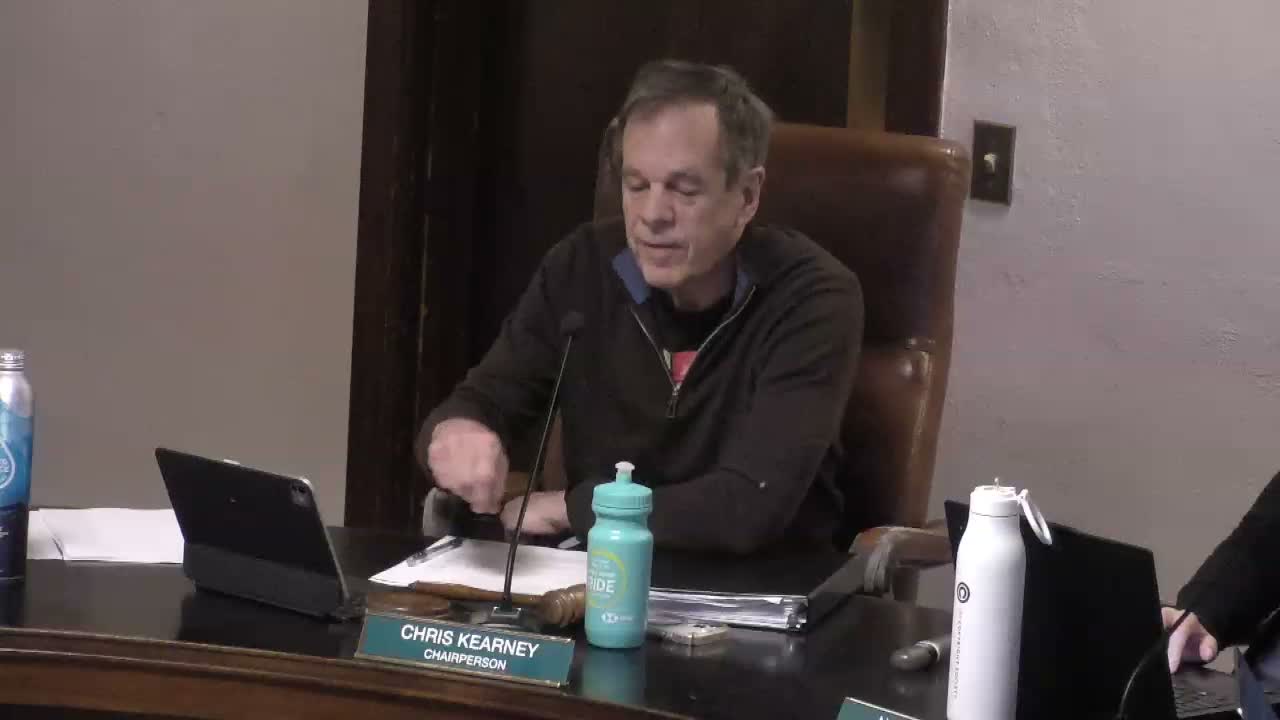
Chair Chris Carney opened the discussion by outlining three overlapping rule sets that govern use of city fields — the field use policy (originally adopted in 1998 with updates through 2013), youth sports allocation procedures, and relevant portions of the municipal code — and said the commission needs a focused group to recommend clarifications and updates.
The hearing drew several public speakers. Michael McCormick, a Mill Valley resident and private coach, described running small‑group sessions that occupy roughly a 20‑by‑20 area and said his trainings have coexisted with league use but that he has been confronted while using otherwise empty space. “I don’t step on anybody’s toes,” McCormick said, describing the sessions as a small patch of grass that does not interfere with scheduled league play.
Parents and local volunteers urged a balanced approach. Wendy Verrett, a parent who said her daughters have trained with McCormick, called for a “sensible and mature solution” and said children were frightened when their coach was threatened with police action. Marybeth Todd, a parent and former youth‑soccer board member, told commissioners that new, nonleague users should meet the same requirements as established groups — including insurance and background checks — and suggested lowering a proposed permit threshold from eight participants to five to prevent incremental growth into larger, unpermitted activities.
Commissioners said they supported a working group that would include commissioners, Parks & Rec staff, league representatives and interested commercial users. Commissioner Andrew Smith highlighted the need to balance fair access for community members, asset preservation and safety, noting that fields are public assets that require maintenance funding.
The commission approved the motion to create the subcommittee and directed staff to populate it and return recommendations at the next regular meeting on March 4. Chair Carney said the subcommittee should act quickly and aim to reconcile insurance, permitting and allocation issues while protecting youth sports and community access.
Next steps: staff will assemble the subcommittee, begin outreach to league representatives and commercial users, and report back with draft recommendations at the March 4 commission meeting.