Get Full Government Meeting Transcripts, Videos, & Alerts Forever!
Get email alerts on the Rule Changes topic
No spam. Unsubscribe anytime.
Staff urges limits and earlier deadlines to ease 'bill bubble' in next session
Summary
Legislative staff proposed limiting bill-draft requests and moving preintroduction and introduction deadlines earlier to spread work across the session and reduce end-of-session congestion, with members expressing broad support but caution about staff capacity and political pushback.
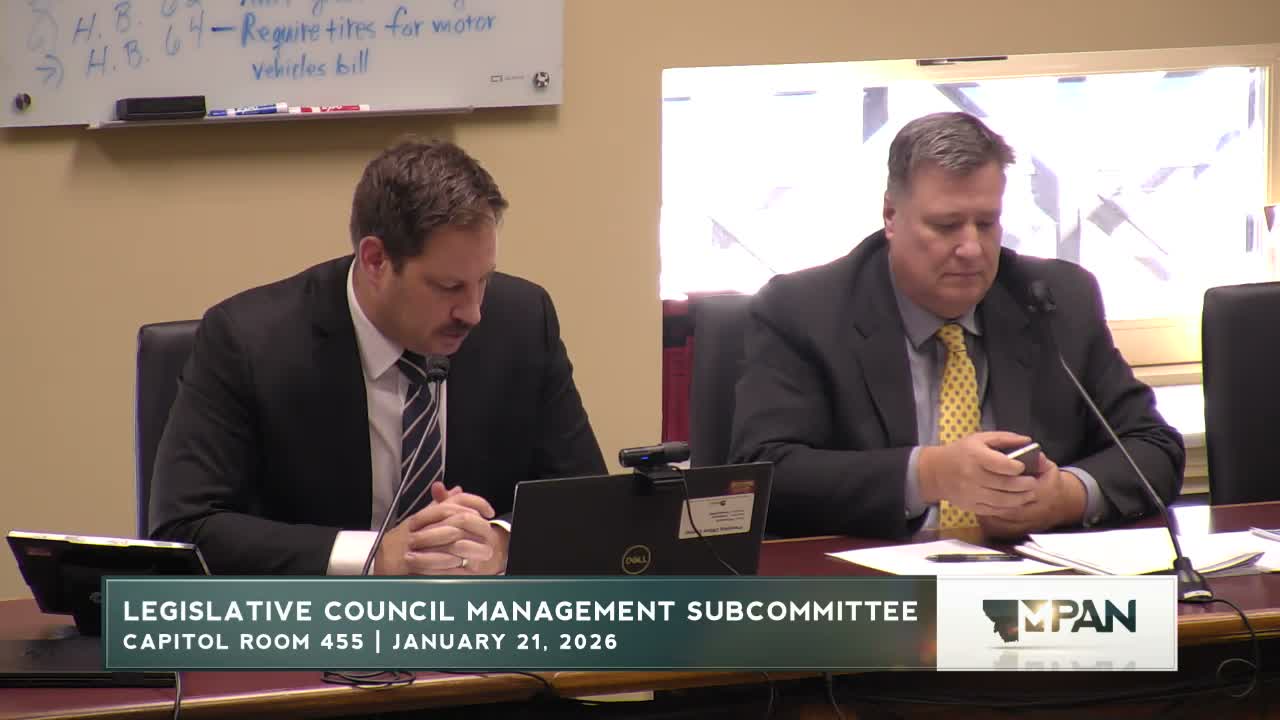
Mr. Evertz, a legislative staff presenter, told the Legislative Council Management Subcommittee on Jan. 21 that the last two sessions produced the highest bill volume since 1973 and strained staff and lawmakers.
“The average number of bill draft requests by legislators during the 2025 session was 29,” Mr. Evertz said, and he noted individual legislators requested as many as 244 drafts in 2025. He showed charts, saying about 214 bills were preintroduced and 1,759 were introduced during 2025, while roughly 1,882 drafts were completed overall.
To reduce the end-of-session ‘‘bubble’’ of work, Evertz proposed a package of timing and intake changes: move agency preintroduction to Nov. 1 (from Nov. 15), split legislator preintroduction from agency/committee preintro and set a Dec. 30 deadline for legislators (keeping agency/committee preintro at Dec. 15), and shift the general-bill introduction deadline from six days before a transmittal deadline to eight days.
Evertz said the extra two days would give committees and floors more opportunity to hold hearings and act before the March transmittal date, easing last-minute congestion. He also advised leadership to instruct committee chairs not to hold drafted bills but to schedule hearings promptly.
Members generally welcomed front-loading but warned limits would be politically sensitive. The Chair proposed exploring a 30-draft cap per legislator after primaries and suggested incentives — for example, offering an “open bill draft title” for legislators who preintroduce priority bills — to encourage earlier preintroduction without wasting staff time.
Speaker Lehi (leadership) said the eight-day change will help but warned that eight days does not equal eight full hearing days across multiple committees and that practical scheduling often yields fewer hearing days. Senator Harvey asked staff to add intermediate calendar trigger points to make drafting benchmarks clearer and flagged the risk of expending staff time on drafts for candidates who may not return to the legislature.
Mr. Evertz said he will coordinate with the rules subcommittee and present a formal package to Legislative Council; no formal action was taken at the Jan. 21 meeting.
The subcommittee agreed to continue discussions and refine specifics such as draft caps, timing, and incentives before advancing rule changes to the council.