Auditors give Secretary of State adverse opinion for FY2023; office agrees to fix key accounting and disclosure issues
Loading...
Summary
Legislative auditors issued an adverse opinion on the Office of the Secretary of State—or FY2023 and a qualified opinion for FY2024, citing material misstatements, unsupported useful-life estimates for election software, and grant accounting errors; the office says it has implemented many recommendations.
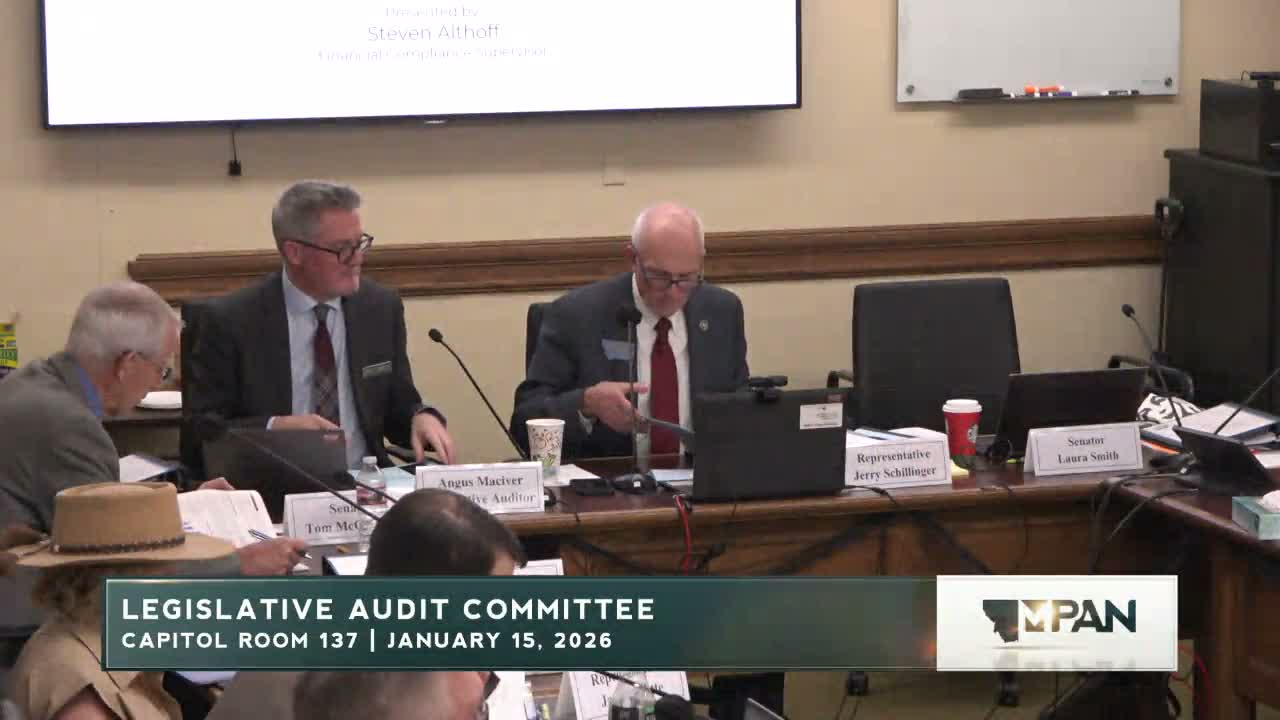
The Legislative Audit Committee on Wednesday was told that the Legislative Audit Division issued an adverse opinion on the Montana Office of the Secretary of State—or fiscal year 2023 financial schedules and a qualified opinion for fiscal year 2024.
Steven Althoff, a financial compliance audit supervisor, told the committee auditors found material and pervasive misstatements in FY2023 that made those financial schedules unreliable for decision-making. Key findings included unsupported accounting estimates for the useful life of a new election management system (LEHI/CARS), improper classification of software development versus maintenance costs, and recognition of investment earnings on federal HAVA grant balances as revenue before grant terms were met.
Althoff said office management had sometimes relied on anecdotal evidence to justify an unusually long 20-year amortization for the election system; auditors found state policy provides a default useful life of four years and recommended supportable, objective estimates. The audit also flagged misapplied transfers related to split-funded assets and weak documentation supporting decisions made in consultation with the Department of Administration.
Angela Nunn, chief deputy for Secretary Jacobson, represented the office and told the committee the office has implemented many of the auditors—onclusions and changed the useful-life estimate to four years while committing to improve documentation. She also said the office received a clean audit from the federal Election Assistance Commission on HAVA funds, which she cited as additional assurance.
Why it matters: Material misstatements in statewide elected officials' financial schedules can affect legislative oversight and budgeting. Committee members pressed for clearer documentation of decisions and asked for follow-up on HAVA fund distribution and accounting.
What—omes next: The committee accepted the audit report; staff will follow up on implementation of the remaining recommendations and work with the office and the Department of Administration on policy clarifications.