
Heated public comments and commissioners clash over proposed student-immigration reporting resolution
Get AI-powered insights, summaries, and transcripts
Subscribe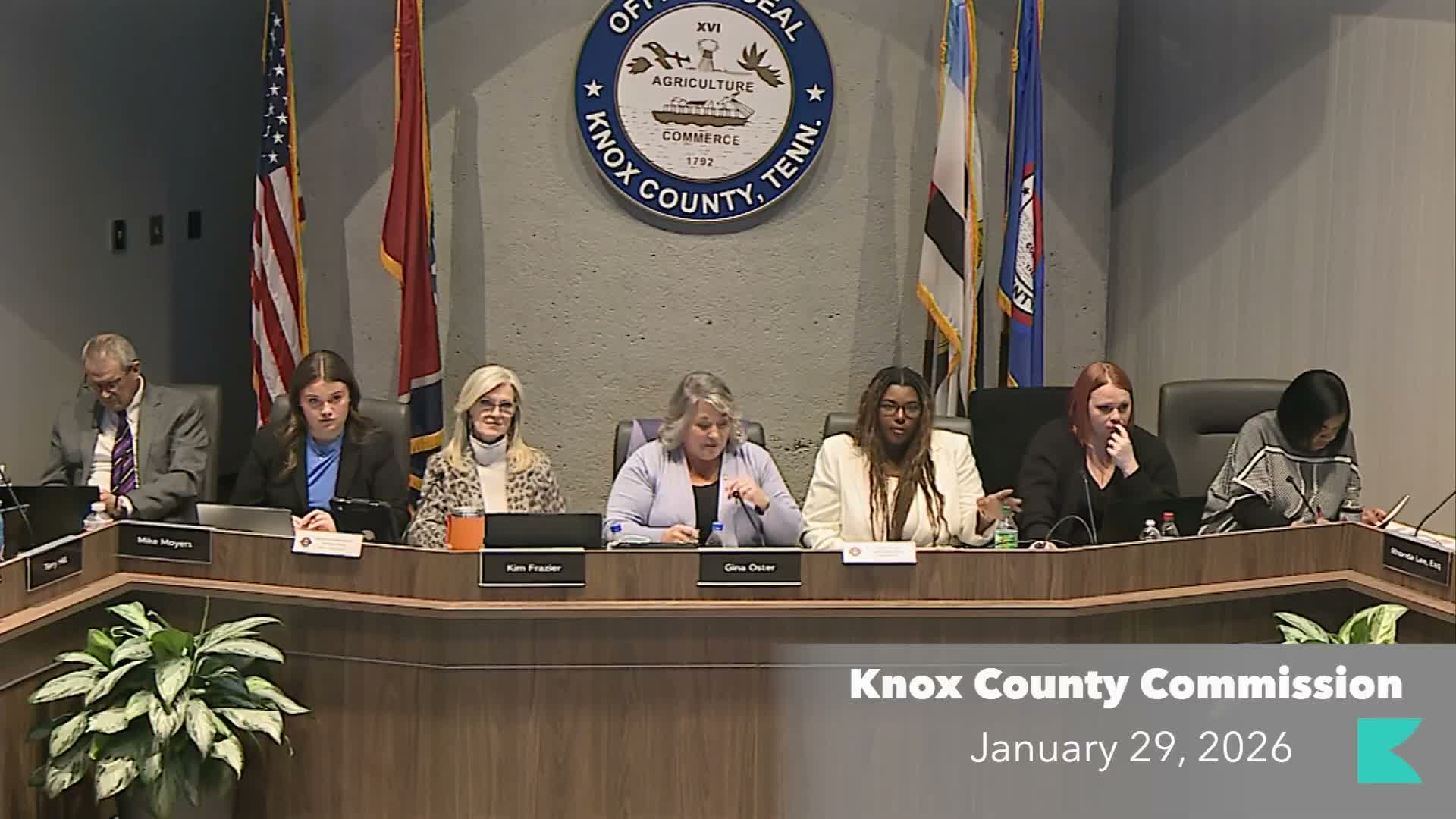
Summary
Public commenters and commissioners clashed Jan. 29 over a proposed county resolution that would encourage monitoring students' immigration status; critics warned it would burden schools and target students, while supporters framed it as fiscal accountability. The resolution was deferred for later consideration.
A proposed Knox County Commission resolution addressing reporting or monitoring students’ immigration status drew sustained public comment and sharp exchanges among commissioners at the Jan. 29 meeting.
Multiple residents and speakers asked the commission not to advance the measure, arguing it would force schools into an enforcement-adjacent role and harm children. Michael O’Malley told the commission the measure ‘‘says what it says’’ and warned it would treat some students ‘‘as a burden’’ and could be used to exclude students: ‘‘students should not be viewed as a burden,’’ he said.
Liz Popp, speaking earlier during public forum in support of human‑trafficking recognition, pressed county leaders for ‘‘actual action and policy’’ and asked, ‘‘what are you actually doing about human trafficking?’’ Her comments and others set a broader tone for the public‑comment period.
Supporters of the commission’s proposal framed it as accountability. Commissioner Tom Fox repeatedly cited federal immigration statutes, saying county policy must ‘‘comport with that law.’’ Opponents — including Commissioner Durrett, a former teacher — said the resolution undermines the locally elected School Board and would ‘‘pull [educators] away from teaching and learning.’’ Durrett said the commission has no oversight authority over the Board of Education and called the measure ‘‘political pressure, outside the proper role of this body.’’
Several speakers compared the proposal with historical discriminatory policies and urged the commission to consider downstream effects on students and families. Commissioner Hill and others urged respectful dialogue and suggested the item be considered later; the sponsor acknowledged the resolution had been postponed to a future meeting (April) for further consideration and public notice.
No formal vote on the substance of the student‑immigration reporting resolution was taken at Jan. 29’s meeting; commissioners who opposed it pledged to vote no when it returns. The debate included frequent appeals to constitutional and moral principles and highlighted a county‑level tension between fiscal oversight and school governance.
The commission’s clerk recorded the procedural status as deferred; when the measure returns the commission will hear additional public comment and deliberation.