Get Full Government Meeting Transcripts, Videos, & Alerts Forever!
Get email alerts on the Housing topic
No spam. Unsubscribe anytime.
Residents urge $30M for Barnes fund and expanded renter supports after winter storm
Summary
At a Feb. 3 council meeting, dozens of residents and housing advocates urged Mayor and Council to increase housing investments after Winter Storm Fern, pressing for $30 million for the Barnes Affordable Housing Trust Fund, $9 million for eviction right-to-counsel and a standing rental assistance fund to prevent mass displacement.
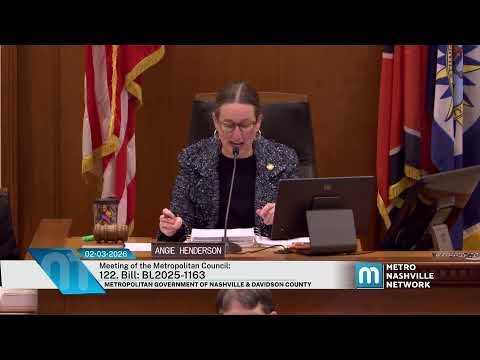
NASHVILLE — Dozens of residents and housing advocates pressed the Metropolitan Council on Feb. 3 to make steep, immediate investments in affordable housing and renter protections after Winter Storm Fern left tens of thousands without power and some families facing eviction.
Public commenters at the council’s pre-budget hearing repeatedly asked the city to fund the Barnes Affordable Housing Trust Fund at $30 million annually, expand eviction legal aid to $9 million and create a standing rental assistance fund to prevent short-term crises from becoming permanent displacement.
"We were told the city needs 90,000 homes," said Paul Pleeman, a Ridgemont Estates resident testifying against two rezoning ordinances, asking the council to explain why city projections differ from state projections. Pleeman also said he filed an ethics complaint about false rumors circulated during the rezoning process.
Speakers representing community organizations and legal service providers described how the storm magnified existing housing instability. "In 10 years, the Barnes Fund has created or preserved more than 6,000 homes," said Mike Hodge of NOAH, arguing the fund’s leverage makes a $30 million investment fiscally responsible. "Every local dollar brings nine more," he said.
Representatives of the Eviction Right to Counsel coalition — which includes the Nashville Hispanic Bar Association and Legal Aid Society — told the council that tenants with lawyers succeed at dramatically higher rates. "When we have a lawyer to help a tenant, we can achieve success," said Elizabeth Leiserson of Legal Aid, citing program outcomes of roughly 90–95 percent in favorable results when representation is available. Coalition leaders said the pilot should be scaled to serve all who need it and asked the council for $9 million to sustain the program.
Advocates also pressed for a rental assistance fund and for emergency policies that would spare renters the immediate threat of eviction after the storm. "There have been 1,350 eviction filings in January — a 56 percent increase," Stand Up Nashville speakers told the council, urging a temporary halt to eviction filings and a permanent rental assistance program to meet surges in need.
Several commenters pressed utilities and Metro for accountability. An electrical engineer who testified said NES communication during the storm relied too heavily on social media and lacked direct texts or automated calls to warn residents about life‑threatening outages.
Council members and staff listening from the dais acknowledged the testimony and reminded the public that the budget process — including the capital improvements prioritization due Feb. 11 and a joint committee meeting Feb. 17 — will shape funding decisions. No formal funding changes were adopted at the meeting; the public comment period is intended to inform the mayor’s proposed budget and the council’s deliberations.
The next formal budget steps include the mayor’s proposed budget release and subsequent council committee reviews and votes. Advocates said they will continue meeting with council members to press for the specific funding levels they requested.