Newport staff: sustainable destination management plan will use 1,810 visitor responses and 62 stakeholder surveys
Loading...
Summary
Beautification and tourism coordinator Lillo Ryan told council the SDMP process includes a site visit by CrossCurrent Collective, 62 stakeholder responses and 1,810 visitor survey responses; a March visioning workshop and metrics dashboard are next.
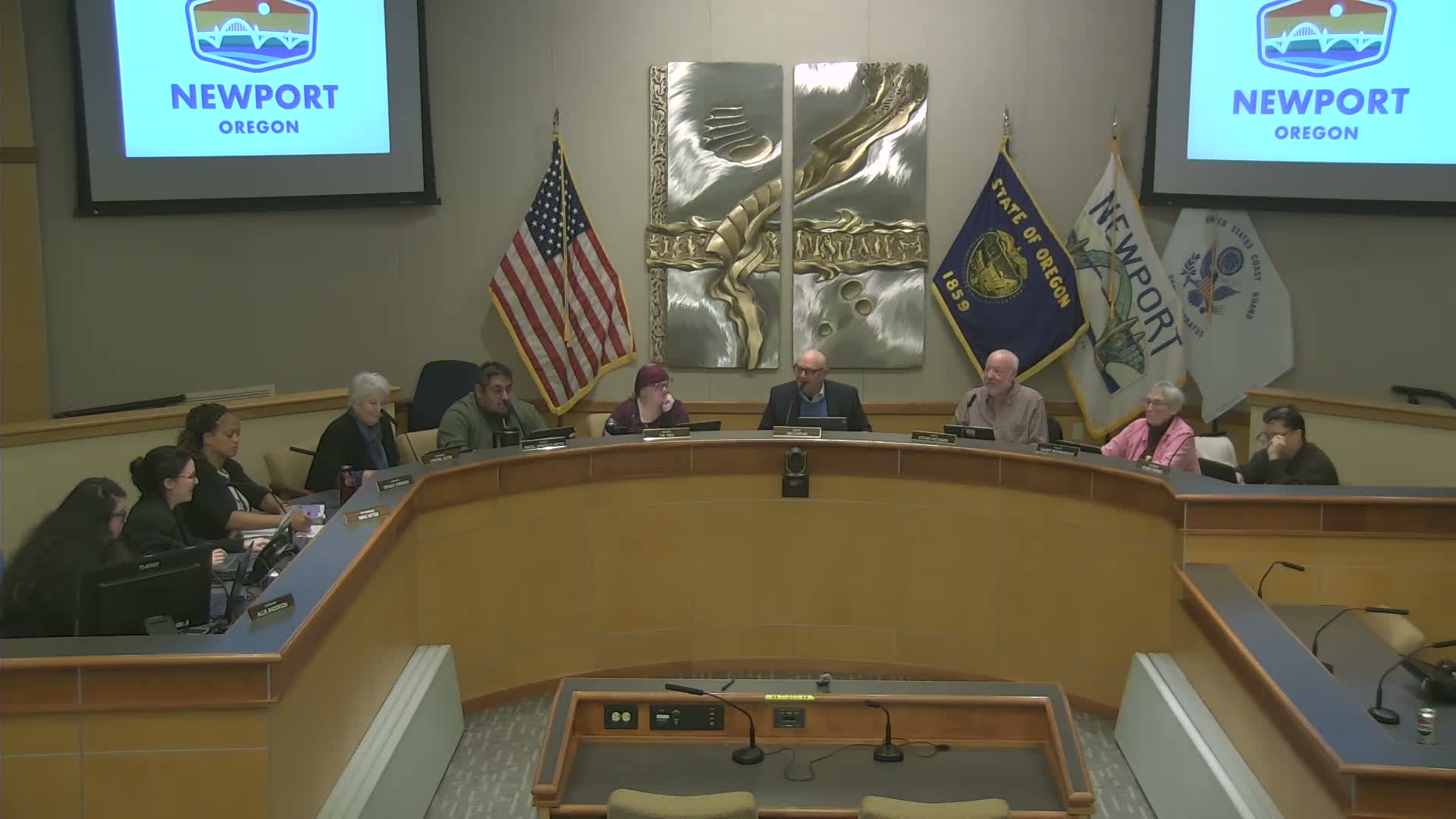
Lillo Ryan, the city’s beautification and tourism program coordinator, briefed the Newport City Council on Feb. 2 on the city’s Sustainable Destination Management Plan (SDMP) and the consultant-led process to shape policy and implementation recommendations.
Ryan said CrossCurrent Collective is the project consultant and that CEO Kristen Dahl will lead a two‑day site visit and advisory-team meetings. "We kicked off this project in October 2025," Ryan said, describing a destination assessment, stakeholder outreach and surveys that will feed the plan's recommendations.
Ryan said the project completed a targeted stakeholder survey that yielded 62 responses and a visitor survey that returned 1,810 responses, exceeding initial targets. "We were shooting for 3 to 400 responses. We ended up with 1,810," Ryan said, and noted the aquarium, local ocean partners and canvassing helped achieve that sample size.
The SDMP will focus on environmental stewardship, sociocultural sensitivity and economic viability, Ryan said, and will produce a roadmap with goals, strategies and a dashboard of metrics and benchmarks. She emphasized that the plan’s purpose is to "responsibly manage tourism"—not necessarily to pursue growth at all costs. "I would say that the goal is not more tourists… the goal is this idea of trying to responsibly manage tourism," she told the council.
Councilors flagged infrastructure impacts—water use, police and fire service demand, and parking—and asked how the plan would capture those effects. Ryan said infrastructure stakeholders were included in outreach and that infrastructure concerns are expected to appear in the stakeholder data; she recommended including infrastructure participants in the March visioning and goal‑setting workshop.
Council members also pressed for balanced stakeholder representation; several suggested adding seniors, neighborhood associations, active artists and fisheries‑related voices to ensure the plan reflects both interests that benefit from tourism and residents who feel its negative impacts. Ryan said the advisory team and additional outreach are being refined to fill identified gaps.
Next steps include on‑site interviews and tours over the next two days with the consultant, a March visioning workshop to set goals and metrics, and subsequent plan development and reporting back to council. Ryan said staff will return in a few months with additional updates and that the consultant deliverables will include recommended strategies and benchmarks for aligning future spending—such as room‑tax dollars—with plan priorities.