Get Full Government Meeting Transcripts, Videos, & Alerts Forever!
Get email alerts on the Sustainable Growth topic
No spam. Unsubscribe anytime.
Commissioner proposes 'sustainable growth' plan, urges targeted pause instead of broad density moratorium
Summary
Commissioner Lely and the mayor presented a framework favoring a targeted 'pause‑and‑fix' approach to development — using fiscal impact tests and capacity thresholds — and asked staff for pipeline data to assess school and infrastructure impacts before any zoning moratoriums.
Commissioner Lely presented a sustainable‑growth framework as an alternative to a broad moratorium on high‑density multifamily and commercial zoning, arguing a blanket ban “almost always backfires and often accelerates sprawl” and can raise long‑term costs for taxpayers.
Lely, who said the proposal is co‑sponsored by the mayor, outlined five guiding principles for the initiative: growth must pay for itself; get more tax revenue per acre; protect taxpayers from unfunded liabilities; encourage efficient mixed‑use development; and prioritize maintenance of existing infrastructure. She recommended a targeted "pause‑and‑fix" approach that pauses projects that exceed measurable thresholds for roads, sewer, stormwater or emergency response until capacity exists rather than imposing a blanket prohibition.
“A density moratorium … almost always backfires,” Lely said, adding that “multifamily, mixed use produces four to 20 times the tax value” compared with low‑density development. She cited walkable downtown districts and projects such as the Courtyards At McFarland as examples of developments that generate higher tax value per acre while placing less long‑term burden on infrastructure.
The meeting chair offered detailed cost estimates drawn from a spreadsheet used for long‑term budgeting, including figures of about $41 per linear foot for roads, $56.20 per linear foot for sidewalks (with roughly 30‑year life spans), and $85 per linear foot for curb and gutter (50‑year life span). Using a sample subdivision of 191 lots and 8,942 feet of road, the chair said the math showed per‑lot shortfalls that would make some low‑density subdivisions fiscally unsustainable for the city over time.
Vice Mayor and other members pressed for data. The vice mayor asked staff to compile the current pipeline — projects approved, permitted, or in progress — and suggested mid‑January as a target to return numbers so commissioners can assess impacts on schools, utilities and overall system capacity. Lely said developers already provide school‑impact capacity information and that public works had reviewed sewer and stormwater long‑term maintenance planning.
Members discussed policy tools that could be used before adopting any moratorium, including fiscal impact studies (FIS), developer cost‑recovery requirements, and ICC‑style measurable thresholds that would trigger a pause. The vice mayor suggested the city could hire consultants to analyze options used successfully by other municipalities.
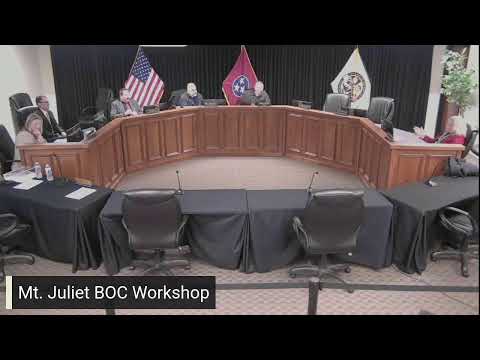
No formal motion or vote was taken; commissioners agreed to continue studying the proposal and asked staff for the requested pipeline and fiscal data. The chair adjourned the workshop “without objection,” and announced the meeting will reconvene at 6:15 p.m. for a public hearing and at 6:30 p.m. for a regular meeting.