Get Full Government Meeting Transcripts, Videos, & Alerts Forever!
Get email alerts on the Public Safety topic
No spam. Unsubscribe anytime.
Montgomery County deputies report fewer injury accidents, more traffic enforcement in The Woodlands
Summary
Montgomery County and precinct partners told township directors that 2025 saw a modest decrease in crimes of note and injury accidents but a significant rise in traffic stops and proactive enforcement; deputies credited targeted traffic enforcement and bank-jogging initiatives for recent reductions in specific crimes.
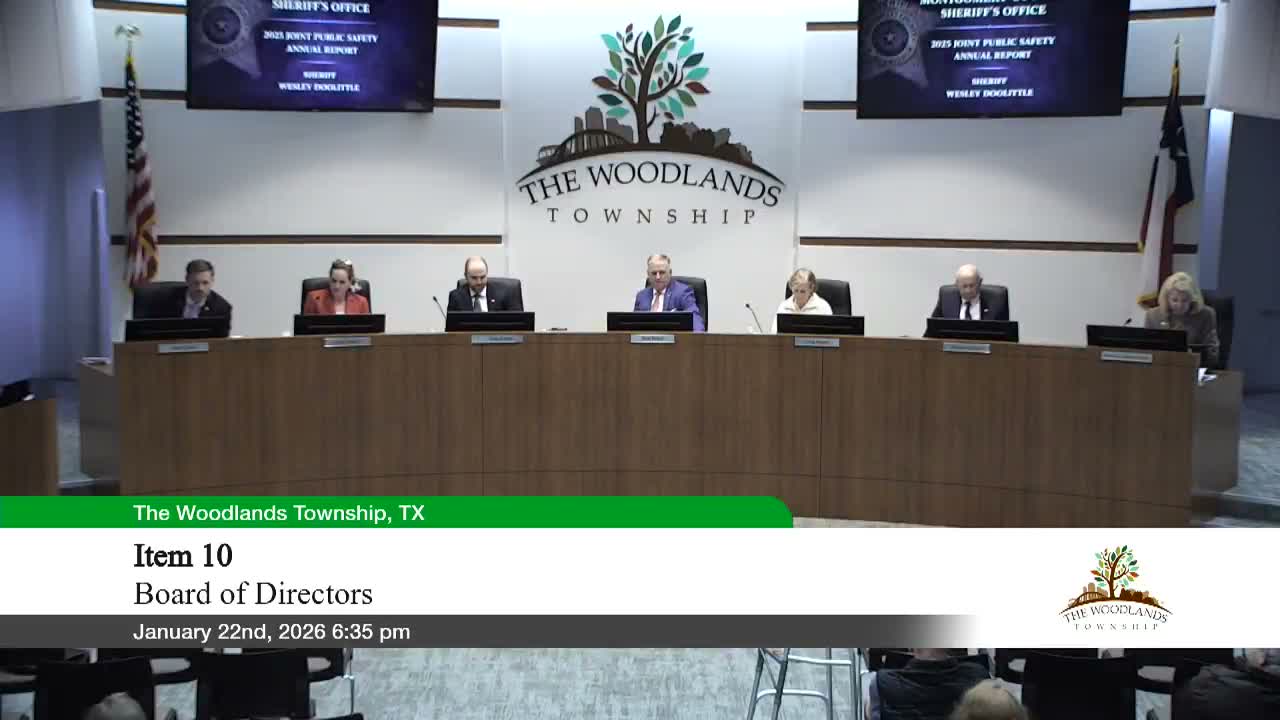
Captain Ryan Drody and other county and precinct officers told The Woodlands Township board on Jan. 22 that public-safety work in 2025 showed mixed trends: calls for service rose while several categories of crime and injury accidents fell.
"In 2025, we had a 10.83% increase at 151,000 calls for service," Captain Ryan Drody said, while also noting a 2.47% decrease in crimes of note and a 9.34% decrease in injury accidents compared with 2024. Deputies attributed some improvements to an emphasis on proactive patrols and targeted operations, including bank-jogging initiatives.
The presentation outlined that traffic enforcement increased substantially: deputies logged roughly 9,500 traffic stops — an increase of about 34% year over year — with the majority resulting in warnings rather than citations. Deputies said speed, failure to yield and driver inattention remain the leading contributing factors to crashes. The crime-reduction unit closed a high share of its cases, reporting 119 of 131 assigned cases cleared and nearly 100 arrests during 2025.
Law-enforcement presenters also described two reported fatalities in 2025, matching the total from 2024, and summarized the Office’s drug- and exploitation-related results: child-exploitation investigations and a narcotics interdiction unit yielded multiple arrests and felony charges in the fourth quarter.
Board members thanked deputies for increased visibility and enforcement. The board accepted the quarterly law-enforcement report without objection.
The township said it will continue to coordinate with Montgomery County and precinct partners as enforcement priorities — and outreach about traffic hot spots — are refined.