Get Full Government Meeting Transcripts, Videos, & Alerts Forever!
Get email alerts on the Public Safety Budget topic
No spam. Unsubscribe anytime.
Staff outlines roughly $2.8 million increase to law-enforcement spending in Woodlands preliminary budget
Summary
Finance staff told the board the law-enforcement portion of the 2026 preliminary budget rises about $2.8 million (≈15%) to pay parity and new equipment; amendments include deputies, reclassifications and equipment purchases totaling six-figure items.
Monique Sharp, presenting the 2026 preliminary budget at the Aug. 21 workshop, said the township’s law-enforcement budget will increase by roughly $2.8 million — about 15% — when contract changes, parity adjustments and equipment purchases are factored in.
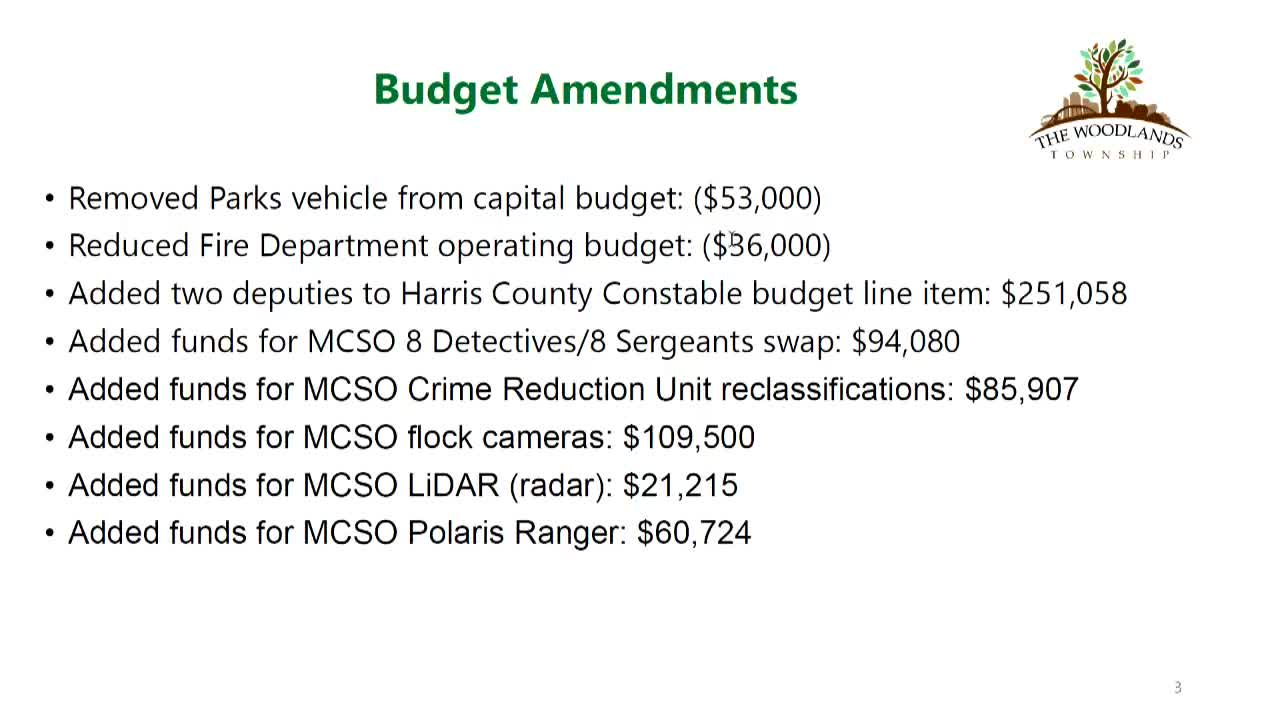
Sharp identified several specific amendments under consideration: funding for two additional deputies, a funding swap that shifts costs between deputy and sergeant positions (a township cost differential of $94,080), Montgomery County reclassification costs totaling $85,907, 30 Flock-brand camera units for $109,500, a radar system listed at $21,002.15, and a Polaris Ranger priced at $60,724. “When we factor all of those things in there... our law enforcement budget is increasing by about $2,800,000 or 15%,” Sharp said.
Board members questioned several legacy or discretionary public-safety line items and urged reallocating certain programs to sworn officers. One director criticized a mounted-patrol community-engagement program (referred to as “Alpha and Omega”) as a longstanding legacy program and suggested shifting approximately $1.5 million toward sworn law enforcement to help reach the no-new-revenue tax goal.
Why it matters: law-enforcement contract costs are a major driver of the township’s budget increase this year and reduce flexibility for other priorities. Staff warned those increases are part of a multi-year pattern built into the five-year plan and will affect reserves, service levels and future tax-rate choices.
Staff said some equipment and contract-driven changes (including a change in body cameras) had been anticipated but contributed to the fiscal hit this year; directors asked for further breakdowns of the personnel additions and urged staff to identify programmatic savings and sponsorship options to offset costs.