Get Full Government Meeting Transcripts, Videos, & Alerts Forever!
Get email alerts on the Cell Tower Ordinance topic
No spam. Unsubscribe anytime.
Brentwood discusses new "tier 4" cell-tower category to ease coverage gaps while limiting visual impact
Summary
Commissioners reviewed a proposed amendment to the city's personal wireless service facility ordinance that would create a new "tier 4" permitting monopole towers up to 160 feet on government or quasi-government property with multi-carrier requirements, third-party propagation review, public notice within 1,000 feet and camouflage/screening expectations.
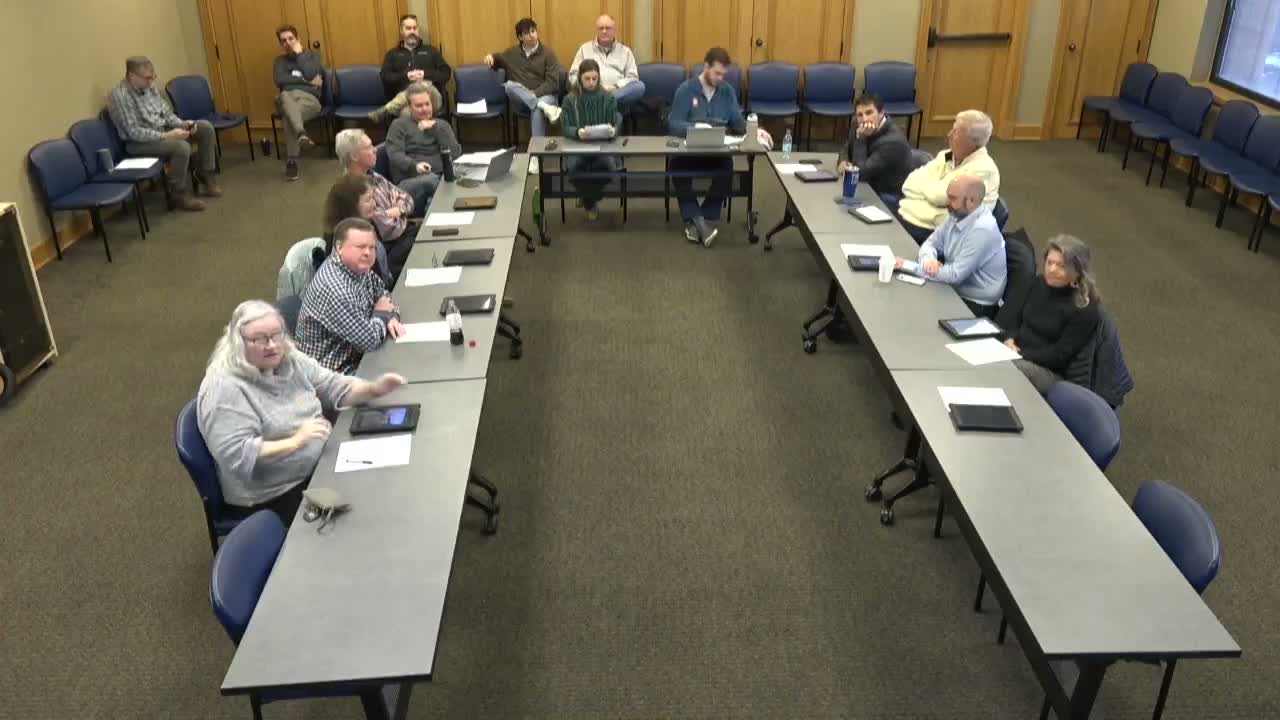
The Brentwood Planning Commission spent the regular-agenda portion of the meeting on a proposed amendment to the city's personal wireless service facility ordinance that would add a new "tier 4" category to address known mobile-coverage gaps.
Speaker 7 (identified in the transcript only as Speaker 7) described the proposal as a response to coverage shortfalls and a strict existing ordinance originally drafted in 2001. "So this tier 4 would allow towers up to 160 feet in height," Speaker 7 said, while stressing the city will require multiple carriers on a single tower "to minimize the number of proposed towers." Speaker 7 told the commission the city will require a propagation study showing a service need and that the city will pick a third party to review that study.
Under the draft, Speaker 7 said towers would be permitted primarily on government-owned or quasi-government property (for example, utility-district land) and could be allowed in HOA-owned residential open space with additional city-commission review. The draft would continue to prohibit lattice-style towers and emphasize monopoles and stealth or camouflaged structures (flagpoles, faux trees or painted monopoles) where feasible. Speaker 7 also described a structural option to eliminate the fall-zone requirement if a tower is engineered with pinch points so it would "collapse upon itself" in a way that prevents a full collapse onto nearby properties.
Commissioners and audience members questioned details. Speaker 11 asked whether "showing a need" meant demonstrating poor coverage rather than carrier convenience; Speaker 7 replied it must be a service need and the city must agree with the justification. Commissioners cited local coverage problems in areas such as Governors Club, parts of Concord Road and near Ravenwood High School; one commissioner said the driving force for the change was widespread citizen reports of inadequate coverage and concerns about emergency calls: "so many landlines are a thing of the past... [residents] can't call 911," a commissioner said, urging urgency in addressing gaps.
The transcript recorded a proposed meeting schedule for the amendment: first reading to the city commission occurred Jan. 12, a public hearing was scheduled for Monday, Feb. 9, and a second and final reading for Feb. 23. Speaker 7 said carriers and tower builders are aware of the change and that the city will limit tower siting through required studies, third-party review, screening requirements and by encouraging co-location where possible.
No final ordinance vote was recorded in this transcript excerpt; the item remains at the ordinance-review stage with upcoming public hearings and additional city-commission action anticipated.