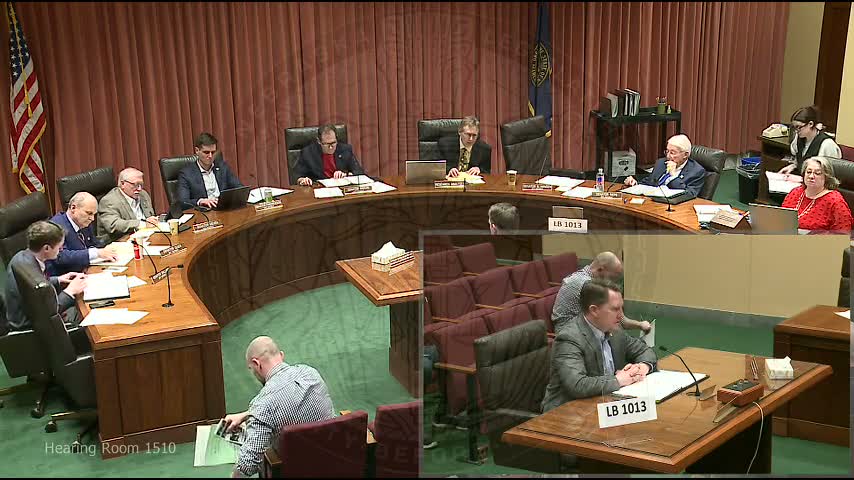
Heated hearing on LB1013 as DHHS seeks flexibility to shift youth populations among state facilities
Loading...
Summary
LB1013 would allow Youth Rehabilitation and Treatment Centers (YRTCs) to be designated to house either boys or girls rather than statutorily tying Kearney to boys. DHHS said the change supports safety and program needs; staff, teachers, unions and the Fraternal Order of Police warned of safety, staffing, education and planning risks and urged a pause.
Senator Ben Hansen introduced LB1013 to let the Department of Health and Human Services designate Youth Rehabilitation and Treatment Center (YRTC) facilities to serve either boys or girls (but not both simultaneously). Hansen said the change would allow DHHS to adapt to fluctuating populations; he noted the department would follow statutory rules on safety and separation.
Dr. Alyssa Bish, director of DHHS’s Division of Children and Family Services, described planned moves: moving boys from YRTC Kearney to the NCYF (Omaha) facility to provide more single-room capacity, moving Hastings’ female population to Kearney’s new facility, and shifting Whitehall PRTF programming to Hastings. Bish said the moves would be gradual, staff would be recruited and trained before transfers, and the target timeline included recruiting in May with full transition by late 2026 if staffing allowed. She framed the changes as designed to improve safety, therapeutic programming and family access for Omaha-area youth.
Opponents — including the Fraternal Order of Police, Whitehall staff, clinicians, teachers, the Nebraska State Education Association and unions — urged the committee to pause the proposal. Jay Wilson (FOP) warned that transferring NCYF from Corrections to DHHS would displace correctional staff and risk placing youth in proximity to maximum-security adult populations. Whitehall staff said closure would eliminate specialized psychiatric and substance-use treatment programs and jeopardize about 68 jobs. Teachers and education representatives warned that converting accredited (rule-10) schools to rule-18 arrangements risks replacing teacher-led instruction with online platforms, undermining rehabilitation and graduation outcomes.
Multiple witnesses urged greater transparency and planning. The Foster Care Review Office flagged technical drafting problems (statutory naming and emergency references) and said specific facilities should be named in statute to preserve clear placement tracking. Union representatives said briefings left many staff uncertain about relocation, severance or whether positions would exist at new sites; some staff said they already planned to leave.
Why it matters: Opponents argued the proposal would trade short-term cost or capacity gains for long-term harms to rehabilitation, staffing stability, and rural access to services; supporters said the bill merely enables DHHS to address facility shortcomings and prohibits moves without adequate staffing.
Next steps: The committee closed the day’s hearings; LB1013 faces further deliberation and likely requests for technical clarifications and implementation safeguards if it moves forward.