
Proposal would require firearm relinquishment for people under protection orders
Get AI-powered insights, summaries, and transcripts
Subscribe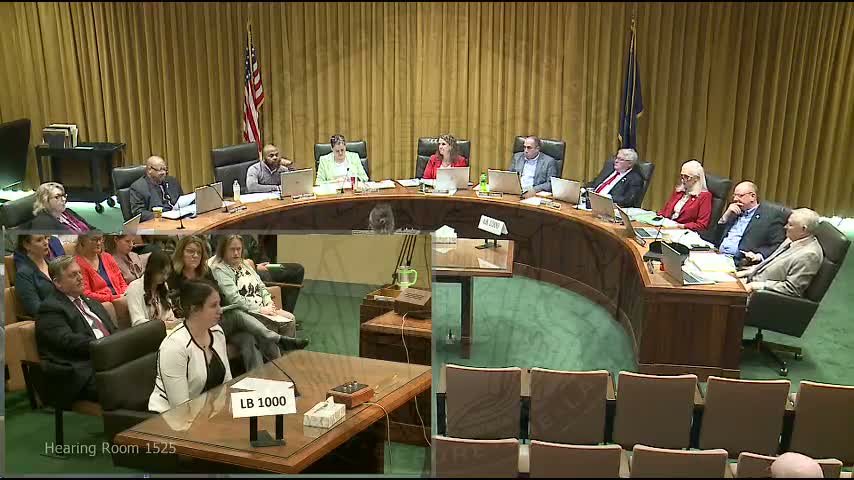
Summary
Sen. Jane Raybould told the Judiciary Committee LB 10 88 would require people subject to domestic‑violence protection orders or qualifying convictions to relinquish firearms within 48 hours to a licensed dealer, a court‑approved third party, or law enforcement; proponents said the change would reduce lethal outcomes, while sheriffs and defense counsel raised operational, fiscal and constitutional concerns.
Sen. Jane Raybould introduced LB 10 88, which would require respondents to domestic‑violence protection orders or persons convicted of qualifying misdemeanors to relinquish firearms and ammunition within 48 hours. The bill directs the court to provide a compliance form to be returned and permits relinquishment to a federal firearms licensee, a court‑approved third party, or, if willing, to law enforcement. Failure to comply would be a Class 1 misdemeanor and contempt of court.
Raybould and many proponent witnesses — including survivors, family members, the Nebraska Coalition against Domestic and Sexual Violence, and family law attorneys — argued that a relinquishment requirement is a practical step to prevent homicide and reduce lethality in domestic violence cases. Belinda Hagen, who previously testified, and other survivors told the committee that a lack of a statewide relinquishment process contributed to a fatal outcome in a local case.
Law enforcement and prosecutors generally supported the goal but raised implementation concerns. Lincoln Police Chief Michon Morrow and the Douglas County Sheriff’s Office described the staffing, storage, chain‑of‑custody, and evidence‑room capacity challenges of accepting potentially thousands of firearms from respondents. Several witnesses suggested fee‑based storage or partnerships with licensed dealers could mitigate costs.
Opponents — including firearms‑law practitioners and some sheriffs — questioned provisions that could require relinquishment after ex parte orders and cautioned about potential federal rules regarding return of firearms to people who remain federally prohibited. They also warned the bill could create new costs and operational burdens for law enforcement and evidence management.
Raybould said she would work with stakeholders on implementation language, consider delayed operative dates to allow systems and partnerships to be built, and explore narrow amendments to reduce fiscal impacts. The committee heard extensive testimony but took no final action during the hearing.