
Proposal would modernize 1903 "matron" statute to ease staffing burdens in small county jails while keeping PREA protections
Get AI-powered insights, summaries, and transcripts
Subscribe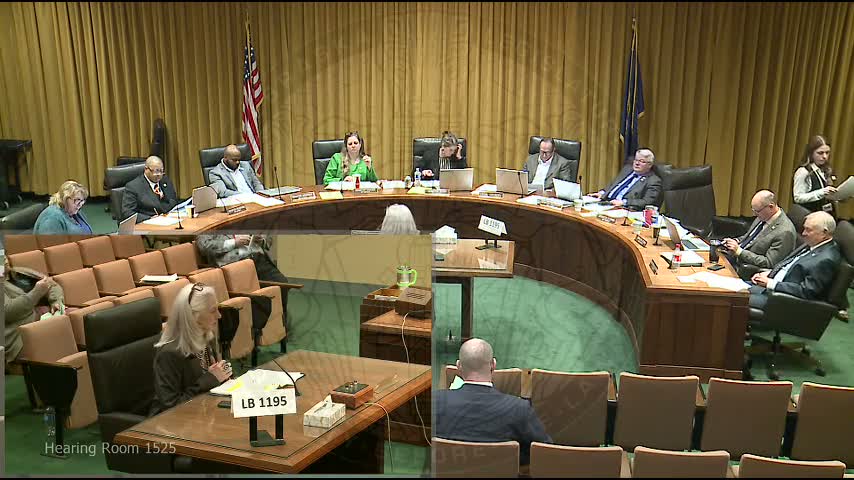
Summary
Sen. Tanya Storer proposed updating an outdated 1903 statute that requires female supervision 24/7 for female inmates in small counties; white‑copy amendment preserves the requirement in Douglas and Lancaster counties while allowing male officers to perform routine duties elsewhere and keeping PREA and jail‑standards protections in place.
Senator Tanya Storer introduced LB1195 to update an antiquated state statute (often described as a "matron" law) that requires female supervisors at county jails when women are incarcerated. Storer said the law dates to 1903 and presents recruitment and operational challenges for small rural counties that often have single‑person overnight shifts and limited staffing budgets. The white‑copy amendment would retain same‑sex staffing requirements for Douglas and Lancaster counties (where the bulk of female inmates are held) and allow male correctional officers in other counties to perform routine duties such as cell checks, meal service and medication distribution while preserving federal PREA protections, state jail standards and ombudsman oversight for privacy‑sensitive procedures.
Rural sheriffs supported the change as a recruitment and retention remedy; several said their facilities rarely hold female inmates and maintaining a female staff 24/7 has forced them to decline qualified applicants or run chronic overtime. Knox County's sheriff said annual PREA training and camera systems create oversight that did not exist when the 1903 statute passed.
Survivor and advocacy testimony urged caution. A survivor who had been incarcerated described trauma and cited recent local charges against a corrections officer; she urged codified protections, better reporting and advocacy resources, and said standards and safeguards are not uniformly implemented. Lancaster County officials asked that the amendment preserve county-level standards for larger jails; the white copy explicitly keeps requirements in place for Lancaster and Douglas.
Ending: Sponsor and stakeholders agreed to work on drafting clarifications and possible statutory cross‑references to jail-standards regulations and PREA requirements to ensure protections remain enforceable while allowing staffing flexibility in small counties. No committee vote was taken.