Get Full Government Meeting Transcripts, Videos, & Alerts Forever!
Get email alerts on the Planning Commission Restructuring topic
No spam. Unsubscribe anytime.
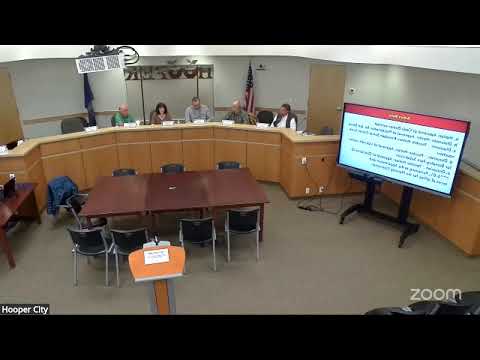
Hooper Council adopts ordinance restoring mayoral appointment power, reduces planning commission to five members
Summary
The Hooper City Council voted to adopt Ordinance 2026-01, changing the planning commission from seven members to five with one alternate, restoring mayoral appointment authority (with council consent), and revising term dates; supporters said the change will improve quorum reliability while opponents warned it risks losing citizen representation.
The Hooper City Council on Jan. 22 adopted Ordinance 2026-01 to change the composition and appointment process for the city’s planning commission.
The ordinance reduces the planning commission from seven members to five, establishes one alternate seat, restores the mayor’s authority to appoint commission members with council consent, and adjusts terms to run Feb. 1–Jan. 31. Council member Craig moved for adoption and Council member Rapalado seconded; the council completed a roll-call and the ordinance passed.
Supporters said the change addresses practical problems with attendance and quorum. “There is a discussion around the 7 voices concern, and I do agree that diverse viewpoints matter, but just adding more people into the mix doesn't necessarily mean that it offers more value,” Council member Craig said during the debate, arguing that a smaller body with alternates would improve efficiency and continuity. City staff and some council members cited repeated quorum struggles since the commission was expanded.
Opponents and several residents warned the shift could reduce representation and remove institutional knowledge. Resident Bryce Wilcox told the council the planning commission helped refine Title 10 and urged the council not to remove experienced members: “Amanda Prince — if we didn't have the answer, she'd go find it,” he said, arguing for the seven-member structure and wider participation from the community.
The council also debated removing a ‘good cause’ hearing requirement for removing appointed commissioners. Council members discussed legal risk and the difficulty of defining “good cause,” with at least one council member urging removal of that language to lower litigation exposure.
Mayor Sherry Bingham noted procedural checks: although the mayor nominates planning commissioners, appointments require city-council consent and removal likewise requires a majority vote. The mayor cast a vote during the roll call and the ordinance passed.
What happens next: the ordinance sets the new term schedule and restores mayoral appointment authority; the council did not take up any removals of current commissioners at this meeting and directed staff to follow the ordinance language for appointment interviews and term starts.