
Decatur highlights career‑pathway growth: AI pilot, new audio and expanded inclusion supports
Get AI-powered insights, summaries, and transcripts
Subscribe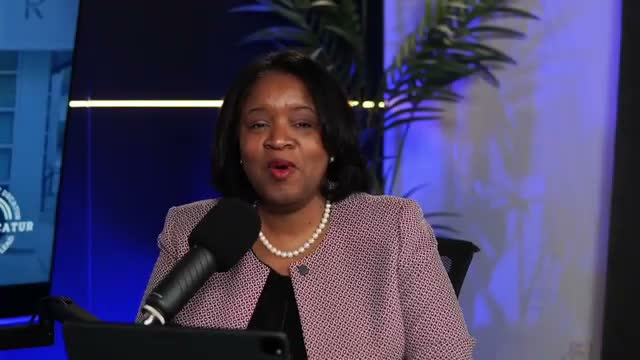
Summary
City Schools of Decatur CTAE director Tara Smiley said the Decatur Career Academy is expanding pathways — including a planned AI sequence, new audio production tracks and a K–2 career exploration pilot — and emphasized industry certifications and partnerships that support student credentials and near‑universal graduation among CTAE participants.
City Schools of Decatur’s Career, Technical and Agricultural Education (CTAE) program is expanding course offerings and hands‑on supports across grade levels, CTAE director Tara Smiley said in a district podcast celebrating National CTAE Month.
Smiley, who serves as chief executive of the Decatur Career Academy and CTAE director, said the academy combines academic and technical training in industry‑aligned pathways and aims to give students credentials and workplace experience. "A career academy is essentially a smaller learning community…where students are able to get academic training, technical skills training, come out with credentials, and sometimes college credit," she said.
Why it matters: The district is positioning CTAE as a route to both postsecondary education and immediate job readiness. Smiley told the podcast that CTAE students in City Schools of Decatur graduate at high rates and leave with industry credentials—examples include ServSafe certification in culinary and AP offerings in IT—that she said improve hiring outcomes and college applications.
New and growing pathways: Smiley announced plans for several additions and pilots. She said the district is planning an AI pathway "that will offer three structured classes" covering use, ethical considerations and a capstone to model AI across industries. She also said the district has begun conversations to add two fine‑arts pathways — audio production and live/audio post production — and is piloting a K–2 career exploration program to introduce young students to hands‑on career activities through community circles.
Industry alignment and outcomes: Smiley highlighted recent industry recognition for existing programs. "We were just, we just received our industry certification" for the culinary program, she said, describing third‑party review of teachers, equipment and curriculum. She also cited advisory‑board partnerships and local employers—architects, physicians and real‑estate professionals—that provide internships, some paid, and mentorship to juniors and seniors.
Inclusion and work experience for students with disabilities: The podcast described a district partnership (referred to in the transcript as the "Joyful Jara" enterprise) that provides pre‑employment transition skills to students with disabilities. Smiley said the enterprise involves students cleaning and preparing jars for reuse or upcycling, giving them practical employability experience. "These kids are learning real skills…that will allow them to become self‑sufficient," she said.
Teaching pipeline and facilities: Smiley described growth in "teaching as a profession" and child‑development pathways that provide internships with classroom teachers and lab experiences at the Frasier Center. She said the district is preparing a new Early Childhood Learning Center (ECLC) facility to support observations and practice for students training in early childhood education.
Performance claims and context: On outcomes, Smiley said CTAE students in City Schools of Decatur have a 99 percent graduation rate. She also described practical wage benefits tied to industry credentials, saying students have returned from interviews reporting employers offered "$3 more" after securing ServSafe certification; the podcast does not specify the wage unit or provide an external source for the graduation statistic.
Next steps: The podcast noted that a student apprentice on the board is preparing policy proposals for presentation to the board of education in May, and that the district will continue planning instructor recruitment and pilots for the new pathways.
Quotes: "Our IB career program students…go even further to dive into their chosen career pathway," Smiley said, and later added, "Computer science…is growing" as the district expands AP networking and cybersecurity offerings.
What remains unspecified: The podcast references an announcement from "the Department of Education" about expanded fine‑arts pathways and potential funding but does not clarify whether that refers to a federal, state, or local agency, or provide funding amounts. The transcript also gives an imprecise count for the number of career pathways (spoken as "7 or 9").
The district did not announce formal board actions in the podcast; the discussion described program developments, partnerships and plans for piloting and expansion.