
Washoe County and Sparks HOPE teams detail homelessness outreach, new 'Clean Path' pilot
Get AI-powered insights, summaries, and transcripts
Sign Up Free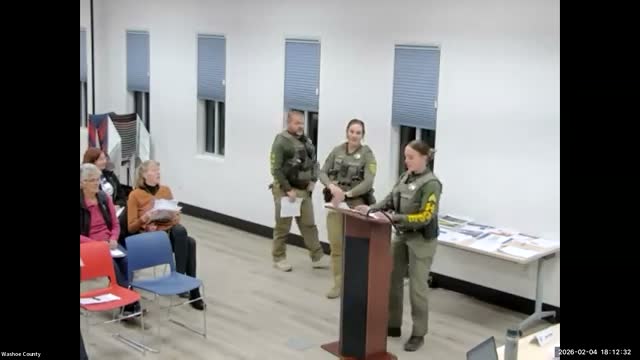
Summary
Washoe County and Sparks Police HOPE teams presented 2025 results — including 194 people housed and a 93% service acceptance rate — and described a new Clean Path initiative for rural encampments offering weekly support, case management and progressive accountability.
Sergeant Kelly Wright of the Washoe County HOPE team told the Spanish Springs Citizens Advisory Board the unit’s outreach approach emphasizes services and housing, reporting 2025 outcomes that the team framed as growth in both reach and results. "We housed 194 individuals into permanent housing," Wright said while summarizing the team’s metrics, and the presentation listed 2,930 contacts in 2025 (up 34% from 2024) and a 93% service acceptance rate.
Wright described HOPE’s embedded case managers from Washoe County Human Services, partner organizations (including Northern Nevada HOPES, Reno Housing Authority and faith-based groups), and 2026 goals to house more than 220 people and improve tenancy support to maintain 85–90% retention. A new reporting tool planned for the Washoe County app will let residents flag encampments and request HOPE response.
A separate presenter outlined Clean Path, a pilot expected to launch in February that targets rural encampments with voluntary weekly support: water refills, seven-day balanced food boxes, trash bags and pickup, intensive case management for IDs and benefits, on-site behavioral-health services, and "welcome home" packages to help people move into housing. Clean Path uses progressive accountability (verbal warnings, seven-day notices, and citations for illegal dumping as a last resort), and organizers said participation is voluntary but requires site cleanliness and active pursuit of permanent housing.
Sparks Police Sergeant Dustin Butler presented the Sparks HOPE model, describing a years-long outreach effort that emphasizes resource-first engagement and uses partnerships to move people into services or housing. "Resource heavy, resource dependent first, enforcement second," Butler said, and his presentation included regional contact data and a heat map of outreach activity.
During Q&A, residents and CAB members asked about veteran services, funding sources (the Washoe team cited federal HUD funds), the most recent point-in-time count (numbers pending), and the gap in tenancy support staff. HOPE team presenters repeatedly emphasized relationship-building — multiple contacts over time to build trust — and stressed the need for additional tenancy-support caseworkers to sustain placements after housing is found.
No formal county action or budget appropriation for Clean Path was recorded at the meeting; presenters asked community members and organizations to support welcome-home package donations and volunteer tenancy-support efforts.