
Alabama House tightens laws on threat reports to schools, approves two related bills
Get AI-powered insights, summaries, and transcripts
Subscribe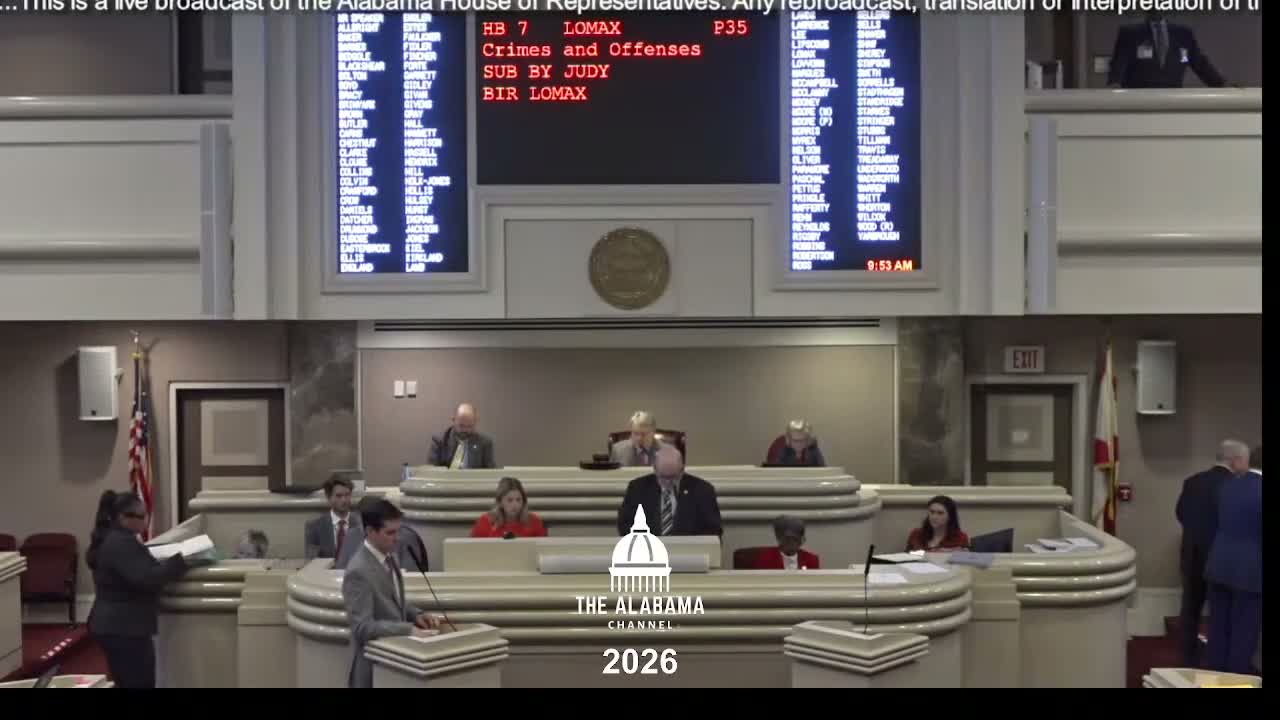
Summary
Lawmakers approved HB7 and HB188 to expand places covered by terrorist-threat statutes and adjust prosecutorial thresholds; sponsors said the measures help prosecutors and protect schools, while some members raised concerns about impacts on students and prosecutorial burden.
The Alabama House approved two bills on Feb. 6 aimed at reducing false or disruptive threat calls and giving prosecutors clearer authority: House Bill 7 (Rep. Lomax) and House Bill 188 (Rep. Baker). Lawmakers said the measures respond to repeated disruptive threats against schools and other institutions.
Representative Lomax said HB7 creates updated penalties for making a terrorist threat against schools, requires principals to notify law enforcement immediately when there is a credible threat, allows suspension pending a mental health evaluation and includes a restitution requirement of $10,000 to cover evacuation and emergency-response costs. "If one student's afraid to go to school because a situation has occurred at their school, I think that's one too many," Lomax said in explaining the bill’s intent.
Representative Baker's HB188 focuses on prosecutorial practicality. Baker told the House the bill removes the statutory requirement that a threat be "credible and imminent" in some cases, enabling authorities to charge disruptive callers even when immediate proof of capability is hard to establish. He said DAs previously had difficulty prosecuting because proving a threat's credibility could take days. "This simply removes then that it does not have to be shown that it's a credible threat," Baker said.
Debate highlighted concerns about students, mental-health considerations and disproportionate impact. Members asked how long a student might be suspended and whether virtual-learning options would be available; Representative (17) warned of the adverse effects of lengthy suspensions on children and urged safeguards. Others asked how DAs would exercise discretion in cases involving youth or people with mental illness; sponsors said prosecutorial discretion remains.
The House adopted a committee substitute to HB7 adding hospitals, nursing homes and other housing for disabled people to the list of covered facilities, and then passed HB7 (recorded vote: 85 ayes, 1 nay). HB188 passed after a substitute and final vote (recorded vote: 83 ayes, 10 nays). Sponsors said the bills will make it easier to hold disruptive callers accountable while allowing prosecutors to consider mental-health and other mitigating factors.
What happens next: Both bills move to the Senate for consideration. Lawmakers and advocates will likely monitor implementation details and how prosecutors handle cases involving juveniles or persons needing mental-health services.