Get Full Government Meeting Transcripts, Videos, & Alerts Forever!
Get email alerts on the Public Health topic
No spam. Unsubscribe anytime.
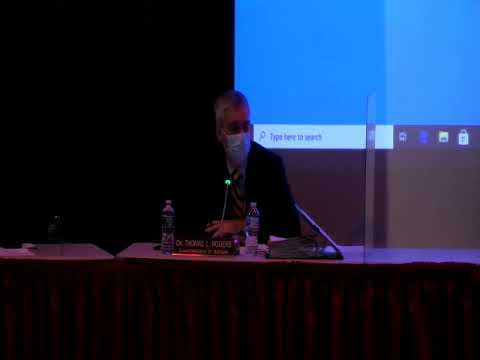
Syosset schools outline testing site, MERV‑13 and HEPA plans as local COVID rates climb
Summary
Superintendent Dr. Rogers told the board that Syosset will finish MERV‑13 filter upgrades where possible, buy HEPA units for rooms without mechanical ventilation, open an on‑campus testing site through South Nassau, and keep parents able to request a return to in‑person instruction as county and town metrics rise.
Syosset Central School District officials on Monday said they are accelerating COVID‑19 mitigation steps — including on‑site testing and interim air‑filtration measures — as local case rates climb.
Superintendent Tracy Rogers reported near‑completion of MERV‑13 filter upgrades to the district’s air‑handling units and described a backup plan to deploy HEPA filters “for the classrooms that don't have mechanical ventilation” while longer mechanical ventilation projects wait on state approval. He said the district has encountered shipping delays but is installing filters as they arrive.
Rogers also described a proposed on‑campus testing arrangement with South Nassau (Mount Sinai) Hospital that the board is expected to approve. The district would not buy and operate tests directly; instead, South Nassau would furnish testing and bill insurance as at an urgent‑care site. Rogers said the partnership would give the district testing capacity if New York assigns a local yellow zone that requires periodic testing of a proportion of students and staff.
"This will be a community testing site of the South Nassau Hospital that will be on our campus," Rogers said, describing it as a convenience and a way to use South Nassau’s testing license without standing up a district laboratory.
Board member Chris Christofilippo asked whether the district planned to use antigen (rapid) tests. Rogers confirmed the initial testing would be antigen but noted a less‑expensive, newer test was expected in December and South Nassau had orders placed for it. Rogers also explained that the district examined the option of becoming a limited service laboratory (LSL) but found the facility, staffing and cold‑storage requirements made that approach impractical.
The superintendent put the health measures in the context of New York State’s micro‑cluster approach. He outlined thresholds officials use to designate yellow/orange/red zones — citing positivity and cases per 100,000 residents — and warned that "these last few days our rate of increase is steeper than the county's rate of increase," which merits community attention.
Rogers encouraged continued adherence to layered protections: masking, distancing and barriers in school, adding, "If you're sick, stay home." He said the district’s internal contact‑tracing work and coordination with the Nassau County Department of Health have so far prevented known in‑school transmission.
Procedural vote: the board moved to approve the district’s testing agreement and related items on the consent agenda by voice vote; the transcript records the motion and second and indicates approval without a recorded roll‑call tally.
What happens next: if the state designates a yellow zone and the board approves the South Nassau partnership, the testing site would be available on campus and the district would employ HEPA units while mechanical ventilation upgrades await state approval.