Get Full Government Meeting Transcripts, Videos, & Alerts Forever!
Get email alerts on the Driver Proficiency topic
No spam. Unsubscribe anytime.
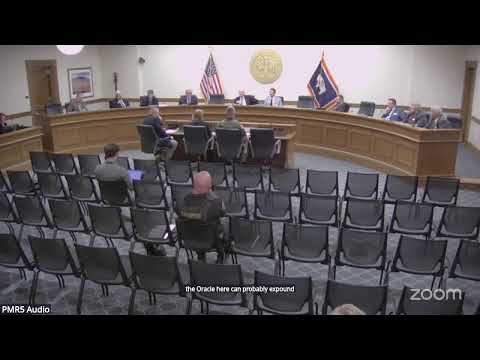
Committee advances English‑proficiency bill for commercial drivers after debate over carrier liability and penalties
Summary
The Transportation Committee voted to advance 26LSO173, a proposal focused on English proficiency for commercial motor vehicle operators, after testimony from industry and citizens and amendments to align state language with federal CFR guidance and clarify penalties.
The Transportation, Highways & Military Affairs Committee voted to advance bill draft 26LSO173 — concerning English language proficiency for commercial motor vehicle (CMV) operators — as amended after several hours of testimony and debate.
The bill, as amended to reference 49 CFR sections and to clarify penalty language, would make a first offense a fine (committee settled on $1,000 as the statutory fine in committee discussion) and create an additive penalty pathway for subsequent violations. Representative Larson raised concerns that a $1,000 immediate fine could be excessive for some drivers and pushed for graduated penalties; other members argued the amount remains necessary given safety concerns and inflation.
Witnesses at the committee urged both caution and stronger enforcement. Carbon County resident Joey Carreni said he favored deleting a carriers‑focused subsection because it could make the measure harder to pass and impose administrative burdens on smaller local agencies. Carreni urged the committee to focus on safety: “What we’re really looking at here is safety on the roads and the state’s responsibility in maintaining that safety for the traveling population,” he said.
Kevin Hawley, president of the Wyoming Trucking Association, praised Wyoming Highway Patrol’s enforcement and urged the committee to mirror federal standards: “Wyoming took it seriously. We led the way,” he said, adding that local officers should get simple, practical training if enforcement is broadened to sheriffs or municipal police. Kathy Klein, an industry expert joining online, recommended adopting stronger language found in Oklahoma’s statute and suggested civil penalties against brokers and shippers where contracts and brokerage practices shift liability away from carriers.
Committee members debated how to reach carriers and brokers rather than only drivers, whether team drivers should be treated differently, and whether state language should hard‑code definitions or rely on the CFR. LSO staff advised that the statute can reference the CFR “as amended” or a dated citation; advocates for flexibility warned that too‑tight state wording could create conflicts with federal interpretation and risk federal funding.
A roll‑call on the draft as amended was recorded in committee. The chair said LSO would circulate a revised draft with the accepted changes. The committee also asked staff to clarify drafting so penalties and cumulative fines are explicit in the statute.
The next steps are for LSO to circulate the amended text to committee members and for sponsors to determine a house or senate vehicle for introduction in session.