Get Full Government Meeting Transcripts, Videos, & Alerts Forever!
Get email alerts on the Education Superintendent Search topic
No spam. Unsubscribe anytime.
Brainerd School Board interviews Chip Rankin; candidate emphasizes curriculum, behavior supports and community continuity
Summary
The Brainerd School Board began superintendent finalist interviews, hearing from Chip Rankin, who highlighted data-driven behavior systems, literacy and curriculum coherence, and the need for targeted funding. The board approved the meeting agenda, MSBA outlined interview procedures, and Rankin recommended an exit survey and potential referendum if additional revenue is required.
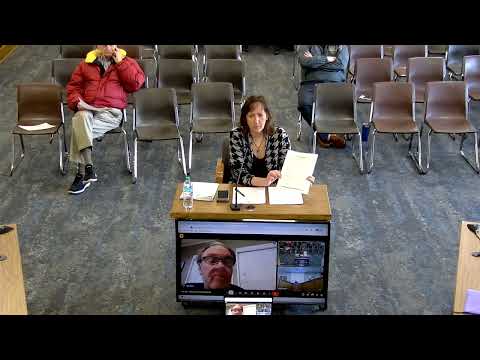
Brainerd — The Brainerd School Board convened a special meeting to begin interviews for superintendent finalists and unanimously approved the meeting agenda before MSBA representative Barb Dorn reviewed logistics for the district’s search process.
Chip Rankin, introduced as the first interviewee, told the board he has deep local ties and extensive K–12 and military leadership experience and said, “I’m not running from anything. I’m running to Brainerd.” Rankin described a leadership record that includes principals’ academy work, district-level strategic planning and a focus on visible community presence.
Rankin outlined several priorities he would bring if hired: implementing a guaranteed, K–12 curriculum with pacing guides, restoring smaller elementary class sizes where possible, and using data to drive behavior interventions. On disciplinary improvements, he said his prior district used PBIS and teacher-empowerment strategies to reduce discipline referrals, reporting a decline “from over 722 discipline referrals” down to “about 394” in the most recent year after the reforms.
On academics, Rankin pointed to literacy as the top lever for long-term student outcomes. He told the board that many teachers in the district had completed 80 hours of training tied to reading instruction and said his district achieved a “12-point gain in reading in the last three years” after shifting curriculum and providing targeted coaching. He emphasized that the board controls “treasure and time” and must resource any districtwide curriculum implementation with clear benchmarks and quarterly dashboards.
Rankin also discussed student mental health and technology. Citing recent research and a book he referenced during the interview, he said social media and forward-facing phone cameras are linked to increased adolescent stress. He described policies used in his district to limit in-class phone use, place phones away during middle school instruction, and provide mental-health practitioners in each building.
On fiscal strategy, Rankin said districts face hard choices and must prioritize investments. He told the board that some improvements — for example, curriculum adoption and adding staff to reduce class sizes — likely require new revenue, saying, “You cannot cut your way to excellence.” Rankin recommended using exit surveys to identify causes of declining enrollment before asking voters for additional funds and noted a capital-projects levy in his prior district that generated roughly $1 million a year for 10 years as an example of a funding approach that supported academic gains.
Chair Sarah Spear and other directors asked about superintendent–board relationships and accountability. Rankin stressed “no surprises” and frequent communication, including regular dashboards and work sessions. On administrator accountability, he described using data retreats, job coaching and formal written reviews tied to board-set goals, citing a recent $239,000 K–12 math curriculum investment at his prior district as part of an accountability and improvement plan.
Procedural notes: MSBA’s Barb Dorn instructed board members to put their names on paper evaluation forms for the first three interviews before entering scores electronically, and she reminded members that written notes may be subject to data-practice requests under the Minnesota Government Data Practices Act. The board chair said recordings of finalist interviews will be made available on the district website when reasonable.
Next steps: The board will continue interviews today and tomorrow and hold deliberations after the final candidate interviews before announcing further decisions.